



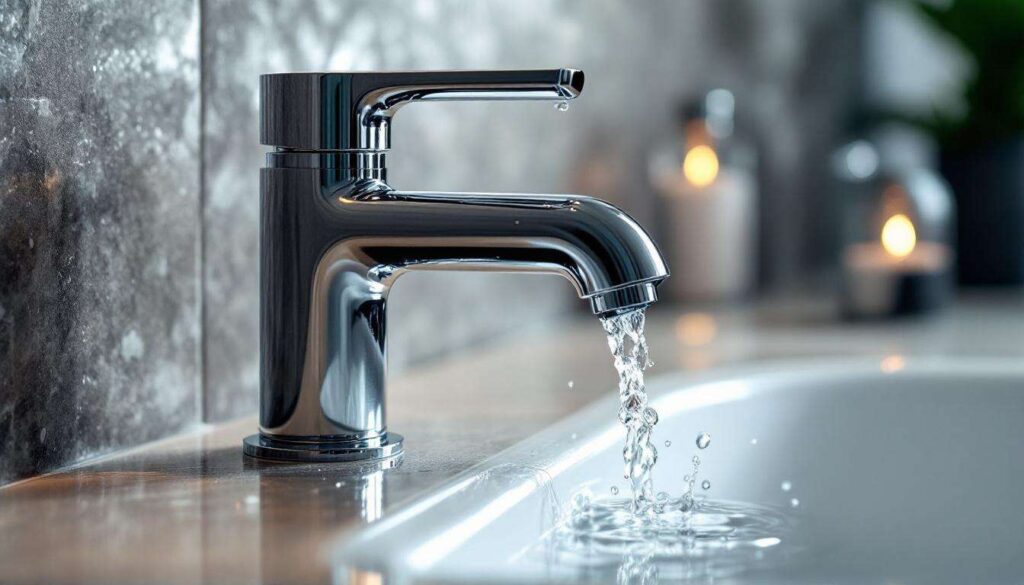
Household taps endure constant exposure to water, and in areas with hard water, this leads to an inevitable battle against limescale. This chalky, white deposit not only mars the appearance of chrome fixtures but can also affect their longevity. Yet a simple household product offers an unexpected solution: baby oil. When applied correctly, this gentle oil creates a protective barrier that repels water and mineral deposits, keeping taps gleaming for up to seven days. This practical approach combines effectiveness with accessibility, transforming a routine chore into a manageable weekly task.
Understanding limescale: a domestic scourge
What causes limescale formation
Limescale develops when hard water evaporates, leaving behind concentrated mineral deposits primarily composed of calcium carbonate and magnesium. These minerals exist naturally in groundwater, particularly in regions with chalk or limestone geology. When water sits on tap surfaces and evaporates, the minerals crystallise into the familiar crusty white residue that proves remarkably stubborn to remove.
The extent of hard water in UK homes
Hard water affects a significant portion of British households, with certain areas experiencing particularly severe issues. The problem is most pronounced in regions such as:
- South East England, including London and surrounding counties
- Eastern England, particularly Cambridgeshire and Lincolnshire
- Parts of the Midlands and Yorkshire
- Specific areas of the South West
These regions typically measure water hardness above 200 milligrams per litre of calcium carbonate, classifying them as having very hard water. Residents in these areas face daily challenges with limescale accumulation on taps, showerheads, kettles and other water-using appliances.
The consequences of neglected limescale
Beyond aesthetic concerns, limescale presents practical problems. Accumulated deposits can restrict water flow, reduce heating efficiency in appliances and eventually cause mechanical failures. The abrasive texture of limescale also makes surfaces more susceptible to bacterial growth, creating potential hygiene issues. Regular removal becomes essential not merely for appearance but for maintaining functional plumbing systems.
Addressing this persistent problem requires both removal strategies and preventative measures, which is where unconventional solutions prove their worth.
Baby oil: why it is effective against limescale
The science behind the protective barrier
Baby oil consists primarily of mineral oil, a petroleum-derived substance with exceptional water-repelling properties. When applied to tap surfaces, this oil creates a hydrophobic layer that causes water droplets to bead and roll off rather than settling and evaporating. This mechanism prevents the mineral-rich water from remaining on the surface long enough to deposit calcium and magnesium crystals.
Why chrome responds particularly well
Chrome-plated taps benefit especially from baby oil treatment due to the material’s smooth, non-porous surface. The oil spreads evenly across chrome, forming a consistent protective film. This compatibility makes the method ideal for modern bathroom and kitchen fixtures, where chrome remains the predominant finish.
| Surface type | Compatibility with baby oil | Duration of protection |
|---|---|---|
| Chrome | Excellent | 5-7 days |
| Stainless steel | Very good | 4-6 days |
| Brass | Good | 3-5 days |
| Matte finishes | Moderate | 2-4 days |
Additional benefits beyond limescale prevention
The protective qualities of baby oil extend beyond preventing mineral deposits. The oil also:
- Enhances the natural shine of chrome surfaces
- Creates a streak-free finish that resists fingerprints
- Provides a gentle polishing effect during application
- Offers mild antibacterial properties
These combined advantages make baby oil a multifunctional solution rather than a single-purpose product, which naturally leads to questions about proper application techniques.
Application method: avoiding greasy residues
Essential materials and preparation
Successful application requires minimal equipment but demands attention to detail. Gather the following items before beginning:
- Baby oil (standard formulation without added fragrances works best)
- Two microfibre cloths (one for application, one for buffing)
- Mild washing-up liquid
- Warm water
- White vinegar (for initial limescale removal if needed)
Begin with clean, dry taps. If existing limescale is present, remove it first using a vinegar solution or commercial descaler. The baby oil works as a preventative measure, not a removal agent, so starting with pristine surfaces ensures optimal results.
Step-by-step application process
The technique requires precision to avoid the common pitfall of excessive oiliness. Follow these steps carefully:
First, apply a small amount of baby oil to a clean microfibre cloth—approximately the size of a five pence coin suffices for an average tap. Rub the cloth between your hands to distribute the oil evenly across the fabric. This prevents concentrated spots that lead to greasy patches.
Second, wipe the tap surfaces using gentle, circular motions. Cover all chrome areas, including the spout, handles and base. The oil should spread thinly and evenly, creating a barely visible sheen rather than an obvious coating.
Third, take the second, completely dry microfibre cloth and buff the surfaces vigorously. This critical step removes excess oil whilst working the remaining product into the chrome. Continue buffing until the surface appears shiny but not slick to the touch.
Common mistakes to avoid
Several errors can compromise results or create additional cleaning challenges:
- Using too much oil, which leaves sticky residues that attract dust
- Applying oil to wet surfaces, preventing proper adhesion
- Neglecting the buffing stage, resulting in greasy taps
- Using paper towels instead of microfibre, which can scratch chrome
Mastering this straightforward technique transforms it into a quick weekly routine that yields consistent results.
Weekly habit: a simple yet effective maintenance
Integrating the routine into household schedules
Consistency proves essential for maintaining limescale-free taps. Designating a specific day each week for this task—perhaps during regular bathroom cleaning—ensures the protective barrier remains effective. The entire process requires merely five to ten minutes per bathroom, making it a minimal time investment for significant returns.
Monitoring effectiveness and adjusting frequency
Water hardness levels vary, and individual usage patterns differ, so the seven-day protection period serves as a general guideline. Households in extremely hard water areas may notice reduced effectiveness after five days, whilst those with moderately hard water might extend the interval to ten days. Observe your taps throughout the week:
- If water spots appear before day five, increase application frequency
- If taps remain spotless beyond day seven, consider extending the interval
- Adjust the amount of oil used based on how quickly the protective layer diminishes
Complementary daily practices
Between weekly oil applications, simple daily habits amplify effectiveness. After each use, quickly wipe taps with a dry cloth to remove standing water droplets. This thirty-second action prevents water from pooling and evaporating, which would otherwise begin the limescale formation process despite the oil barrier. The combination of weekly oil treatment and daily wiping creates a comprehensive defence system.
Beyond the practical benefits, this approach offers broader advantages worth considering.
The ecological and economic benefits of baby oil
Cost comparison with commercial products
Financial considerations make baby oil particularly attractive. A standard bottle costs approximately £2-£4 and provides enough product for several months of weekly applications. Compare this with specialised limescale prevention sprays:
| Product type | Average cost | Applications per bottle | Cost per month |
|---|---|---|---|
| Baby oil | £3.00 | 40-50 | £0.60-£0.75 |
| Commercial limescale spray | £4.50 | 20-25 | £1.80-£2.25 |
| Chrome polish | £6.00 | 15-20 | £3.00-£4.00 |
The savings accumulate substantially over time, particularly in multi-bathroom households.
Environmental considerations
Whilst baby oil derives from petroleum, its environmental profile compares favourably to many alternatives when considering the full picture. The product requires minimal quantity per application, reducing overall consumption. Additionally, preventing limescale formation means fewer applications of harsh chemical descalers, which often contain acids and phosphates that impact aquatic ecosystems when washed down drains.
Reducing water waste and appliance replacement
The broader ecological benefits extend beyond the product itself. Maintaining limescale-free fixtures preserves water flow efficiency, preventing the increased consumption that occurs when deposits restrict tap aerators. Furthermore, protecting taps from mineral damage extends their lifespan, reducing the frequency of replacements and the associated manufacturing environmental costs.
Maximising results often involves combining this method with complementary strategies.
Additional tips to keep taps shiny
Natural cleaning solutions for regular maintenance
Between oil applications, gentle cleaning maintains tap appearance without damaging the protective layer. Effective natural options include:
- Warm water with a drop of washing-up liquid for daily cleaning
- Diluted white vinegar (one part vinegar to three parts water) for occasional deeper cleaning
- Lemon juice applied briefly then rinsed thoroughly for natural antibacterial properties
- Bicarbonate of soda paste for stubborn spots, used sparingly
Avoid abrasive cleaners, scouring pads or products containing bleach, as these can scratch chrome surfaces and strip the oil barrier prematurely.
Addressing specific fixture types
Different tap styles require slight modifications to the baby oil technique. For mixer taps with complex shapes, use a cotton bud dipped in baby oil to reach crevices around the base and handle joints. Waterfall taps with wide spouts benefit from extra buffing to ensure even coverage across larger surface areas. Pull-out spray taps need attention to the hose connection points, where water tends to accumulate.
Dealing with persistent problem areas
Some locations prove more susceptible to limescale despite preventative measures. Tap bases, where water pools, and aerator screens, which trap minerals, require particular attention. For these areas, consider fortnightly removal and soaking of aerators in vinegar solution, whilst applying slightly more baby oil to base areas during weekly treatments.
Implementing these comprehensive strategies creates a sustainable system for maintaining pristine taps with minimal effort and expense.
The simplicity of using baby oil to combat limescale belies its effectiveness, offering households an accessible solution to a persistent problem. This method combines scientific principles with practical application, creating a protective barrier that prevents mineral deposits from forming whilst enhancing the natural beauty of chrome fixtures. The minimal time investment—just minutes weekly—yields results that last seven days in most conditions, making it a sustainable addition to cleaning routines. Financial savings, reduced reliance on harsh chemicals and extended fixture lifespan provide additional incentives beyond the immediate aesthetic improvements. By adopting this straightforward technique alongside complementary daily habits, maintaining sparkling, limescale-free taps becomes an achievable reality rather than an ongoing struggle.