



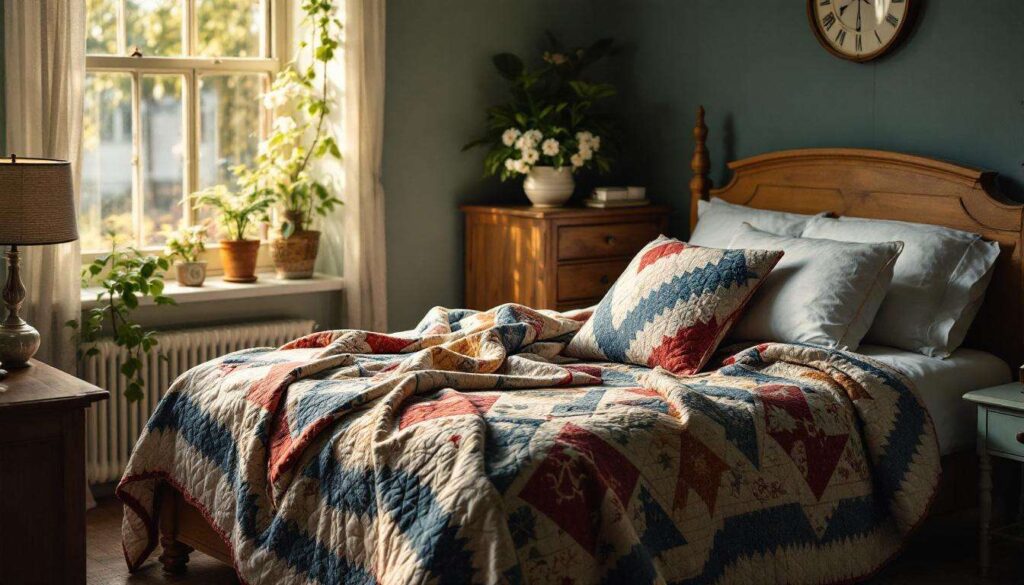
Transforming a bedroom from bland to captivating needn’t involve expensive interior designers or extensive renovations. One of the most overlooked treasures hiding in charity shops across the country offers an instant solution: vintage quilts. These textile heirlooms bring warmth, texture, and a story into any sleeping space, turning functional bedding into a focal point that speaks of craftsmanship and history. With their intricate patterns, faded colours, and tactile appeal, vintage quilts provide an affordable yet sophisticated way to inject personality into modern interiors whilst supporting charitable causes.
What is a vintage quilt ?
Defining vintage versus antique textiles
A vintage quilt typically refers to a handmade or machine-made quilted textile that is at least 20 to 30 years old but not quite old enough to be classified as antique. Antique quilts generally date back a century or more, whereas vintage pieces span from the 1920s through to the 1990s. These quilts were often created for practical warmth but evolved into decorative statements, featuring distinctive patterns that reflect the era of their creation.
Common styles and patterns
Vintage quilts showcase a remarkable variety of designs that reveal much about their origins:
- Patchwork quilts: assembled from fabric scraps in geometric arrangements, reflecting resourcefulness during times of scarcity
- Appliqué designs: featuring fabric shapes sewn onto a background, often with floral or pictorial motifs
- Log cabin patterns: constructed from strips arranged around a central square, symbolising hearth and home
- Dresden plate and grandmother’s flower garden: circular and hexagonal patterns popular in the mid-20th century
The materials used also vary considerably, from cotton feedsacks repurposed during wartime to vibrant synthetic fabrics from the 1960s and 1970s. Each quilt carries the aesthetic sensibilities of its time, making it a genuine piece of social history. Understanding these characteristics helps when selecting pieces that complement contemporary bedroom schemes whilst maintaining their historical integrity.
The aesthetic and functional benefits of vintage quilts
Adding texture and visual interest
Modern bedrooms often suffer from a lack of textural diversity, with smooth surfaces and minimalist aesthetics dominating contemporary design. A vintage quilt immediately addresses this deficit by introducing layers of visual complexity. The stitching patterns create subtle shadows and depth, whilst the combination of different fabrics offers tactile variation that invites touch. Whether draped across the foot of a bed or used as a bedspread, these textiles break up monotonous colour schemes and add dimension to flat surfaces.
Creating a unique focal point
Unlike mass-produced bedding available in high street shops, no two vintage quilts are identical. This uniqueness transforms them into conversation pieces that anchor a room’s design. The faded palette of a 1940s quilt can soften stark white walls, whilst the bold geometrics of a 1970s piece can energise a neutral space. Their imperfections—slight colour variations, minor repairs, or uneven stitching—add character rather than detract from their appeal.
Practical warmth and comfort
Beyond aesthetics, vintage quilts serve their original purpose remarkably well. The multiple layers and batting provide genuine insulation, making them ideal for chilly evenings. Their substantial weight offers a comforting sensation that lightweight modern duvets cannot replicate, promoting better sleep quality for many people.
| Benefit | Vintage Quilt | Modern Bedding |
|---|---|---|
| Visual uniqueness | One-of-a-kind patterns | Mass-produced designs |
| Textural interest | Layered, handcrafted | Smooth, uniform |
| Warmth | Substantial insulation | Varies by fill type |
| Character | Historical patina | New condition |
These combined advantages make vintage quilts particularly valuable for those seeking to create bedrooms with personality and depth. Once you appreciate their multifaceted appeal, the question becomes how best to incorporate them into existing décor schemes.
How to integrate a vintage quilt into your decor
Layering techniques for different bed sizes
Vintage quilts come in various dimensions, and many predate standardised mattress sizes. Rather than viewing this as a limitation, consider it an opportunity for creative layering. For a double or king-size bed, fold a smaller quilt lengthways and drape it across the foot, allowing the pattern to display prominently. Alternatively, layer two complementary quilts of different sizes to create depth, with the smaller piece positioned diagonally or horizontally over a larger neutral coverlet.
Colour coordination strategies
The faded hues of vintage textiles work surprisingly well with contemporary colour schemes. To achieve cohesion:
- Extract one or two colours from the quilt and repeat them in cushions, artwork, or accessories
- Use the quilt as the room’s colour anchor, keeping walls and furniture neutral
- Embrace contrast by pairing soft vintage pastels with crisp white linens
- Balance busy patterns with solid-coloured pillowcases and sheets
Alternative display methods
Quilts needn’t be confined to beds. Hanging a particularly striking example on the wall transforms it into textile art, protecting it from wear whilst showcasing its craftsmanship. Use a wooden quilt hanger or curtain rod with clips to avoid damaging the fabric. Smaller quilts can be draped over chairs, folded at the end of a window seat, or displayed on a quilt ladder leaning against the wall. These alternative presentations allow you to rotate pieces seasonally or change the room’s mood without major redecoration.
With these styling strategies in mind, the next step involves sourcing these treasures without breaking the bank.
Finding vintage quilts in charity shops
Where to look and when to shop
Charity shops represent the most accessible and affordable source for vintage quilts. Larger branches of Oxfam, British Heart Foundation, and Age UK often stock homeware sections where textiles appear regularly. Shops in market towns and rural areas frequently receive donations from house clearances, yielding particularly interesting finds. Timing matters: visit on weekday mornings when stock is freshly sorted, and establish relationships with staff who may alert you to incoming donations.
What to look for when inspecting quilts
Not every vintage quilt merits purchase. Before committing, examine the piece thoroughly:
- Overall condition: minor wear is acceptable, but extensive tears or missing sections require significant repair
- Odour: musty smells may indicate mould or mildew that proves difficult to eliminate
- Structural integrity: check that seams remain secure and batting hasn’t shifted excessively
- Staining: light discolouration adds character, but heavy stains may be permanent
- Colour vibrancy: whilst fading is expected, ensure patterns remain distinguishable
Typical pricing and negotiation
Charity shop quilts typically range from £10 to £40, depending on size, condition, and location. This represents exceptional value compared to reproduction vintage-style bedding, which often costs upwards of £100. Most charity shops maintain fixed pricing, but end-of-day discounts or sales periods may offer opportunities for better deals. Remember that your purchase supports charitable work, making any expenditure doubly beneficial.
Once you’ve acquired your vintage quilt, proper care ensures it remains a bedroom feature for years to come.
Tips for maintaining and preserving a vintage quilt
Cleaning methods for delicate fabrics
Vintage textiles require gentle handling to prevent damage. For lightly soiled quilts, spot-cleaning with mild detergent and cool water often suffices. When full washing becomes necessary, hand-washing in a bathtub with cool water and specialist textile cleaner proves safest. Avoid wringing or twisting; instead, press water out gently and dry flat on clean towels away from direct sunlight. Machine washing risks tearing seams and causing colours to run, though sturdy cotton quilts from the 1960s onwards may tolerate delicate cycles.
Storage solutions to prevent deterioration
When not in use, store quilts in breathable cotton bags or wrapped in acid-free tissue paper. Avoid plastic containers, which trap moisture and encourage mildew. Refold periodically along different lines to prevent permanent creases. Keep stored textiles in cool, dry locations away from attics or basements where temperature fluctuations and humidity cause damage.
Addressing minor repairs
Small holes or loose seams needn’t render a quilt unusable. Basic hand-stitching skills allow for discrete repairs using thread that matches the original colours. For valuable or particularly fragile pieces, consult textile conservation specialists who can stabilise damage without compromising historical integrity.
Beyond personal enjoyment, choosing vintage quilts carries broader implications worth considering.
The ecological and social impact of vintage quilts
Reducing textile waste through reuse
The fashion and homeware industries generate enormous environmental costs, with textile production consuming vast quantities of water and energy. By purchasing pre-existing quilts, you actively participate in the circular economy, extending the lifespan of items that might otherwise end up in landfill. This choice reduces demand for new manufacturing whilst giving beautiful objects continued purpose.
Supporting charitable organisations
Every vintage quilt purchased from a charity shop directly funds vital services. Whether supporting medical research, poverty alleviation, or community programmes, your bedroom upgrade contributes to social good. This dual benefit—acquiring something beautiful whilst helping others—adds meaningful dimension to interior design choices.
Preserving craft traditions and history
Vintage quilts represent disappearing skills and cultural practices. Many were created by women whose creative output received little recognition, making each piece a testament to unacknowledged artistry. By valuing and displaying these textiles, we honour their makers and keep traditional craftsmanship visible in contemporary life. This preservation of material culture connects us to past generations and their resourcefulness, offering perspective in our disposable age.
Vintage quilts offer far more than simple bedroom decoration. They provide an accessible entry point into sustainable living, support charitable causes, and transform impersonal spaces into rooms with genuine character. The abundance of these textiles in charity shops means anyone can afford to enhance their home whilst making environmentally and socially conscious choices. Whether you’re drawn to their aesthetic appeal, historical significance, or practical warmth, vintage quilts prove that the most effective design solutions often lie not in purchasing new items but in rediscovering the overlooked treasures already in circulation.