



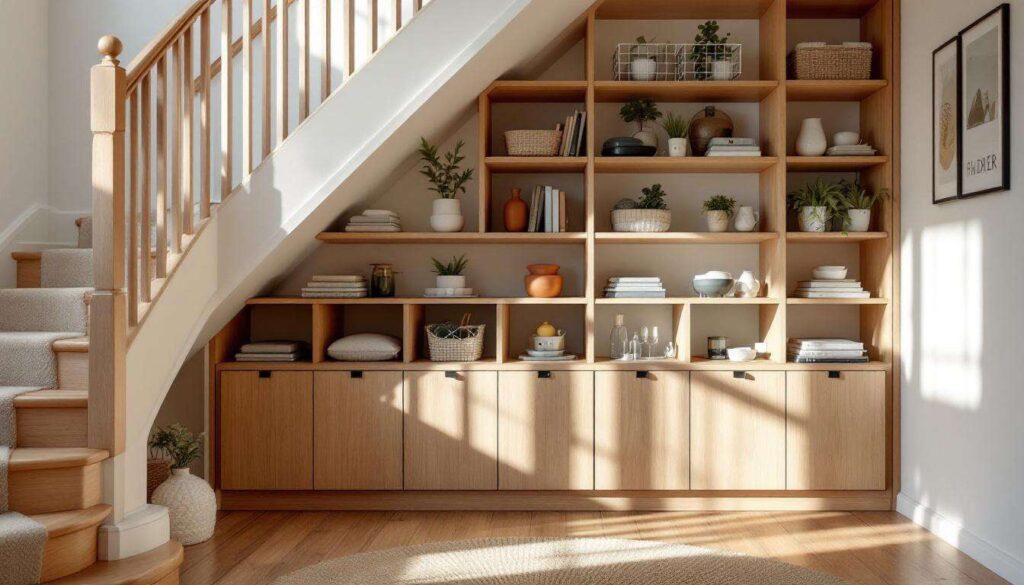
Homeowners across the country are discovering the untapped potential hiding beneath their staircases. With property prices continuing to climb and living spaces becoming increasingly precious, the search for creative storage solutions has intensified dramatically. The surge in interest for understairs storage reflects a broader shift towards maximising every square inch of available space, transforming previously neglected areas into highly functional zones that enhance both organisation and aesthetic appeal.
Maximising the space under your staircase
Understanding your available dimensions
The first step in creating effective understairs storage involves carefully measuring the space you have to work with. Most staircases offer between three to six cubic metres of potential storage volume, though this varies considerably depending on your home’s architecture. The triangular nature of the space presents unique challenges, but with thoughtful planning, these awkward angles can become valuable assets rather than obstacles.
- Measure the height at various points along the staircase
- Calculate the depth from the wall to the stair risers
- Identify any structural elements that cannot be moved
- Consider access points and door swing clearances
- Account for skirting boards and existing features
Planning for accessibility and functionality
The most successful understairs storage solutions prioritise ease of access whilst maintaining the visual harmony of your interior. Consider how frequently you’ll need to retrieve items from different sections of the space. The tallest area nearest the top of the stairs works brilliantly for everyday essentials, whilst the lower, more awkward sections can house seasonal items or belongings you access less regularly.
Understanding these spatial dynamics sets the foundation for choosing the most appropriate storage solution for your specific needs and budget.
Affordable solutions for built-in storage
Cost-effective materials that deliver quality
Creating built-in understairs storage needn’t drain your renovation budget. Many homeowners assume bespoke carpentry comes with an eye-watering price tag, but several affordable alternatives deliver impressive results. Medium-density fibreboard (MDF) painted to match your existing décor offers a sleek, professional finish at a fraction of the cost of solid wood, with basic installations starting from around £400 to £800 for a simple cupboard design.
| Storage Type | Estimated Cost | Installation Time |
|---|---|---|
| Basic cupboard with shelving | £400-£800 | 1-2 days |
| Pull-out drawer system | £600-£1,200 | 2-3 days |
| Fitted wardrobe solution | £800-£1,500 | 2-4 days |
| Custom shelving unit | £300-£700 | 1 day |
DIY versus professional installation
Competent DIY enthusiasts can reduce costs significantly by tackling simpler projects themselves. Flat-pack storage systems designed specifically for understairs spaces are widely available, with comprehensive instructions that make installation manageable for those with basic carpentry skills. However, more complex designs involving electrical work for integrated lighting or intricate custom joinery benefit from professional expertise to ensure structural integrity and a polished finish.
With budget-conscious options established, the question becomes how to conceal your storage whilst maintaining seamless access.
Incorporating concealed shelving
Hidden storage that blends with your interior
Concealed shelving represents one of the most elegant approaches to understairs storage, creating clean lines that don’t interrupt the flow of your living space. Push-to-open mechanisms eliminate the need for visible handles, allowing doors to sit flush with surrounding walls. This minimalist aesthetic works particularly well in contemporary interiors, where maintaining uncluttered surfaces takes priority.
- Magnetic catches provide silent, secure closure
- Soft-close hinges prevent slamming and extend longevity
- Panel doors can be painted to match adjacent walls
- Integrated toe kicks maintain the illusion of solid wall space
Maximising vertical space with adjustable systems
The beauty of concealed shelving systems lies in their adaptability. Adjustable shelving tracks allow you to reconfigure the interior layout as your storage needs evolve, accommodating everything from shoe collections to household cleaning supplies. Installing shelves at varying heights ensures you’re not wasting the precious vertical space, with deeper shelves positioned lower down where the ceiling height permits, and shallower options near the top where the staircase restricts clearance.
Whilst concealed options offer visual simplicity, some homeowners prefer dedicated hanging storage for specific items.
Creating an understairs wardrobe
Tailored hanging solutions for clothing storage
Transforming your understairs area into a functional wardrobe provides valuable hanging space, particularly beneficial in homes lacking adequate bedroom storage. A carefully designed system can accommodate full-length coats near the tallest section, transitioning to shorter hanging rails for jackets and shirts as the ceiling slopes downward. This graduated approach maximises every centimetre whilst ensuring garments hang without creasing.
Incorporating additional wardrobe features
Beyond simple hanging rails, a well-appointed understairs wardrobe can include numerous practical elements. Pull-out shoe racks, integrated drawers for accessories, and dedicated sections for bags and luggage transform the space into a comprehensive storage hub. Adding a small mirror to the inside of the door creates a convenient spot for last-minute appearance checks before heading out, whilst battery-operated LED strips provide adequate illumination without requiring complex electrical work.
For those seeking even greater organisation, drawer systems offer another dimension of storage capability.
Optimising with pull-out drawers
The advantages of drawer-based storage
Pull-out drawer systems deliver superior accessibility compared to traditional cupboard shelving, allowing you to view and reach items at the back without awkward stretching or rummaging. Heavy-duty drawer runners rated for substantial weight ensure smooth operation even when fully loaded with books, tools, or household supplies. The modular nature of drawer systems means you can specify different depths and heights to suit the unique profile of your understairs space.
- Shallow drawers work perfectly for stationery and small items
- Medium-depth options accommodate toys and games
- Deep drawers can store bulky items like winter blankets
- Divided inserts keep contents organised and visible
Installation considerations for drawer systems
Quality drawer systems require precise installation to function correctly over time. The carcass must be perfectly square and level, with runners aligned accurately to prevent binding or uneven movement. Whilst this precision demands either advanced DIY skills or professional fitting, the investment pays dividends in long-term reliability and user satisfaction. Soft-close mechanisms add a premium feel whilst protecting both the drawers and their contents from impact damage.
Beyond storage, understairs spaces can serve entirely different purposes when thoughtfully reimagined.
Designing a functional home office nook
Converting dead space into productive workspace
The rise in remote working has prompted many homeowners to seek dedicated office space within their existing footprint. An understairs area, particularly one with reasonable ceiling height, can be transformed into a compact yet highly functional workspace. A fitted desk following the line of the stairs, combined with overhead shelving for books and files, creates an efficient work zone that can be concealed behind doors when not in use.
Essential elements for an effective office nook
A successful understairs office requires careful attention to practical details beyond simple desk installation. Adequate lighting is paramount, with task lighting positioned to eliminate shadows on your work surface. Cable management systems keep technology leads tidy and prevent tangling, whilst integrated power sockets eliminate the need for trailing extension cables. Acoustic considerations matter too, with sound-absorbing panels helping to reduce noise transmission if your stairs are in a high-traffic area.
| Feature | Importance | Typical Cost |
|---|---|---|
| Fitted desk surface | Essential | £200-£500 |
| Task lighting | Essential | £50-£150 |
| Overhead storage | Highly recommended | £150-£400 |
| Cable management | Recommended | £30-£80 |
The understairs area represents one of the most overlooked opportunities in home design, yet with modest investment and thoughtful planning, it can be transformed into highly functional space that adds genuine value to daily life. Whether you opt for traditional storage cupboards, sophisticated drawer systems, dedicated wardrobe space, or even a compact home office, the key lies in understanding your specific needs and choosing solutions that align with both your budget and lifestyle. The dramatic increase in searches for understairs storage ideas reflects a growing awareness that every corner of our homes can contribute to better organisation and enhanced living. By implementing any of these seven approaches, you’ll join countless homeowners who have discovered that the space beneath your stairs offers far more potential than simply housing the vacuum cleaner and forgotten boxes.