



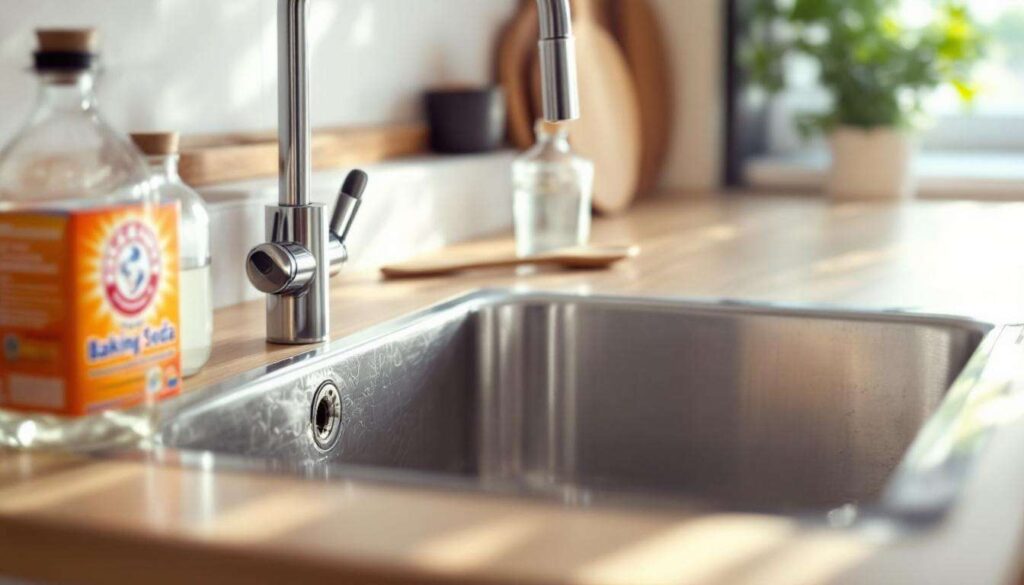
Blocked drains disrupt daily routines and create unpleasant odours throughout the home. Rather than reaching for harsh chemical cleaners or calling an expensive plumber, a simple solution sits in most kitchen cupboards. Baking soda offers a natural, effective method to clear minor to moderate blockages quickly, restoring proper drainage without damaging pipes or harming the environment.
Introduction to using baking soda
The science behind baking soda’s cleaning power
Baking soda, scientifically known as sodium bicarbonate, possesses alkaline properties that make it exceptionally effective at breaking down organic matter. When introduced into a blocked drain, this common household ingredient reacts with acidic substances found in grease, soap scum and food residues. The resulting chemical reaction produces carbon dioxide gas, which creates pressure and agitation within the pipe, helping to dislodge stubborn blockages.
Why this method works for most household drains
Most domestic drain blockages stem from accumulated debris rather than structural problems. Hair, soap residue, cooking oils and food particles gradually build up along pipe walls, restricting water flow. Baking soda addresses these common culprits through both mechanical and chemical action. The granular texture provides mild abrasion whilst the alkaline nature dissolves fatty deposits and neutralises odour-causing bacteria.
- Safe for all standard plumbing materials including PVC, copper and cast iron
- Non-toxic formulation poses no health risks to household members or pets
- Readily available in supermarkets at minimal cost
- Produces no harmful fumes during application
Understanding these fundamental properties helps explain why this traditional remedy remains popular amongst homeowners seeking practical solutions. The effectiveness of baking soda naturally leads to examining its specific advantages over commercial alternatives.
Why choose baking soda to unclog drains
Environmental and health considerations
Commercial drain cleaners typically contain caustic chemicals such as sodium hydroxide or sulphuric acid. These substances pose significant risks to both human health and aquatic ecosystems. Baking soda presents a dramatically safer alternative, breaking down completely into harmless compounds. Households with children, elderly residents or individuals with respiratory sensitivities particularly benefit from avoiding toxic fumes associated with conventional products.
Cost comparison with commercial products
| Product Type | Average Cost | Environmental Impact | Effectiveness |
|---|---|---|---|
| Baking soda method | £0.50-£1.00 | Minimal | Moderate blockages |
| Chemical drain cleaner | £4.00-£8.00 | High | Moderate to severe |
| Professional plumber | £60.00-£150.00 | Varies | All blockages |
Protection for your plumbing system
Harsh chemical cleaners generate extreme heat during their reactions, potentially weakening pipe joints and degrading older plumbing materials. Regular use accelerates pipe deterioration, leading to costly repairs. Baking soda produces a gentle fizzing action that clears blockages without subjecting pipes to damaging temperatures or corrosive substances. This gentler approach extends the lifespan of household plumbing infrastructure whilst maintaining cleaning effectiveness.
With these compelling advantages established, attention turns to the practical preparation required for optimal results.
Effectively preparing your cleaning solution
Gathering necessary materials
Successful drain clearing requires minimal equipment, most of which already exists in typical households. Assembling everything beforehand ensures a smooth, uninterrupted process:
- 180-240ml baking soda (approximately three-quarters to one full cup)
- 120ml white vinegar (roughly half a cup)
- One kettle of freshly boiled water
- Drain plug or plate to cover the opening
- Rubber gloves for hygiene
- Old cloth or towel for spills
Pre-treatment preparation steps
Before introducing cleaning agents, remove standing water from the affected sink or basin using a cup or small container. This allows direct contact between the baking soda and the blockage site. Wearing rubber gloves, clear any visible debris from the drain opening, including hair clumps or food particles. Boil a full kettle of water and set aside, ensuring it remains hot for the final rinsing stage.
Optimising ingredient ratios
Whilst standard measurements work for most situations, adjusting quantities based on blockage severity improves outcomes. For minor slow drainage, use the lower recommended amounts. Stubborn blockages benefit from increased baking soda quantities, up to 300ml. The vinegar-to-baking-soda ratio should remain approximately 1:2 to ensure adequate chemical reaction without excessive liquid that might flush ingredients through before they work effectively.
With materials assembled and preparations complete, the actual unclogging process can commence efficiently.
Steps to unclog a drain in under 5 minutes
The application sequence
Pour the measured baking soda directly into the drain opening, using a funnel if necessary to prevent spillage. Tap the sides of the sink to help the powder settle deeper into the pipe. Immediately follow with the white vinegar, pouring steadily to ensure thorough mixing with the baking soda. A vigorous fizzing reaction should begin instantly, producing foam and bubbles.
Containing the chemical reaction
Quickly cover the drain with a plug or inverted plate to trap the carbon dioxide gas within the pipes. This containment increases pressure, forcing the fizzing action deeper into the blockage rather than escaping harmlessly into the air. The confined reaction creates greater agitation around debris, enhancing the breaking-down process. Maintain this seal for 30 minutes minimum, though longer periods up to one hour increase effectiveness for stubborn clogs.
Final flushing procedure
After the waiting period, remove the cover and slowly pour the boiled water down the drain in stages. Begin with approximately one-third of the kettle, pause briefly, then add the remainder. The hot water dissolves loosened grease and flushes dislodged debris through the system. Run the cold tap for 30 seconds to verify restored flow and cool the pipes.
Sometimes initial attempts require reinforcement, which brings us to addressing persistent blockages.
What to do if the drain remains blocked
Repeating the treatment safely
Persistent blockages often respond to a second application using the same method. Wait at least two hours between attempts to allow pipes to cool and residual moisture to evaporate. Increase baking soda quantities slightly for the second treatment, and extend the reaction time to 45 minutes. Multiple gentle treatments prove more effective than single aggressive applications and maintain pipe integrity.
Mechanical intervention techniques
When chemical methods prove insufficient, physical removal becomes necessary. A plunger creates hydraulic pressure that can dislodge blockages beyond the baking soda’s reach. Ensure adequate water covers the plunger cup, then apply firm, rhythmic pressure. Alternatively, a drain snake or wire coat hanger straightened with a small hook can manually extract hair and solid obstructions.
Recognising when professional help is required
Certain situations exceed DIY capabilities and warrant professional assessment:
- Multiple drains backing up simultaneously, suggesting main sewer line issues
- Foul sewage odours persisting after cleaning attempts
- Water backing up into other fixtures when one is used
- Gurgling sounds from toilets or drains indicating venting problems
- Complete blockages preventing any water drainage
Addressing these warning signs promptly prevents extensive damage and costly repairs. Beyond reactive measures, preventative strategies offer long-term solutions.
Tips to avoid future blockages
Regular maintenance schedule
Implementing a monthly preventative treatment maintains clear drains before problems develop. Apply the baking soda and vinegar method on the last weekend of each month, treating all household drains including those showing no symptoms. This routine removes gradual accumulations before they compact into solid blockages, significantly reducing emergency situations.
Daily habits that protect drains
Simple behavioural changes dramatically reduce blockage frequency. Install mesh screens over all drain openings to catch hair, food particles and debris. Scrape plates thoroughly before washing, disposing of food waste in bins rather than sinks. Avoid pouring cooking oils or fats down drains, as these solidify within pipes and trap other materials. Run hot water for 30 seconds after each sink use to flush away soap residue and minor deposits.
Bathroom-specific prevention strategies
| Problem Source | Prevention Method | Frequency |
|---|---|---|
| Hair accumulation | Use drain covers, brush hair before showering | Daily |
| Soap scum build-up | Switch to liquid soap, flush with hot water | After each use |
| Toothpaste residue | Rinse thoroughly, monthly baking soda treatment | Weekly/Monthly |
Baking soda provides an accessible, environmentally responsible solution for common drain blockages. This method combines chemical effectiveness with mechanical action, clearing most household clogs within minutes without expensive products or professional assistance. Regular application as preventative maintenance reduces emergency situations whilst protecting plumbing infrastructure from harsh chemical damage. By adopting simple daily habits alongside monthly treatments, homeowners maintain free-flowing drains and avoid the inconvenience and expense of severe blockages. This natural approach demonstrates that effective home maintenance need not compromise health, environmental responsibility or household budgets.