



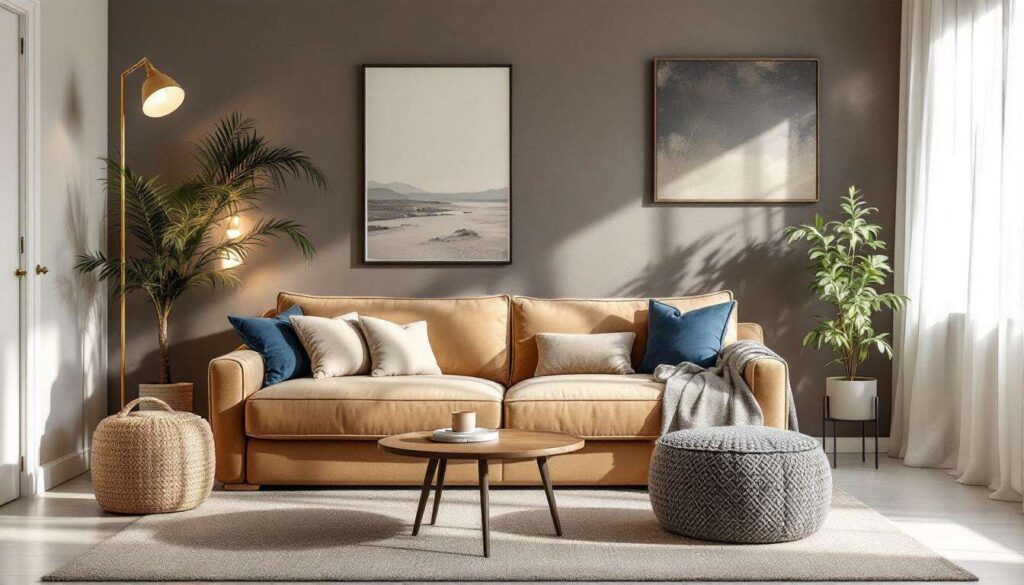
The sofa has evolved from a simple seating solution into the defining element that anchors every living space. Designers increasingly recognise its role as more than furniture—it’s the foundation upon which entire rooms are built, the piece that dictates flow, atmosphere and functionality. As we look ahead, five distinct trends are reshaping how we think about this essential element, each reflecting broader shifts in how we live, work and connect within our homes.
Material trend: nature and sustainability in the spotlight
The movement towards eco-conscious materials has transformed from niche preference to mainstream expectation. Designers are championing sofas crafted from organic fabrics, reclaimed woods and responsibly sourced components that minimise environmental impact without compromising on aesthetic appeal.
Natural fibres taking centre stage
Linen, hemp and organic cotton are experiencing a renaissance in upholstery choices. These materials offer breathability and durability whilst maintaining a tactile quality that synthetic alternatives struggle to replicate. The natural texture variations create visual interest, adding depth to minimalist and maximalist schemes alike.
Sustainable production methods
Manufacturers are adopting circular economy principles, designing sofas with longevity and eventual recyclability in mind. Key features include:
- Modular components that can be replaced individually rather than requiring complete replacement
- Water-based adhesives and low-VOC finishes that reduce indoor air pollution
- Transparent supply chains that verify ethical sourcing of materials
- Frame construction using FSC-certified timber or recycled metals
This commitment to sustainability extends beyond the product itself, with brands increasingly offering take-back programmes and repair services that extend the lifespan of each piece. The shift towards natural and sustainable materials sets the foundation for understanding how form and function are equally evolving.
Modular shapes: flexibility at the heart of decor
The traditional three-seater sofa is giving way to configurable systems that adapt to changing needs and spatial constraints. This trend reflects our increasingly fluid approach to domestic life, where rooms serve multiple purposes throughout the day.
Reconfigurable seating arrangements
Modular sofas consist of individual sections that can be rearranged to suit different occasions. A linear configuration for formal entertaining transforms into an L-shape for casual family gatherings, or separates into independent seating islands when hosting larger groups. This versatility proves particularly valuable in open-plan spaces where furniture must delineate zones without permanent barriers.
Adaptability across life stages
The appeal of modular design extends to its ability to grow with changing circumstances. Young professionals might begin with a compact two-seater, adding sections as their space expands. Families appreciate the option to reconfigure around children’s play areas, whilst those downsizing can reduce their sofa’s footprint without purchasing entirely new furniture.
| Configuration type | Ideal room size | Typical pieces |
|---|---|---|
| Compact modular | 12-15 m² | 2-3 sections |
| Medium sectional | 18-25 m² | 4-5 sections |
| Large configuration | 30+ m² | 6+ sections |
The flexibility inherent in modular design finds its visual counterpart in the chromatic choices that are simultaneously gaining momentum.
Bold colours: the return of vivid hues
After years dominated by neutral palettes, saturated colours are reclaiming their place in interior design. Designers are encouraging clients to view the sofa as an opportunity for chromatic expression rather than playing it safe with beige and grey.
Statement shades making an impact
Deep jewel tones—emerald green, sapphire blue, ruby red—are appearing in showrooms and design magazines with increasing frequency. These rich hues create focal points that anchor rooms and provide visual weight without overwhelming smaller spaces. The key lies in balancing bold upholstery with complementary surroundings that allow the sofa to command attention.
Colour psychology in living spaces
The choice of sofa colour influences mood and perception in measurable ways:
- Warm terracotta and burnt orange tones create welcoming, energising atmospheres
- Cool blues and greens promote calm and concentration
- Vibrant yellows and corals inject optimism and creativity
- Deep purples and burgundies add sophistication and drama
Designers recommend considering natural light exposure when selecting bold colours, as north-facing rooms benefit from warmer tones whilst south-facing spaces can handle cooler palettes. This renewed embrace of colour works in harmony with approaches that prioritise restraint and refinement.
Reimagined minimalism: when simplicity meets elegance
Contemporary minimalism has evolved beyond stark austerity into something more nuanced and inviting. The new interpretation maintains clean lines and uncluttered forms whilst incorporating warmth through texture, proportion and subtle detail.
Refined silhouettes and proportions
Today’s minimalist sofas feature slender profiles that appear to float above the floor, achieved through recessed legs or plinth bases. The emphasis on negative space creates visual lightness, making rooms feel more expansive. Armrests have become streamlined, often integrated seamlessly with backrests to form continuous horizontal lines.
Textural complexity within simplicity
The apparent simplicity conceals thoughtful layering of materials and finishes. A monochromatic sofa might combine bouclé upholstery with brushed metal legs and contrast piping, creating interest through tactile variation rather than decorative embellishment. This approach demonstrates that minimalism need not equate to coldness when executed with attention to sensory detail.
As aesthetic purity advances, so too does the integration of functional innovation that remains invisible until needed.
Integrated technology: smart sofas for everyday life
Technology is becoming seamlessly woven into sofa design, enhancing functionality without compromising aesthetics. The most successful implementations remain discreet and intuitive, activating only when required.
Connectivity and charging solutions
Built-in USB ports and wireless charging pads eliminate the tangle of cables that once cluttered living spaces. These features are typically concealed within armrests or beneath seat cushions, maintaining clean lines whilst ensuring devices remain powered. Some models incorporate Bluetooth speakers within the frame, delivering audio without visible hardware.
Adjustable comfort mechanisms
Electric reclining functions have become quieter and more responsive, controlled via touch panels or smartphone applications. Advanced models offer:
- Memory settings that recall preferred positions for different users
- Heating elements for therapeutic warmth
- Massage functions targeting specific pressure points
- Ambient lighting integrated into the base or underside
The challenge lies in ensuring these technological additions enhance rather than dominate the user experience, remaining secondary to fundamental comfort and design integrity. This technological sophistication complements the practical versatility that defines contemporary expectations.
Multiple functionalities: sofas ready for anything
The contemporary sofa must perform numerous roles beyond seating. Space constraints and changing lifestyles demand multi-purpose furniture that adapts to diverse activities throughout the day.
Convertible sleeping solutions
Sofa beds have shed their reputation for discomfort, with manufacturers developing mechanisms that deploy genuinely supportive mattresses within streamlined frames. Pull-out systems now operate smoothly enough for daily use, making them viable for studio apartments or guest rooms that serve multiple functions.
Integrated storage capabilities
Hidden compartments beneath seats or within armrests provide valuable storage without visual clutter. These spaces accommodate:
- Blankets and cushions for instant comfort adjustments
- Remote controls and reading materials
- Seasonal items that would otherwise require separate storage solutions
- Children’s toys that can be quickly tidied away
| Functionality | Space saving | Typical cost increase |
|---|---|---|
| Storage compartment | 0.3-0.5 m³ | 15-25% |
| Sofa bed mechanism | Eliminates guest bed | 30-50% |
| Adjustable headrests | Minimal | 10-15% |
These functional enhancements transform the sofa from passive furniture into an active participant in daily routines, justifying its position as the true epicentre of domestic life.
The sofa’s evolution reflects broader changes in how we inhabit our homes, balancing aesthetic ambition with practical necessity. From sustainable materials to smart technology, from bold colours to adaptable forms, these trends demonstrate that the most essential piece of furniture continues to innovate. Designers’ insistence on its central importance proves well-founded—the sofa remains the anchor point around which successful interiors are built, deserving thoughtful consideration in any design scheme.