



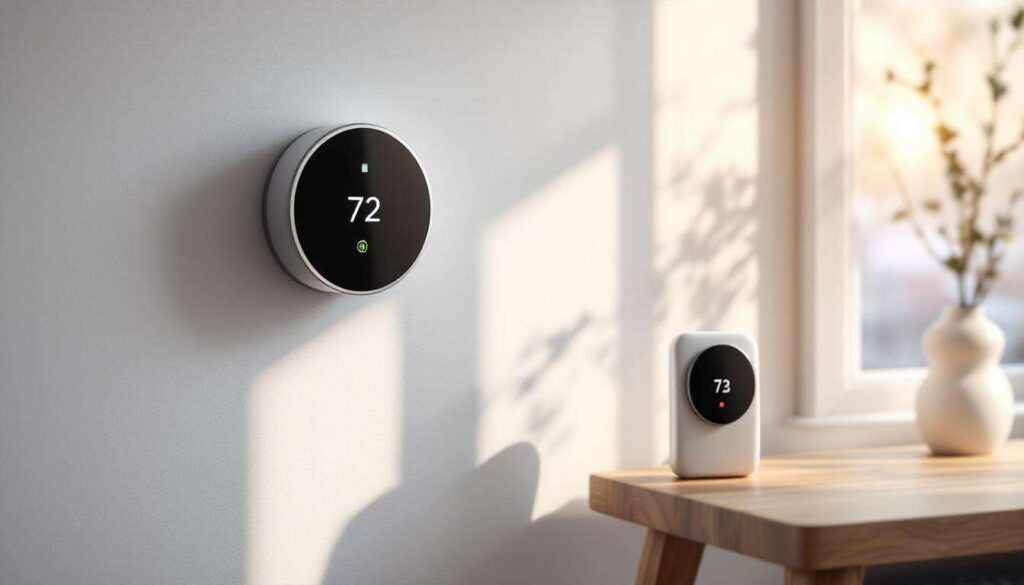
Rising energy costs continue to challenge British households, prompting many to reconsider how they heat their homes. The debate between smart thermostats and manual controls has intensified as families seek practical solutions to reduce expenditure without sacrificing comfort. Understanding the genuine financial implications of each option requires examining not just initial costs, but long-term savings, usability, and environmental considerations. This analysis explores whether technological innovation truly delivers on its promise of lower bills, or whether traditional manual controls remain the more economical choice for UK homes this winter.
Smart thermostats: an energy revolution ?
How smart thermostats function
Smart thermostats represent a significant departure from conventional heating controls. These devices connect to home Wi-Fi networks, enabling remote access via smartphone applications. They utilise machine learning algorithms to analyse household patterns, automatically adjusting temperatures based on occupancy, weather forecasts, and user preferences. Unlike traditional programmers that follow rigid schedules, smart thermostats adapt in real-time, reducing heating when rooms are empty and pre-warming spaces before residents return.
The technology incorporates multiple sensors that detect presence, humidity, and ambient temperature. Many models integrate with other smart home devices, creating comprehensive energy management systems. Voice control through platforms like Amazon Alexa or Google Assistant adds convenience, whilst detailed energy reports provide insights into consumption patterns.
Potential savings claims
Manufacturers frequently cite impressive savings figures, with some suggesting reductions of 20-30% on heating bills. However, these estimates often depend on specific conditions. The Energy Saving Trust offers more conservative projections, indicating that households replacing inefficient manual controls could save approximately £75-£150 annually. Key factors influencing actual savings include:
- Existing heating system efficiency
- Property insulation quality
- Household occupancy patterns
- Previous thermostat usage habits
- Correct installation and configuration
| Property type | Average annual saving | Payback period |
|---|---|---|
| Well-insulated modern home | £100-£150 | 18-24 months |
| Older property, poor insulation | £50-£75 | 30-36 months |
| Flat or small dwelling | £40-£60 | 36-48 months |
Understanding these nuances helps set realistic expectations about what smart technology can genuinely achieve in different circumstances.
Operational modes: manual vs smart
Manual control characteristics
Traditional manual thermostats operate through straightforward mechanical or basic digital mechanisms. Users set desired temperatures manually, with simple programmers allowing scheduled heating periods. This approach offers complete user control but requires active management. Households must remember to adjust settings when routines change, and manual systems cannot respond automatically to unexpected absences or weather fluctuations.
The simplicity of manual controls means fewer potential failure points and no dependency on internet connectivity. However, this simplicity comes at the cost of flexibility, often resulting in heating empty homes or returning to cold properties.
Smart automation advantages
Smart thermostats excel through adaptive learning and automation. After an initial learning period, these devices create personalised heating schedules without requiring constant user input. Geolocation features detect when residents leave or approach home, adjusting heating accordingly. Weather compensation algorithms factor in external temperatures, optimising indoor comfort whilst minimising energy waste.
Advanced features include:
- Room-by-room temperature control with additional sensors
- Holiday modes for extended absences
- Energy usage tracking and detailed analytics
- Integration with renewable energy systems
- Maintenance alerts and system diagnostics
These capabilities theoretically eliminate the inefficiencies associated with human forgetfulness or inconvenient manual adjustments, though they introduce new considerations around technology reliability and user engagement.
Impact on energy bills: which is more cost-effective ?
Initial investment comparison
The upfront cost difference between manual and smart controls remains substantial. Basic manual thermostats cost £15-£40, whilst programmable models range from £30-£80. Smart thermostats typically require £150-£250, with professional installation adding £50-£100. This significant initial outlay must be recouped through energy savings, making the payback period a crucial consideration.
Some energy suppliers offer smart thermostats at reduced rates or as part of tariff packages, potentially reducing this barrier. Government schemes occasionally provide grants for energy-efficient upgrades, though availability varies.
Real-world savings analysis
Independent studies reveal that actual savings often fall short of manufacturer claims. Research by consumer organisations indicates that typical households save between 8-15% on heating costs with smart thermostats, translating to £60-£120 annually at current energy prices. These figures depend heavily on previous heating habits: families already managing manual controls efficiently see minimal improvement, whilst those previously heating continuously or irregularly benefit most.
| Previous heating behaviour | Likely annual saving | Smart thermostat benefit |
|---|---|---|
| Constant heating, rarely adjusted | £120-£180 | High |
| Basic schedule, occasional adjustments | £60-£100 | Moderate |
| Actively managed manual control | £30-£50 | Low |
The financial case for smart thermostats strengthens in larger properties with multiple heating zones and households with irregular schedules, where automation provides genuine efficiency gains that manual management cannot easily replicate.
Ease of use and comfort: a competitive duel
Learning curves and user experience
Manual thermostats offer immediate comprehension: turn the dial or press buttons to adjust temperature. This simplicity appeals particularly to older residents or those uncomfortable with technology. However, programming complex schedules on manual systems can prove frustrating, with confusing interfaces often leading to incorrect settings.
Smart thermostats require initial setup and familiarisation with mobile applications. Whilst interfaces have improved dramatically, some users find the array of features overwhelming. The dependency on smartphones and stable internet connections can frustrate those experiencing connectivity issues or preferring physical controls.
Comfort and convenience factors
Smart thermostats excel in maintaining consistent comfort through predictive heating and remote access. The ability to adjust temperatures whilst away from home prevents returning to freezing properties or wasting energy heating empty spaces. Detailed scheduling options accommodate complex routines, with different settings for weekdays, weekends, and individual rooms.
Comfort advantages include:
- Pre-warming bedrooms before sleep
- Reducing temperatures during known absence periods
- Adjusting heating based on actual weather conditions
- Creating optimal temperatures for different activities
- Eliminating manual adjustment inconvenience
Manual controls can achieve similar comfort levels but require diligent attention and frequent adjustments, which many households find impractical amid busy schedules. The convenience factor of smart technology represents genuine value beyond pure financial savings, though quantifying this benefit remains subjective.
Sustainability and environmental impact
Carbon footprint considerations
Reducing energy consumption directly lowers carbon emissions, making efficient heating controls an environmental priority. Smart thermostats contribute to sustainability goals by optimising heating patterns and reducing waste. A typical household saving 15% on heating translates to approximately 300-400 kg of CO₂ reduction annually, equivalent to driving 1,000-1,300 fewer miles.
However, the environmental calculation must include manufacturing impacts. Smart thermostats require rare earth minerals, electronic components, and energy-intensive production processes. Their limited lifespan compared to simple manual controls raises questions about overall lifecycle sustainability.
Long-term environmental benefits
Beyond individual household savings, smart thermostats facilitate grid-level energy management. Integration with time-of-use tariffs enables heating during periods of renewable energy abundance, reducing reliance on fossil fuel generation. Demand response programmes allow energy suppliers to temporarily adjust smart thermostat settings during peak periods, helping balance grid load and prevent inefficient peaker plant activation.
These broader system benefits include:
- Supporting renewable energy integration
- Reducing peak demand strain on infrastructure
- Enabling more efficient energy distribution
- Facilitating transition to low-carbon heating systems
- Providing data for improved energy policy
The collective environmental impact of widespread smart thermostat adoption potentially exceeds individual household benefits, contributing to national decarbonisation targets and grid modernisation efforts essential for achieving net-zero commitments.
Conclusion: what choice for this British winter ?
The decision between smart thermostats and manual controls depends on individual circumstances rather than universal superiority. Smart technology offers genuine savings potential, particularly for households with irregular schedules, larger properties, or previously inefficient heating habits. The convenience and comfort benefits add value beyond pure financial calculations, whilst environmental advantages support broader sustainability goals. However, the substantial initial investment requires several years to recoup through energy savings, and households already managing manual controls efficiently may see limited financial benefit. Manual systems remain viable for budget-conscious consumers, smaller dwellings, or those uncomfortable with technology dependency. Ultimately, maximising energy efficiency requires proper insulation, regular boiler maintenance, and mindful heating habits regardless of control type. Smart thermostats represent powerful tools for optimising consumption, but they complement rather than replace fundamental energy-saving principles. British households should assess their specific heating patterns, property characteristics, and budget constraints before determining which option genuinely delivers better value this winter.