

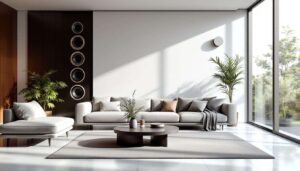

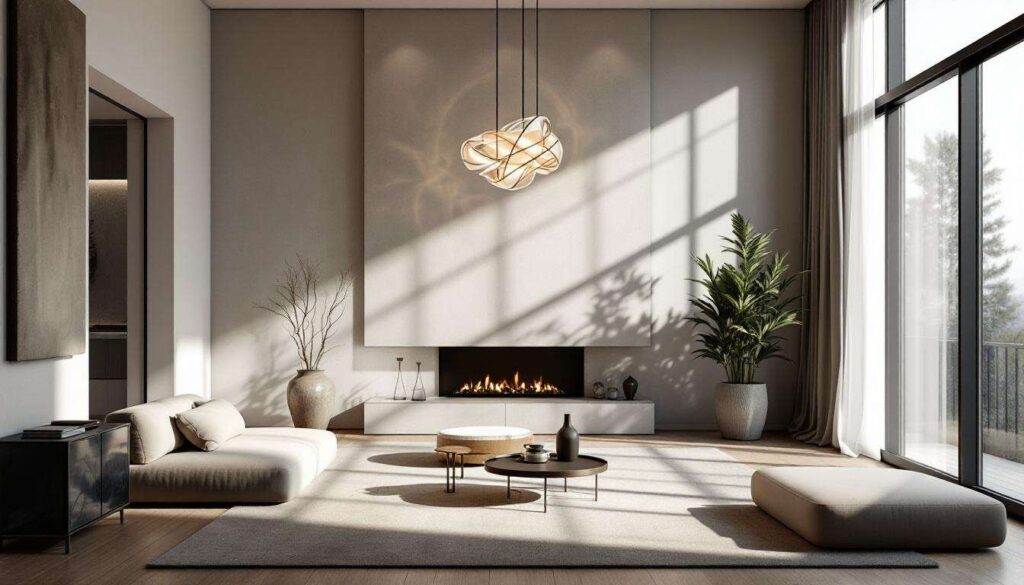
Lighting has long been considered a purely functional element in interior design, but the landscape is shifting dramatically. Homeowners and designers alike are discovering that a single, carefully chosen pendant can serve as both illumination and art, transforming the entire character of a space. This movement towards sculptural lighting represents a fundamental departure from the minimalist aesthetic that dominated the previous decade, where recessed spotlights reigned supreme. The rise of statement fixtures signals a renewed appreciation for visible design elements that celebrate craftsmanship and individuality.
The emergence of sculptural lighting in 2026
A shift in design philosophy
The interior design community has witnessed a remarkable evolution in lighting preferences. Where once the mantra was “less is more”, contemporary spaces now embrace fixtures that command attention and spark conversation. This transformation reflects a broader cultural shift towards maximalism and the desire for homes that express personality rather than conform to sterile minimalism.
Several factors have contributed to this emergence:
- Increased access to artisan-made and limited-edition lighting pieces
- Social media platforms showcasing bold interior design choices
- A reaction against the uniformity of modern construction
- Growing appreciation for handcrafted and sustainable materials
- Advances in LED technology allowing for more creative forms
Market response and availability
Manufacturers have responded enthusiastically to this demand, with both established brands and emerging designers launching collections that blur the line between lighting and sculpture. The market now offers an unprecedented range of styles, from organic forms inspired by nature to geometric compositions that reference architectural movements. This diversity ensures that sculptural lighting is accessible across various price points and aesthetic preferences.
Understanding how these fixtures actually impact a space requires examining their transformative potential in practical terms.
The art of transforming a room with a single fixture
Creating a focal point
A sculptural pendant naturally draws the eye upward, altering the perceived proportions of a room. In spaces with high ceilings, these fixtures help to bridge the vertical distance, making the room feel more intimate without sacrificing its sense of volume. For rooms with standard ceiling heights, a carefully scaled piece adds visual interest without overwhelming the space.
Influencing spatial perception
The impact extends beyond mere aesthetics. Light distribution from a pendant differs fundamentally from recessed lighting, creating layers of illumination that add depth and dimension. The fixture itself casts shadows and reflects light in ways that change throughout the day, ensuring the room never appears static or flat.
| Design element | Impact on space |
|---|---|
| Scale | Defines room proportions and hierarchy |
| Material | Influences texture and warmth perception |
| Form | Sets aesthetic tone and style direction |
| Finish | Affects light quality and ambience |
These transformative qualities become even more apparent when compared directly to traditional recessed lighting solutions.
The contrast between recessed spots and designer pendants
Functional differences
Recessed spotlights offer discreet illumination that disappears into the ceiling architecture. They provide efficient, directed light ideal for task-oriented spaces. However, they lack the ability to create ambient warmth or serve as decorative elements. Designer pendants, conversely, become part of the room’s narrative, contributing to both function and atmosphere.
Aesthetic considerations
The visual impact differs substantially:
- Recessed spots maintain clean, uninterrupted ceiling lines
- Pendants introduce texture, colour, and form to vertical space
- Spotlights create pools of light with hard edges
- Sculptural fixtures diffuse light through materials, creating softer illumination
- Recessed lighting feels institutional in many residential contexts
- Statement pendants personalise and humanise interiors
Installation and flexibility
While recessed lighting requires ceiling modifications and often extensive electrical work, pendant fixtures can be installed with relative ease. This flexibility allows homeowners to update their spaces without major renovations, making sculptural lighting an accessible design intervention. The ability to change or relocate a pendant also provides long-term adaptability that built-in spotlights cannot match.
These distinctions reflect broader movements within the design industry that are shaping contemporary interiors.
Current trends in interior lighting
Material innovations
Contemporary sculptural lighting embraces diverse materials that were previously uncommon in fixture design. Designers are experimenting with handblown glass, woven natural fibres, oxidised metals, recycled components, and even paper-based materials. This material diversity allows fixtures to complement various interior styles whilst maintaining their sculptural presence.
Organic and biomorphic forms
Nature-inspired shapes dominate current collections, with fixtures mimicking seed pods, coral formations, cloud-like clusters, and flowing water. These organic forms soften modern interiors and create visual connections to the natural world, addressing the growing desire for biophilic design elements in urban environments.
Oversized statements
Scale has become increasingly bold, with designers creating fixtures that occupy significant visual space. These oversized pieces work particularly well in open-plan living areas, above dining tables, and in double-height entrance halls where their presence can be fully appreciated.
Beyond aesthetics, these fixtures offer practical benefits that justify their prominence in contemporary interiors.
Aesthetic and functional advantages of sculptural fixtures
Layered lighting benefits
A well-designed sculptural pendant contributes to multiple lighting layers simultaneously. It provides ambient illumination through diffusion, creates accent lighting through shadow play, and serves as a decorative element even when switched off. This multifunctionality makes them remarkably efficient from a design perspective.
Energy efficiency and sustainability
Modern LED technology has enabled sculptural fixtures to be both beautiful and energy-efficient. Many contemporary designs consume significantly less electricity than traditional recessed lighting schemes whilst providing superior light quality. Additionally, investing in a timeless, well-crafted piece promotes sustainability through longevity rather than disposable design.
Psychological impact
Research in environmental psychology suggests that visually interesting environments contribute to wellbeing and satisfaction. A sculptural fixture provides daily visual stimulation and can serve as a source of pride and pleasure for inhabitants, enhancing their emotional connection to their home.
With these advantages in mind, selecting the appropriate fixture requires careful consideration of several factors.
Choosing the right sculptural lighting for your space
Assessing room proportions
The relationship between fixture size and room dimensions is critical. A general guideline suggests adding the room’s length and width in feet, then converting that number to inches for an appropriate fixture diameter. However, this rule should be adjusted based on ceiling height, furniture scale, and personal preference.
Considering existing design elements
The fixture should complement rather than compete with existing features:
- Match metal finishes to hardware and fixtures already present
- Consider colour temperature in relation to wall colours and natural light
- Ensure the style aligns with architectural character
- Balance visual weight with furniture and artwork
Practical installation factors
Before committing to a sculptural pendant, verify ceiling structure can support the weight, confirm electrical box capacity, measure clearance heights for walking areas, and consider dimming capabilities for versatility. These practical considerations ensure your chosen fixture performs as beautifully as it appears.
The movement towards sculptural lighting represents more than a passing trend. It reflects a fundamental reassessment of how we illuminate and experience interior spaces. By replacing anonymous recessed spots with carefully chosen pendants, homeowners can transform rooms into personalised environments that balance function with artistic expression. The single fixture becomes a defining element, proving that thoughtful lighting design remains one of the most powerful tools in creating spaces that truly feel like home. As this approach continues to gain momentum, the distinction between lighting and decoration will continue to blur, offering ever more creative possibilities for those willing to embrace fixtures as sculpture.