



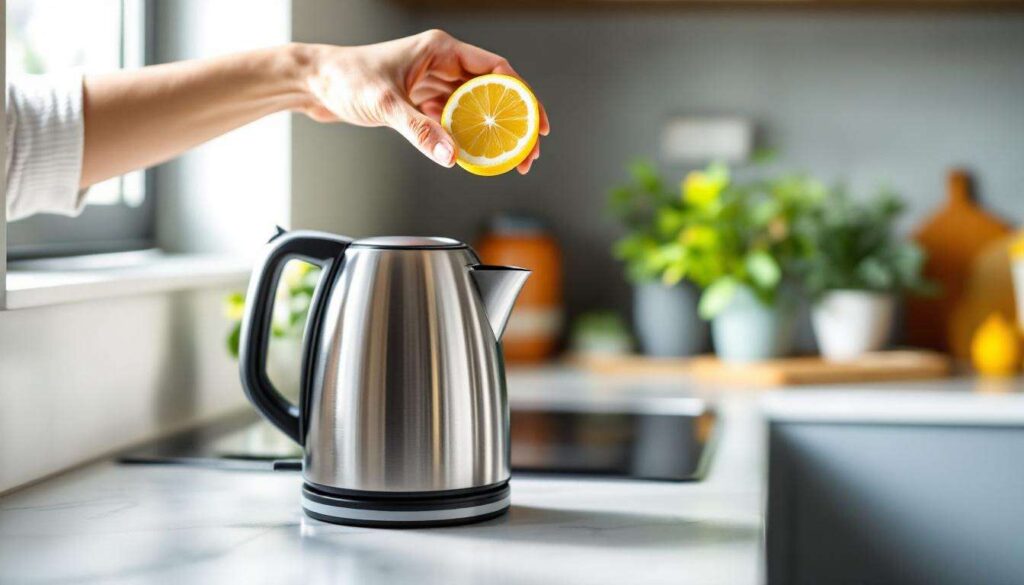
Electric kettles have become indispensable in British households, yet they remain vulnerable to an invisible enemy that gradually impairs their efficiency. That chalky white residue clinging to heating elements and interior surfaces is limescale, a stubborn deposit formed when hard water is repeatedly heated. Whilst many reach for vinegar or soap-based solutions, there exists a superior method that requires neither of these traditional remedies. This simple trick not only restores your kettle to pristine condition but does so without unpleasant odours or harsh chemicals.
Understanding limescale formation in your kettle
The science behind the white deposits
Limescale develops when calcium carbonate precipitates from hard water during the heating process. Britain’s water supply varies considerably in hardness, with regions such as the South East experiencing particularly elevated levels of dissolved minerals. When water reaches boiling point, these minerals separate and adhere to any available surface, creating the characteristic crusty white layer that many households battle regularly.
Why kettles are particularly vulnerable
Electric kettles face unique challenges compared to other appliances:
- Repeated heating cycles concentrate mineral deposits
- Heating elements provide ideal surfaces for limescale adhesion
- Standing water between uses allows further crystallisation
- The confined space intensifies deposit accumulation
The consequences extend beyond aesthetics. Energy efficiency decreases as limescale acts as an insulator, forcing the heating element to work harder and consume more electricity. Performance deteriorates gradually, with boiling times increasing and operational costs rising unnecessarily.
Understanding these mechanisms helps explain why conventional cleaning approaches often fall short of expectations, leading many to seek more effective alternatives.
Why vinegar and soap are not enough
The limitations of traditional vinegar treatments
Whilst white vinegar remains a popular household remedy, it presents several significant drawbacks. The pungent odour permeates the kettle and requires multiple rinses to eliminate completely. Many users report a lingering taste that affects subsequent brews, particularly problematic for tea enthusiasts who value pure flavour profiles. Additionally, vinegar’s acidic nature, whilst effective against limescale, can potentially damage certain kettle components with repeated use.
Why soap-based solutions fail
Soap and washing-up liquid prove entirely unsuitable for kettle maintenance:
- Creates excessive foam that complicates rinsing
- Leaves residue that contaminates drinking water
- Fails to dissolve mineral deposits effectively
- May damage internal seals and gaskets
| Method | Effectiveness | Drawbacks |
|---|---|---|
| White vinegar | Moderate | Strong odour, lingering taste, multiple rinses required |
| Soap solutions | Poor | Ineffective against limescale, residue contamination |
| Commercial descalers | Good | Chemical composition, higher cost |
These shortcomings have prompted households to explore alternatives that deliver superior results without compromising convenience or safety, paving the way for a remarkably simple yet effective solution.
Discover the mysterious anti-limescale ingredient
The power of citric acid
Citric acid represents the ideal descaling agent for electric kettles. This naturally occurring compound, found abundantly in citrus fruits, possesses remarkable limescale-dissolving properties without the disadvantages associated with vinegar. It is odourless, tasteless, and completely food-safe, making it perfect for appliances that prepare beverages.
Why citric acid outperforms alternatives
The advantages of this ingredient extend beyond mere effectiveness:
- Biodegradable and environmentally responsible
- Available inexpensively from supermarkets and online retailers
- Requires no protective equipment or ventilation
- Leaves no residual flavour or aroma
- Gentle on kettle components whilst tough on deposits
Citric acid works by chelating calcium ions, effectively breaking the chemical bonds that hold limescale together. This process occurs rapidly at elevated temperatures, making it ideally suited for kettle descaling applications.
With this knowledge in hand, implementing the method becomes straightforward, requiring only basic household items and minimal effort.
Instructions for a shiny kettle
Step-by-step descaling process
Begin by filling your kettle halfway with fresh water. This quantity provides sufficient liquid for the descaling process whilst allowing space for boiling action. Add one to two tablespoons of citric acid powder, adjusting the quantity based on the severity of limescale accumulation. For heavily affected kettles, two tablespoons prove more effective.
The boiling and resting phases
Secure the lid and bring the mixture to a full boil. The heat activates the citric acid, accelerating the chemical reaction with calcium carbonate deposits. Once boiling commences, switch off the kettle and allow the solution to rest for 20 to 30 minutes. During this period, the acid continues working, penetrating stubborn deposits and loosening them from interior surfaces.
Final rinsing procedure
After the resting period, carefully empty the kettle, noting how the limescale has dissolved. Rinse thoroughly with fresh water at least twice, ensuring no citric acid residue remains. For particularly stubborn deposits, a soft cloth or sponge can gently remove any remaining fragments without scratching surfaces.
This method typically restores kettles to near-original condition in a single treatment, though severely neglected appliances may require repetition for optimal results.
Tips for extending your kettle’s life
Frequency of descaling treatments
Regular maintenance proves far more effective than reactive cleaning. In hard water areas, monthly descaling prevents significant build-up, whilst regions with softer water may require treatment only quarterly. Monitoring the interior condition helps establish an appropriate schedule tailored to local water characteristics.
Operational best practices
Simple habits significantly reduce limescale formation:
- Empty the kettle completely after each use rather than leaving standing water
- Wipe the interior dry periodically to prevent mineral crystallisation
- Fill only with the quantity needed to minimise repeated heating of the same water
- Avoid reboiling water that has already been heated
Component care and inspection
Beyond descaling, regular inspection of seals, lids, and electrical connections ensures optimal performance. Replace worn components promptly to prevent leaks and maintain energy efficiency. Keep the exterior clean and the base free from dust accumulation, which can impair heat dissipation.
These practices complement descaling efforts, creating a comprehensive maintenance routine that maximises appliance longevity whilst minimising operational costs.
Preventing limescale build-up in the long term
Water filtration solutions
Addressing water hardness at source provides the most effective long-term prevention. Jug filters offer an economical entry point, removing a portion of dissolved minerals before water enters the kettle. For comprehensive solutions, consider installing inline filters on kitchen taps or whole-house water softening systems that exchange calcium and magnesium ions for sodium.
Advanced prevention technologies
| Solution | Effectiveness | Installation complexity |
|---|---|---|
| Jug filters | Moderate | None required |
| Tap-mounted filters | Good | Simple DIY installation |
| Salt-based softeners | Excellent | Professional installation recommended |
| Reverse osmosis systems | Superior | Professional installation required |
Balancing cost and convenience
The optimal prevention strategy depends on household circumstances. Rental properties may favour portable solutions like jug filters, whilst homeowners might invest in permanent installations. Cost-benefit analysis should consider not only initial investment but also ongoing maintenance expenses, replacement cartridges, and potential energy savings from improved appliance efficiency.
Combining preventive measures with regular citric acid treatments creates a robust defence against limescale, ensuring kettles operate efficiently for years beyond their typical service life.
Maintaining an electric kettle free from limescale requires neither harsh chemicals nor unpleasant procedures. Citric acid emerges as the superior descaling agent, combining effectiveness with safety and environmental responsibility. Regular treatments using this simple method, coupled with sensible operational habits and appropriate water filtration, protect appliances from performance degradation whilst reducing energy consumption. The investment of minimal time and expense yields substantial returns in appliance longevity, operational efficiency, and beverage quality. By adopting these straightforward practices, households can eliminate limescale concerns permanently, ensuring their kettles deliver optimal performance throughout their extended service life.