



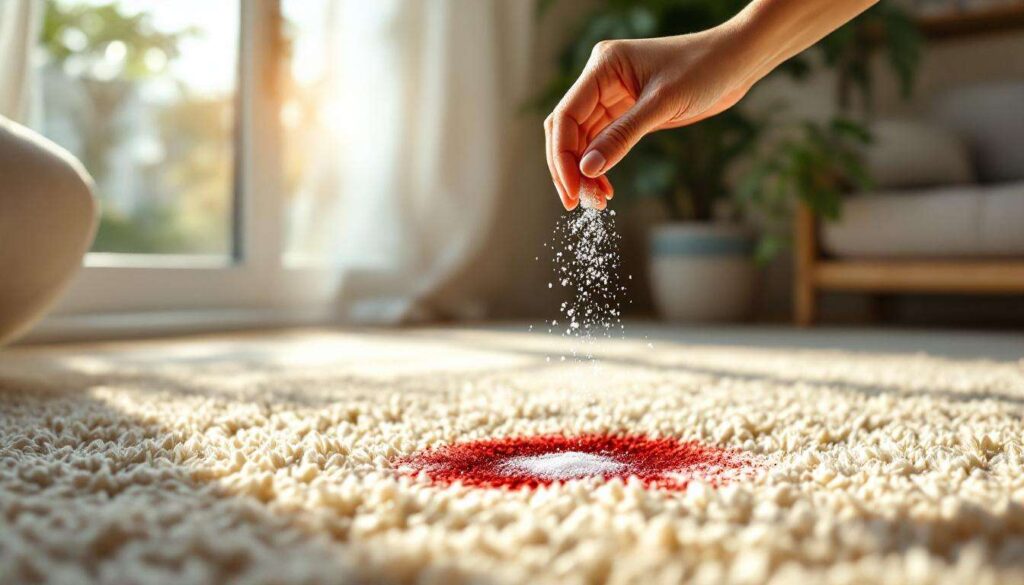
Carpet stains have long plagued homeowners, turning pristine floors into unsightly reminders of spills and accidents. Yet one of the most effective solutions has been sitting in kitchen cupboards all along. Salt, a humble household staple, possesses remarkable stain-lifting properties that work swiftly and efficiently on carpet fibres. This natural remedy combines scientific principles with practical application, offering an accessible alternative to expensive commercial cleaners. Understanding how and when to deploy this simple substance can transform carpet maintenance, delivering professional-quality results without the associated costs or chemical concerns.
How does salt quickly remove stains ?
The hygroscopic properties of salt crystals
The effectiveness of salt in stain removal lies primarily in its hygroscopic nature, meaning it naturally attracts and absorbs moisture from its surroundings. When sprinkled onto a wet carpet stain, salt crystals begin working immediately to draw liquid away from the fibres. This process occurs at a molecular level, as the ionic structure of sodium chloride creates an affinity for water molecules. The angular, crystalline structure of salt provides numerous surface points where moisture can attach, maximising the absorption capacity of even a small quantity.
Capillary action and liquid extraction
Beyond simple absorption, salt employs capillary action to pull staining liquids upward from deep within carpet pile. This physical phenomenon occurs when liquid moves through narrow spaces without external forces, driven by adhesive and cohesive molecular properties. The following mechanisms contribute to salt’s stain-lifting capabilities:
- microscopic channels between salt granules create pathways for liquid migration
- the concentration gradient between wet carpet and dry salt drives moisture movement
- evaporation at the salt surface maintains continuous absorption pressure
- crystallisation of dissolved substances concentrates stain components for easier removal
Prevention of deeper penetration
Perhaps most importantly, salt creates a barrier effect that prevents stains from spreading or penetrating deeper into carpet backing and underlay. By rapidly absorbing surface moisture, it effectively halts the downward migration of spills before they can cause permanent damage. This protective action proves particularly valuable with substances that might otherwise seep through multiple carpet layers, creating odours and structural problems that require professional intervention.
| Stain type | Absorption time | Effectiveness rating |
|---|---|---|
| Red wine | 15-20 minutes | Excellent |
| Coffee | 10-15 minutes | Very good |
| Fruit juice | 12-18 minutes | Excellent |
| Mud (wet) | 20-30 minutes | Good |
Understanding these scientific principles helps explain why salt works so effectively, but knowing which stains respond best to this treatment ensures optimal results.
The types of stains that salt can treat
Liquid-based stains and spills
Salt demonstrates exceptional performance against liquid stains, particularly those containing water-soluble compounds. Wine, coffee, tea, soft drinks, and fruit juices all respond remarkably well to salt treatment when addressed promptly. The key lies in the liquid nature of these substances, which allows salt to absorb the moisture before pigments and tannins bond permanently with carpet fibres. Fresh blood stains also fall into this category, though they require cold water pre-treatment to prevent protein coagulation.
Grease and oil-based marks
Whilst salt excels with water-based stains, its effectiveness diminishes considerably with oil and grease. However, it still offers some benefit by absorbing any water content in emulsified substances and preventing spread. For cooking oil, butter, or salad dressing spills, salt can serve as a first-response measure to contain the stain whilst preparing more appropriate treatments involving absorbent powders or degreasing agents.
Organic matter and biological stains
Salt proves particularly useful for addressing organic stains such as:
- pet urine (when fresh)
- vomit residue after solid removal
- food spills containing sauces or gravies
- beer and alcoholic beverages
- milk and dairy products
The antibacterial properties of salt provide an additional advantage with these stains, helping to neutralise odours and prevent bacterial growth whilst the absorption process occurs. This dual action makes salt especially valuable for households with children or pets where such accidents occur frequently.
Limitations with set-in and dried stains
It bears noting that salt works optimally on fresh, wet stains rather than those that have dried or set into fibres. Once a stain has oxidised or bonded chemically with carpet materials, salt alone cannot reverse the process. In such cases, it may serve as a component in a broader cleaning strategy but should not be relied upon as the sole treatment method. Recognising when salt will prove effective requires understanding the appropriate timing and circumstances for its application.
When to use salt and when to avoid it
Ideal conditions for salt treatment
Salt achieves maximum effectiveness when applied to fresh spills on absorbent carpet types. Natural fibres such as wool, cotton, and sisal respond particularly well to salt treatment, as do most synthetic carpets including nylon and polyester. The ideal scenario involves immediate application following a spill, with the stain still visibly wet and not yet penetrated beyond surface fibres. Temperature also plays a role; room temperature or slightly warm conditions facilitate better absorption than very cold environments where moisture may not move as freely.
Situations requiring alternative approaches
Certain circumstances demand different cleaning strategies rather than salt application. Delicate or antique carpets with natural dyes may suffer colour bleeding when exposed to salt’s moisture-drawing properties. Similarly, carpets with waterproof or stain-resistant treatments may not allow salt to access the moisture effectively, rendering the treatment pointless. The following situations warrant caution:
- silk or viscose carpets that may water-spot
- carpets with jute backing susceptible to moisture damage
- stains containing bleaching agents or strong acids
- areas with underfloor heating where prolonged dampness poses risks
Timing considerations and stain age
The window of opportunity for salt treatment typically extends from immediate application up to approximately thirty minutes after a spill occurs. Beyond this timeframe, liquid will have penetrated deeper into carpet construction, and salt’s surface-level absorption becomes less effective. For stains older than several hours, pre-treatment with appropriate solutions becomes necessary before salt can contribute meaningfully to the cleaning process.
| Time since spill | Salt effectiveness | Recommended action |
|---|---|---|
| 0-15 minutes | Excellent | Apply salt immediately |
| 15-30 minutes | Good | Blot first, then apply salt |
| 30-60 minutes | Fair | Pre-treat with water, then salt |
| Over 1 hour | Poor | Use dedicated stain remover |
With proper understanding of when salt proves most beneficial, implementing the correct application technique ensures the best possible outcome.
The step-by-step process for using salt on carpets
Initial spill management
The moment a spill occurs, resist the urge to rub or scrub the affected area. Instead, use a clean, absorbent cloth or kitchen paper to blot the stain gently, working from the outer edges towards the centre to prevent spreading. Apply firm pressure to lift as much liquid as possible before introducing salt. This preliminary step removes excess moisture that might otherwise dilute the salt’s effectiveness or create a larger affected area.
Salt application technique
Once initial blotting is complete, generously sprinkle table salt or sea salt over the entire stained area, ensuring complete coverage with a layer approximately three to five millimetres thick. The salt should extend slightly beyond the visible stain boundary to capture any moisture that may have spread beneath the surface. For larger spills, use the following quantities as guidance:
- small stains (coffee cup size): two to three tablespoons
- medium stains (dinner plate size): quarter to half cup
- large spills (larger than dinner plate): half to full cup
Absorption waiting period
Allow the salt to remain undisturbed for a minimum of fifteen to thirty minutes, though overnight treatment produces superior results for stubborn stains. During this period, the salt crystals will visibly darken as they absorb moisture and staining compounds. Avoid walking on the treated area or disturbing the salt layer, as this interrupts the capillary action and reduces effectiveness. For particularly saturated spills, consider applying a second layer of fresh salt after the initial application becomes completely saturated.
Removal and final cleaning
After the absorption period, vacuum the area thoroughly to remove all salt residue. Use a brush attachment if available to ensure complete removal from carpet pile. Inspect the treated area; if discolouration remains, prepare a solution of one part white vinegar to two parts warm water and gently dab the area with a clean cloth. Blot dry and allow to air completely before resuming normal foot traffic. This comprehensive approach addresses both the immediate stain and any residual marking.
Beyond the practical cleaning benefits, salt offers compelling advantages that extend to household budgets and environmental considerations.
The economic and ecological benefits of salt
Cost comparison with commercial products
A standard container of table salt costs a fraction of proprietary carpet cleaning solutions, with price differences often exceeding tenfold. Whilst specialist stain removers may retail for eight to fifteen pounds per bottle, an equivalent quantity of salt costs less than one pound. For households managing frequent spills, particularly those with young children or pets, these savings accumulate substantially over time. Moreover, salt’s extended shelf life means it remains effective indefinitely when stored properly, eliminating waste from expired cleaning products.
| Product type | Average cost | Applications per container | Cost per use |
|---|---|---|---|
| Commercial stain remover | £12.00 | 15-20 | £0.60-£0.80 |
| Table salt | £0.65 | 30-40 | £0.02 |
Environmental advantages
Salt represents a naturally occurring mineral that biodegrades completely without introducing synthetic chemicals into household wastewater systems or groundwater supplies. Unlike many commercial cleaners containing phosphates, optical brighteners, or synthetic fragrances, salt leaves no persistent environmental footprint. This natural approach aligns with growing consumer awareness regarding chemical exposure in living spaces, particularly important for households with respiratory sensitivities or allergies.
Reduced packaging and transportation impact
The concentrated nature of salt means less packaging waste compared to water-based commercial cleaners. Additionally, its density allows efficient transportation, reducing the carbon footprint associated with distribution. Many households already maintain salt supplies for cooking purposes, eliminating additional shopping trips and associated vehicle emissions. These factors contribute to a substantially lower environmental impact across the product lifecycle.
Having invested time and resources in stain removal, protecting carpets from future damage becomes the logical next consideration.
Tips for protecting your carpets after treatment
Immediate post-treatment care
Following salt treatment and cleaning, ensure the carpet dries completely and thoroughly before resuming normal use. Position fans to improve air circulation or open windows to facilitate evaporation, particularly in humid conditions. Damp carpets attract dirt more readily and may develop mildew if moisture remains trapped in fibres or backing materials. Consider placing clean towels over treated areas and walking on them to absorb residual moisture from deep within the pile.
Preventative measures for long-term protection
Implementing protective strategies reduces the likelihood of future staining incidents. Consider these practical approaches:
- apply carpet protector sprays to high-traffic areas and beneath dining tables
- enforce no-shoes policies to reduce tracked-in dirt and contaminants
- use washable rugs or mats in spill-prone zones such as entryways and beneath pet feeding stations
- schedule regular professional deep cleaning every twelve to eighteen months
- address spills within minutes rather than hours to prevent permanent marking
Routine maintenance practices
Regular vacuuming removes abrasive particles that wear carpet fibres and make them more susceptible to staining. Aim for at least twice-weekly vacuuming in main living areas, with daily attention to high-traffic zones. Rotate furniture periodically to distribute wear patterns evenly and prevent permanent crushing of pile in specific areas. These simple habits extend carpet lifespan significantly whilst maintaining appearance between deep cleaning sessions.
Building a carpet care toolkit
Maintain readily accessible supplies for immediate spill response, including clean white cloths, spray bottles, white vinegar, and naturally, salt. Storing these items in convenient locations throughout the home enables prompt action before stains set. Consider creating a portable cleaning kit for upstairs areas or multiple floors, ensuring preparedness regardless of where accidents occur.
Salt’s remarkable stain-lifting capabilities stem from fundamental scientific principles that homeowners can harness effectively with proper technique and timing. This accessible, economical solution offers genuine results for fresh liquid stains whilst supporting environmental responsibility and household budget management. By understanding when and how to deploy salt treatment, combined with appropriate protective measures, maintaining immaculate carpets becomes an achievable goal rather than an expensive aspiration. The combination of immediate response, correct application, and ongoing preventative care creates a comprehensive approach to carpet maintenance that preserves both appearance and investment value for years to come.