



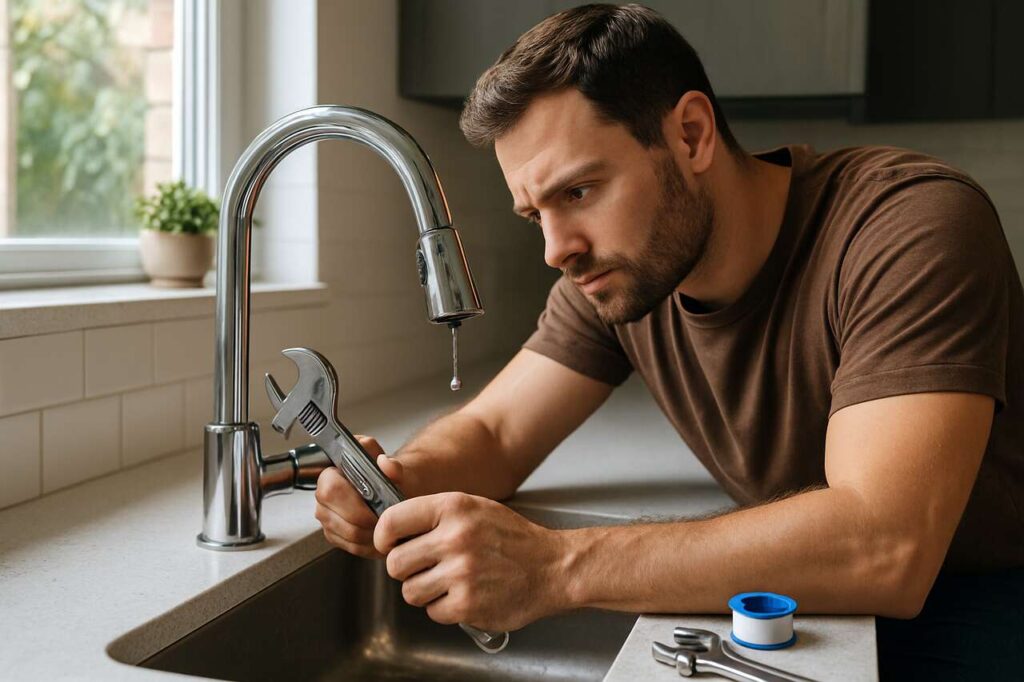
A dripping tap might seem like a minor annoyance, but left unattended it can waste litres of water daily and drive up utility bills. The constant plip-plop echoing through the kitchen or bathroom can be maddening, particularly during quiet evenings. Fortunately, most tap leaks stem from simple mechanical failures that require neither specialist knowledge nor professional intervention. With a handful of basic tools and a methodical approach, homeowners can tackle this common household problem in less than half an hour. This guide walks through the entire process, from diagnosis to completion, empowering you to restore your tap to perfect working order without the expense of calling a tradesperson.
Understanding the causes of a leaking tap
Worn washers and seals
The most frequent culprit behind a dripping tap is a deteriorated washer. These small rubber or silicone components create a watertight seal when the tap is closed, but constant friction and water pressure cause them to wear down over time. Once compromised, they can no longer form an effective barrier, allowing water to seep through even when the tap appears fully closed. Traditional compression taps rely heavily on washers, making them particularly susceptible to this issue.
Damaged O-rings
O-rings are circular rubber seals that sit around the tap’s moving parts, preventing water from escaping around the spout or handle. These components can become brittle, cracked, or dislodged through regular use. When an O-ring fails, water typically leaks from around the base of the spout rather than from the tap itself. This type of leak is especially common in mixer taps where separate hot and cold feeds converge.
Corroded valve seats
The valve seat connects the tap to the spout, providing another critical sealing point. Mineral deposits from hard water can accumulate on the valve seat, creating an uneven surface that prevents the washer from sealing properly. Corrosion can also roughen the metal, producing the same effect. This problem often develops gradually, with the drip worsening over weeks or months.
Loose components
Sometimes the issue isn’t wear but simple looseness. The adjusting ring, packing nut, or other internal components can work free through repeated turning of the tap handle. When these parts lose their tight fit, water finds pathways to escape. A thorough inspection often reveals which specific component has come loose.
Once you’ve identified the likely source of your leak, the next step involves assembling everything you’ll need to carry out the repair efficiently.
Gathering the necessary tools
Essential toolkit items
Before beginning any repair work, ensure you have the following basic tools at hand:
- Adjustable spanner or set of spanners in various sizes
- Flathead and Phillips screwdrivers
- Allen keys (hex keys) for modern tap designs
- Plumber’s tape (PTFE tape) for thread sealing
- Clean cloth or towel to protect surfaces and wipe components
- Small container or bowl to hold screws and small parts
- Torch or headlamp for visibility in dark cupboards
Replacement parts to have ready
Identifying your tap type beforehand allows you to purchase the correct replacement components. Most hardware stores stock universal washer assortment kits containing multiple sizes, which prove invaluable for this type of repair. Consider having these replacement parts available:
- Assorted tap washers (various diameters and thicknesses)
- O-ring sets in common sizes
- Ceramic disc cartridges (if you have a quarter-turn tap)
- Valve seat if corrosion is suspected
Optional but helpful items
Whilst not strictly necessary, certain items can make the job considerably easier. A penetrating oil spray helps loosen stubborn or corroded components that resist initial attempts at removal. White vinegar or limescale remover proves useful for cleaning mineral deposits from parts before reassembly. A mobile phone camera allows you to photograph each stage of disassembly, creating a visual reference for the reassembly process.
With your toolkit assembled and replacement parts at the ready, the crucial next step ensures you can work safely without flooding your home.
Turning off the water before any work
Locating the isolation valves
Most modern plumbing installations include isolation valves directly beneath the sink or near the tap itself. These small valves typically feature a flat-head screw or small lever that turns perpendicular to the pipe when closed. Check inside the cupboard under your sink for these valves—there should be separate ones for hot and cold water supplies. Turning these clockwise (or rotating the lever 90 degrees) stops water flow to that specific tap without affecting the rest of your home.
Using the stopcock as an alternative
If isolation valves aren’t present or are seized and inoperable, you’ll need to shut off the main stopcock. This valve controls water supply to your entire property and is usually located under the kitchen sink, in a downstairs cupboard, or near where the water main enters the building. Turn it fully clockwise until it stops. Be aware that closing the stopcock affects all taps and appliances throughout your home.
Draining residual water
After closing the relevant valves, open the faulty tap fully to release any water remaining in the pipes. Place a bucket or towel beneath the tap to catch this residual flow. For taps fed from a storage tank rather than mains pressure, you may need to drain more water by opening other taps at lower levels in the house. This step prevents unexpected water release when you begin disassembling components.
Confirming water is off
Before proceeding, verify that water flow has completely stopped. Try turning the tap on again—no water should emerge. This simple check prevents the frustrating and potentially damaging scenario of water gushing out mid-repair. If water continues flowing, recheck your valve positions or consider whether you’ve isolated the correct supply.
With water safely isolated and residual pressure released, you can now confidently begin taking the tap apart to access the faulty components.
Step-by-step disassembling of the tap
Removing the tap handle
The handle conceals the internal mechanism, so removing it is your first task. Look for a small decorative cap on top of or behind the handle—this often covers the retaining screw. Gently pry this cap off with a flathead screwdriver or knife. Beneath you’ll find either a Phillips screw, flathead screw, or Allen bolt. Unscrew this completely and lift the handle straight upwards. Some handles may be stiff due to limescale buildup, requiring a gentle wiggling motion whilst pulling upward.
Accessing the headgear or cartridge
With the handle removed, you’ll see either a large hexagonal nut (the headgear) or a cartridge housing. For traditional compression taps, use an adjustable spanner to turn the headgear anticlockwise. Protect chrome finishes by wrapping the cloth around the nut before applying the spanner. The headgear should unscrew after several turns, revealing the internal mechanism. For quarter-turn ceramic disc taps, you may instead find a cartridge that pulls or unscrews directly out of the tap body.
Extracting the internal components
Once the headgear is removed, the jumper valve (which holds the washer) should be visible inside the tap body. This component either lifts out freely or unscrews from the base of the headgear. Examine how it’s attached before removing it—some jumper valves have a small nut securing the washer, whilst others use a press-fit design. Carefully extract all components and lay them out in sequence on your cloth, maintaining their order for easier reassembly.
Inspecting all parts thoroughly
With everything disassembled, conduct a systematic inspection of each component:
- Check the washer for cracks, deformation, or hardening
- Examine O-rings for splits, brittleness, or missing sections
- Feel the valve seat inside the tap body for roughness or pitting
- Look for limescale deposits on threads and sealing surfaces
- Verify that all metal components are intact without cracks
This inspection reveals exactly which parts need replacement, ensuring you address the root cause rather than merely the symptoms. Having identified the faulty components, you’re ready to install fresh parts that will restore proper function.
Replacing faulty parts
Fitting a new washer
Select a replacement washer that matches the diameter and thickness of the original. If the old washer is severely degraded and difficult to measure, bring the jumper valve to a hardware store for comparison. Remove the old washer by unscrewing the retaining nut or simply pulling it off if it’s a press-fit type. Position the new washer onto the jumper valve, ensuring it sits flat and centred. If there’s a retaining nut, tighten it just enough to hold the washer securely without crushing it—overtightening can cause premature failure.
Replacing O-rings
O-rings typically slide over the tap’s internal components and sit in dedicated grooves. Carefully roll the old O-ring off its position, taking care not to scratch the metal surface beneath. Clean the groove thoroughly with a cloth to remove any debris or limescale. Lightly lubricate the new O-ring with a small amount of silicone grease or petroleum jelly—this helps it slide into position and creates a better seal. Roll the new O-ring into the groove, ensuring it sits evenly without twisting or bunching.
Addressing valve seat issues
If inspection revealed a corroded or pitted valve seat, you have two options. For minor roughness, a valve seat grinding tool can resurface the metal, creating a smooth sealing surface once more. This specialised tool fits into the tap body and grinds away imperfections when rotated. Alternatively, some valve seats are removable and replaceable. Insert a valve seat removal tool (which looks like an L-shaped Allen key) into the seat and turn anticlockwise to unscrew it. Install a new seat by screwing it clockwise into the tap body until snug.
Cleaning components before reassembly
Before putting everything back together, clean all metal parts with white vinegar or a dedicated limescale remover. This removes mineral deposits that could interfere with proper sealing or make future disassembly difficult. Rinse components with clean water and dry them thoroughly with your cloth. Apply a thin layer of plumber’s grease to threads and moving parts—this prevents corrosion and makes future maintenance easier.
With all faulty parts replaced and components cleaned, you’re ready to reverse the disassembly process and restore your tap to working order.
Reassembling the tap and testing
Rebuilding in reverse order
Reassembly follows the disassembly sequence in reverse. Insert the jumper valve with its new washer back into the headgear or tap body, ensuring it’s properly seated. Wrap two or three turns of PTFE tape clockwise around the headgear threads—this creates an additional watertight seal. Screw the headgear back into the tap body, tightening it firmly but not excessively. Overtightening can damage internal components or crack ceramic parts. Replace the handle by aligning it with the spindle and securing it with the retaining screw, then press the decorative cap back into position.
Restoring water supply gradually
Before fully opening the water supply, ensure all components are securely fastened. Turn the tap to the closed position. Slowly open the isolation valve or stopcock, allowing water to refill the pipes gradually. This controlled approach prevents sudden pressure surges that could dislodge newly fitted parts. Listen carefully for any unusual sounds and watch for leaks around the base of the tap or handle as pressure builds.
Testing for successful repair
Once water pressure is restored, conduct a thorough test of your repair:
- Turn the tap on and off several times, checking for smooth operation
- Close the tap fully and observe for any dripping from the spout
- Check around the base and handle for water seepage
- Let hot water run to test both temperature extremes
- Leave the tap closed for several minutes and recheck for drips
Addressing persistent leaks
If dripping continues after reassembly, several factors might be responsible. The washer may not be seated correctly, requiring you to disassemble and reposition it. You might have selected the wrong size washer—try a slightly larger or thicker one. The headgear may need additional tightening, though be cautious not to overtighten. In some cases, both the washer and valve seat require replacement for a complete seal. If leaks persist around the handle or base rather than the spout, check that O-rings are properly positioned and that all threaded connections are adequately tightened.
A dripping tap represents one of the most straightforward plumbing repairs a homeowner can undertake. By methodically identifying the cause, gathering appropriate tools, safely isolating water supply, carefully disassembling components, replacing worn parts, and reassembling with attention to detail, most people can complete this repair in well under thirty minutes. The process requires no specialist training, merely patience and a logical approach. Successfully fixing a leaking tap not only saves water and reduces bills but also builds confidence for tackling other household maintenance tasks. Should the problem prove more complex than expected—such as a cracked tap body or severely corroded internal mechanisms—professional assistance remains an option, but the vast majority of dripping taps yield to this simple repair methodology.