


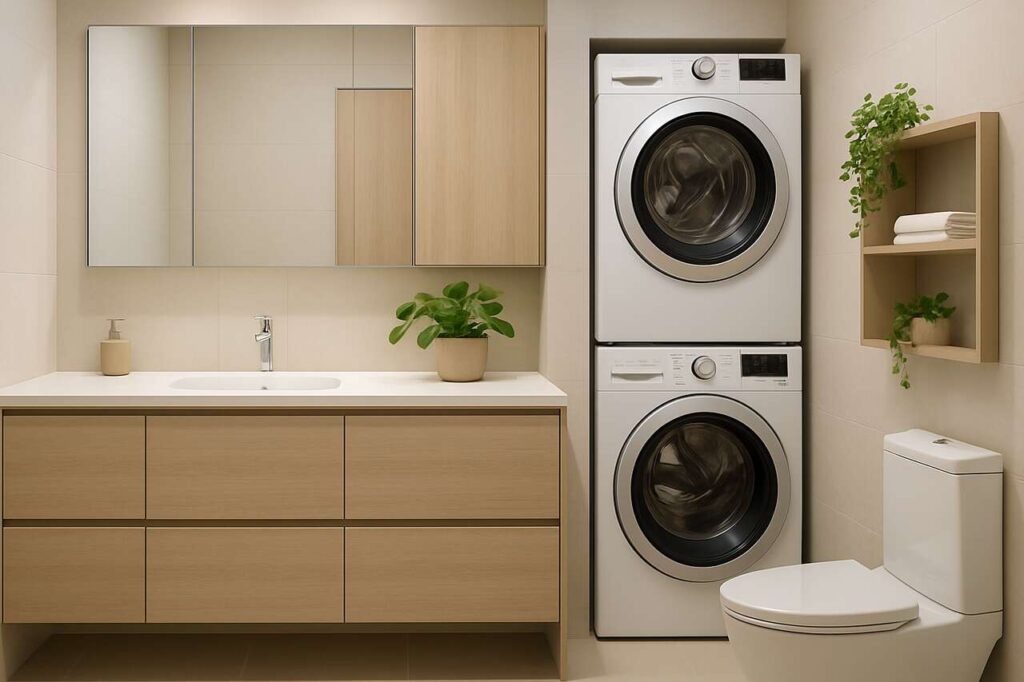
Combining laundry facilities with bathroom spaces has emerged as one of the most sought-after home design solutions, with Houzz reporting a remarkable 190% surge in searches for ‘bathroom with laundry space’. This dramatic increase reflects a growing desire amongst homeowners to maximise every square metre of their properties, particularly in urban environments where space comes at a premium. The concept addresses practical needs whilst offering innovative design opportunities that transform traditionally separate functions into cohesive, efficient living areas.
Why integrate a laundry space in the bathroom ?
Practical considerations for modern living
The decision to incorporate laundry facilities into bathroom spaces stems from several compelling factors that resonate with contemporary lifestyles. Space constraints represent the primary driver, particularly for flat dwellers and those living in compact homes where dedicating an entire room to laundry proves impractical. The bathroom already contains the necessary plumbing infrastructure, making it the logical location for washing machines and dryers without requiring extensive renovation work.
Furthermore, the proximity of laundry facilities to where dirty clothes naturally accumulate creates an efficient workflow. Towels, bathrobes and delicates can be washed immediately, reducing the need to transport laundry throughout the home. This arrangement also addresses privacy concerns, as the bathroom door provides a convenient barrier to conceal laundry activities from guests.
Cost-effectiveness and installation advantages
From a financial perspective, utilising existing bathroom plumbing significantly reduces installation costs compared to creating a separate utility room. The water supply, drainage and ventilation systems are already in place, requiring only minor modifications to accommodate washing appliances. This practical approach appeals to both homeowners undertaking renovations and property developers seeking to maximise functionality within limited floor plans.
Understanding these motivations naturally leads to exploring the broader advantages that multifunctional bathroom spaces deliver.
The benefits of multifunctional bathrooms
Maximising property value
Multifunctional bathrooms offer tangible benefits that extend beyond mere convenience. Property value enhancement ranks amongst the most significant advantages, as prospective buyers increasingly prioritise homes with clever space utilisation. Estate agents report that well-designed bathroom-laundry combinations appeal particularly to first-time buyers and downsizers who appreciate practical solutions.
- Increased functionality without expanding the property footprint
- Higher appeal to space-conscious buyers
- Potential for better rental yields in buy-to-let properties
- Competitive advantage in crowded housing markets
Environmental and efficiency gains
The environmental credentials of combined bathroom-laundry spaces deserve recognition. By consolidating water-using appliances in one location, homeowners can more easily implement greywater recycling systems and monitor overall water consumption. Modern washing machines operate more efficiently than ever, and when positioned in bathrooms, they can potentially utilise heated water from the home’s central system rather than relying solely on internal heating elements.
These advantages become truly valuable only when the space is thoughtfully planned and optimised.
How to optimise space in a bathroom with laundry facilities
Strategic layout planning
Successful integration of laundry facilities demands meticulous spatial planning. The first consideration involves assessing the bathroom’s dimensions and identifying zones that can accommodate appliances without compromising essential bathroom functions. Corner placements often prove most effective, utilising otherwise awkward spaces whilst maintaining clear circulation routes.
Vertical space exploitation represents a crucial strategy. Stacked washer-dryer combinations occupy minimal floor area whilst providing full laundry functionality. Alternatively, installing washing machines beneath countertops creates additional surface area for folding clothes or storing toiletries, effectively serving dual purposes.
Clever storage solutions
| Storage solution | Space saved | Best suited for |
|---|---|---|
| Wall-mounted cabinets | Floor space preserved | Detergents and cleaning supplies |
| Pull-out drawers beneath appliances | Utilises dead space | Laundry baskets and accessories |
| Over-door organisers | Minimal footprint | Small items and cloths |
| Recessed shelving | Wall depth utilised | Folded towels and linens |
Selecting appropriate equipment becomes the next critical step in creating a functional bathroom-laundry space.
Selecting the right equipment for a bathroom with laundry
Appliance specifications and requirements
Choosing suitable appliances requires careful consideration of both technical specifications and practical requirements. Compact washing machines, typically measuring 60cm wide or less, fit comfortably in most bathrooms without overwhelming the space. Models with reduced depth prove particularly valuable in narrow bathrooms, though capacity must be balanced against size constraints.
Ventilation requirements demand special attention. Condenser dryers eliminate the need for external venting, making them ideal for bathrooms without exterior walls. Heat pump dryers offer superior energy efficiency, though they require adequate space for air circulation. Washer-dryer combination units provide the ultimate space-saving solution, albeit with slightly reduced drying capacity compared to separate appliances.
Features that enhance bathroom compatibility
- Quiet operation modes to minimise disturbance during bathing
- Quick wash cycles for small loads and delicates
- Moisture sensors that prevent over-drying and reduce humidity
- Delayed start functions allowing operation during off-peak hours
- Child locks for safety in family bathrooms
Equipment selection naturally connects to the broader question of creating spaces that balance functionality with visual appeal.
Designing an aesthetic and functional bathroom
Concealment strategies
Maintaining an attractive bathroom aesthetic whilst accommodating laundry facilities requires thoughtful design approaches. Custom cabinetry with matching facades allows washing machines to disappear behind doors that coordinate with other bathroom furniture. Sliding panels offer another elegant solution, particularly in contemporary settings where clean lines and minimalism prevail.
Colour coordination plays a vital role. Selecting appliances in finishes that complement existing bathroom fixtures—whether white, stainless steel, or black—creates visual cohesion. Integrated appliances that sit flush with cabinetry deliver the most seamless appearance, though they typically command premium prices.
Lighting and ventilation considerations
Adequate lighting ensures the laundry area remains functional whilst contributing to the overall bathroom ambience. Task lighting above the washing machine facilitates loading and unloading, whilst ambient lighting maintains consistency with the rest of the bathroom. Moisture-resistant fixtures rated for bathroom use are essential given the dual sources of humidity from bathing and laundry activities.
Enhanced ventilation becomes non-negotiable in combined spaces. Extractor fans with humidity sensors automatically activate when moisture levels rise, protecting against mould and condensation damage. This technical foundation supports the practical challenge of maintaining organisation in compact environments.
Tips for maintaining order in a limited space
Establishing efficient routines
Organisational systems prove essential for preventing bathroom-laundry combinations from descending into chaos. Designated storage for dirty laundry prevents clothes from accumulating on floors or surfaces. Slim laundry hampers that fit beside or beneath appliances keep soiled items contained whilst occupying minimal space.
Implementing a regular washing schedule prevents overload situations where laundry demands overwhelm the bathroom’s capacity. Processing smaller loads more frequently suits compact spaces better than attempting occasional large washes that monopolise the area for extended periods.
Maintaining cleanliness and hygiene
The dual-purpose nature of these spaces necessitates rigorous cleaning protocols. Wiping down appliance exteriors regularly prevents detergent residue and lint accumulation. Monthly maintenance cycles for washing machines eliminate bacteria and odours that could compromise bathroom freshness. Ensuring proper drainage prevents water pooling that might create slip hazards or damage flooring materials.
Strategic product selection also contributes to maintaining order. Concentrated detergents in compact packaging require less storage space than traditional formats. Multi-purpose cleaning products that serve both bathroom and laundry needs reduce the number of bottles requiring accommodation.
The integration of laundry facilities within bathroom spaces represents a practical response to modern living constraints that delivers genuine benefits when executed thoughtfully. Success hinges upon careful planning, appropriate equipment selection, and maintaining organisational discipline. Whilst the 190% increase in searches demonstrates growing interest, the concept’s true value emerges through implementation that respects both functional requirements and aesthetic aspirations. Those willing to invest time in proper design and organisation discover that bathroom-laundry combinations offer sustainable solutions that enhance daily life without compromising comfort or style.