
The enduring appeal of herringbone flooring continues to captivate homeowners and interior designers alike, yet questions persist about its relevance in contemporary spaces. This distinctive pattern, characterised by its zigzag arrangement of rectangular planks, has witnessed remarkable transformations throughout the decades. As we navigate evolving design preferences and technological advancements in flooring materials, the debate surrounding herringbone’s place in modern interiors has intensified. Professionals from across the design industry weigh in on whether this classic pattern deserves its place in today’s homes, examining both its timeless qualities and potential limitations in contemporary settings.
History and evolution of herringbone flooring
Ancient origins and practical beginnings
The herringbone pattern traces its roots to ancient Rome, where engineers discovered that arranging bricks in a V-shaped configuration created remarkably durable roadways. This practical innovation proved so effective that Roman roads featuring herringbone patterns have survived for centuries, testament to the structural integrity of this arrangement. The name derives from the resemblance to herring fish bones, with the distinctive angular pattern providing both aesthetic appeal and functional benefits.
Renaissance and aristocratic adoption
During the Renaissance period, herringbone flooring transitioned from purely functional applications to become a symbol of wealth and sophistication. French châteaux and Italian palazzos featured elaborate herringbone parquet floors, often crafted from expensive hardwoods. The pattern’s popularity spread throughout Europe, with variations emerging to suit different architectural styles and regional preferences. This aristocratic association has contributed significantly to the pattern’s enduring prestige in interior design.
Modern manufacturing and accessibility
Contemporary production methods have democratised herringbone flooring, making it accessible beyond luxury properties. Technological advances have introduced numerous options:
- Engineered wood alternatives offering stability and affordability
- Luxury vinyl tiles replicating the herringbone aesthetic
- Pre-assembled panels simplifying installation processes
- Sustainable materials addressing environmental concerns
These developments have transformed herringbone from an exclusive luxury into a viable option for diverse budgets and project scales, setting the stage for examining its aesthetic merits in contemporary design.
The aesthetic advantages of herringbone flooring
Visual impact and spatial perception
Herringbone flooring creates an immediate visual statement that few other flooring patterns can match. The angular arrangement naturally draws the eye along its directional flow, creating a sense of movement within a space. This characteristic proves particularly valuable in smaller rooms, where the pattern can make areas appear more expansive. The interplay of light and shadow across the angled planks adds depth and dimension, transforming floors from mere functional surfaces into architectural features.
Versatility across design styles
One of herringbone’s most compelling attributes is its remarkable adaptability to various aesthetic approaches. The pattern seamlessly integrates into multiple design contexts:
- Traditional interiors benefit from its historical authenticity
- Contemporary spaces gain textural interest and sophistication
- Scandinavian minimalism finds balance through subtle pattern
- Industrial designs achieve warmth through natural materials
Timeless appeal and investment value
Unlike trendy flooring options that may appear dated within a few years, herringbone maintains its relevance across generations. This longevity translates into practical value for property owners, as the flooring is unlikely to require replacement due to changing tastes. Estate agents consistently report that homes featuring quality herringbone flooring command premium prices, with buyers perceiving the installation as a mark of quality and attention to detail.
| Flooring Type | Average Lifespan | Resale Value Impact |
|---|---|---|
| Herringbone hardwood | 50-100 years | +8-12% |
| Standard plank flooring | 25-50 years | +3-5% |
| Laminate flooring | 10-25 years | Neutral |
Having established the aesthetic credentials of herringbone flooring, the question becomes how this traditional pattern adapts to contemporary expectations and lifestyle requirements.
Herringbone flooring: balancing authenticity and modernity
Contemporary interpretations of classic design
Modern designers have reimagined herringbone flooring through innovative material choices and unexpected applications. Whilst traditional oak remains popular, contemporary projects increasingly feature materials such as reclaimed timber, whitewashed finishes, and even concrete tiles arranged in herringbone patterns. These fresh interpretations preserve the pattern’s geometric integrity whilst aligning with current aesthetic preferences for industrial textures and sustainable materials.
Scale and proportion considerations
The dimensions of herringbone planks significantly influence the overall effect. Contemporary design trends favour varied approaches depending on spatial context:
- Narrow planks (50-70mm) create refined, traditional aesthetics
- Wide planks (100-150mm) deliver bold, contemporary statements
- Mixed widths introduce artisanal, bespoke character
- Oversized formats suit large, open-plan spaces
Integration with modern technologies
Herringbone flooring now incorporates advanced technological features that enhance its practicality for contemporary living. Underfloor heating systems integrate seamlessly with engineered herringbone products, whilst protective coatings provide resistance to moisture and wear. Smart home systems can even monitor floor conditions, alerting homeowners to maintenance requirements. These innovations ensure that choosing herringbone doesn’t mean sacrificing modern conveniences.
Understanding these contemporary adaptations naturally leads to practical considerations regarding the installation process and ongoing maintenance requirements that potential adopters must address.
Installation and maintenance: what to know
Professional installation requirements
Installing herringbone flooring demands considerable expertise and precision, as the pattern’s visual impact depends entirely on accurate alignment and consistent spacing. Professional installation typically costs 30-50% more than standard plank flooring due to increased labour time and material waste. The process requires meticulous planning, particularly around room perimeters and doorways, where the pattern must be carefully resolved to maintain visual coherence.
Material and cost considerations
Budget planning for herringbone flooring should account for multiple factors beyond the visible surface materials:
| Component | Cost Range (per m²) | Notes |
|---|---|---|
| Solid hardwood | £80-£200 | Premium materials, maximum longevity |
| Engineered wood | £45-£120 | Stable, suitable for underfloor heating |
| LVT herringbone | £25-£60 | Budget-friendly, moisture-resistant |
| Installation labour | £35-£65 | Specialist skills required |
Maintenance and longevity
Herringbone flooring requires regular but straightforward maintenance to preserve its appearance. Weekly sweeping or vacuuming removes abrasive particles, whilst periodic damp mopping with appropriate cleaners maintains the finish. Solid wood herringbone can be sanded and refinished multiple times throughout its lifespan, effectively renewing the surface when wear becomes apparent. This capacity for restoration represents a significant advantage over alternatives that require complete replacement when damaged.
With practical considerations addressed, attention turns to what design professionals themselves think about herringbone flooring’s continued relevance in contemporary projects.
Designers’ opinions on herringbone flooring in 2026
Professional consensus and divided perspectives
Leading interior designers express nuanced views on herringbone flooring’s current status. Many established professionals champion the pattern as a timeless foundation that provides visual interest without overwhelming other design elements. Sarah Mitchell, a London-based designer, notes that herringbone creates instant sophistication that clients consistently appreciate. However, some avant-garde designers caution against overuse, suggesting that the pattern’s popularity may have diluted its impact in certain market segments.
Application-specific recommendations
Design professionals generally agree that herringbone flooring excels in particular contexts whilst proving less suitable for others. Their recommendations include:
- Hallways and entrance areas benefit from herringbone’s directional flow
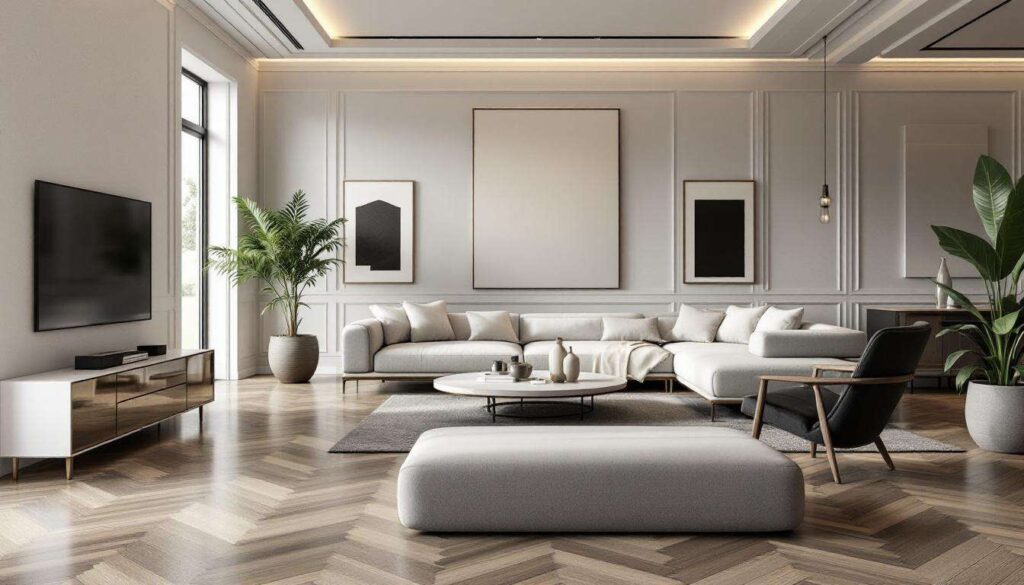
- Living rooms gain elegance and visual anchoring
- Kitchen installations work best with engineered or LVT options
- Bathrooms require moisture-resistant materials and careful sealing
- Bedrooms achieve warmth through lighter wood tones
Future outlook and evolving trends
Design experts predict that herringbone flooring will continue evolving rather than disappearing. Emerging trends include mixed material applications, where herringbone patterns combine different wood species or integrate stone and timber elements. Sustainability considerations are driving increased interest in reclaimed materials arranged in herringbone patterns, satisfying both aesthetic and environmental priorities. The consensus suggests that whilst herringbone may experience periodic fluctuations in popularity, its fundamental appeal ensures continued relevance.
These professional insights provide valuable context for understanding how herringbone flooring fits within broader decorating movements and stylistic directions currently shaping interior design.
Decorating trends for herringbone flooring
Colour palettes and finish options
Contemporary approaches to herringbone flooring embrace diverse colour treatments that extend beyond traditional mid-tone woods. Whitewashed and grey-toned finishes align with Scandinavian and coastal aesthetics, creating airy, light-filled spaces. Conversely, dark walnut and ebonised finishes deliver drama and sophistication in formal settings. Matte and natural oil finishes have largely supplanted high-gloss treatments, reflecting preferences for authentic, tactile surfaces over artificial sheen.
Complementary design elements
Successfully integrating herringbone flooring requires thoughtful coordination with surrounding design elements:
- Minimalist furnishings prevent visual competition with floor patterns
- Neutral wall colours allow herringbone to serve as the focal point
- Geometric textiles echo the angular pattern without creating chaos
- Statement lighting draws attention to floor craftsmanship
- Area rugs define zones whilst preserving pattern visibility
Regional and cultural variations
Herringbone flooring applications vary considerably across different markets and cultural contexts. European interiors traditionally favour narrower planks and darker finishes, maintaining connections to historical precedents. North American projects increasingly adopt wider planks in lighter tones, creating more casual, contemporary interpretations. Asian markets demonstrate growing interest in herringbone patterns executed in bamboo and other sustainable materials, reflecting regional environmental priorities and material availability.
The pattern’s enduring presence across diverse design movements and geographical contexts reinforces its fundamental versatility and adaptability to changing tastes and requirements.
Herringbone flooring demonstrates remarkable resilience as both a practical flooring solution and an aesthetic statement. Its capacity to bridge historical authenticity and contemporary sensibilities positions it favourably for continued relevance. Whilst installation costs and maintenance requirements demand consideration, the pattern’s proven longevity and positive impact on property values justify the investment for many homeowners. Design professionals largely endorse herringbone flooring when appropriately specified and thoughtfully integrated within broader interior schemes. The pattern’s evolution through diverse materials, finishes, and applications suggests that rather than becoming obsolete, herringbone continues adapting to meet changing expectations whilst preserving the geometric elegance that has sustained its appeal across centuries.