


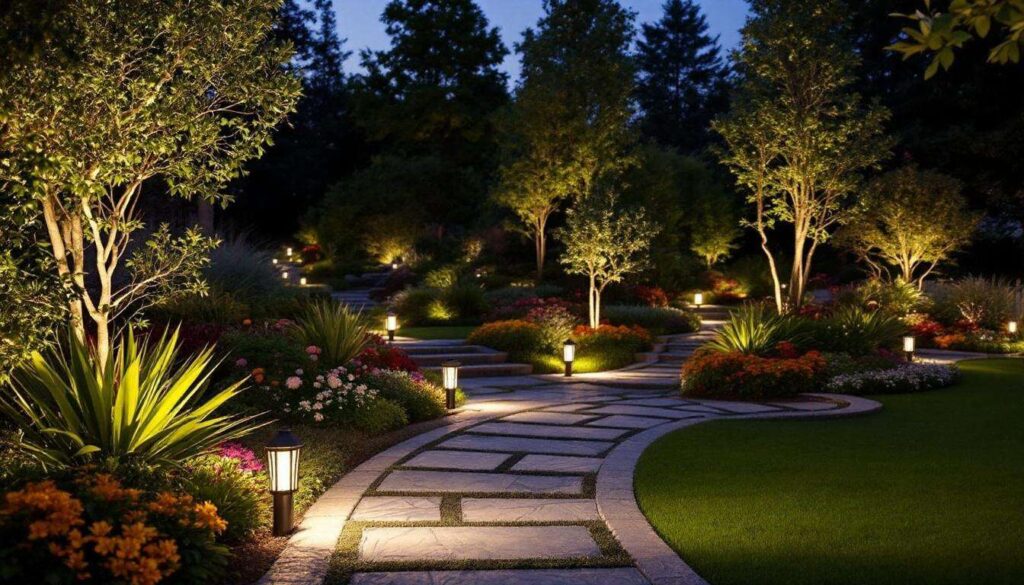
Garden lighting has long been dominated by the ubiquitous string lights draped across patios and woven through trees. However, landscape designers and outdoor lighting specialists are now championing a shift towards more sophisticated, functional and aesthetically refined alternatives. This evolution reflects broader changes in garden design philosophy, where purposeful illumination takes precedence over purely decorative elements. Understanding which lighting trends have become outdated and discovering contemporary replacements can transform outdoor spaces into elegant evening retreats whilst improving both functionality and visual appeal.
Farewell to traditional string lights
Why designers are moving away from string lights
String lights have saturated the outdoor lighting market to the point of becoming predictable and uninspired. Designers note several fundamental drawbacks that make these fixtures less desirable for contemporary gardens. The temporary aesthetic they create often appears cluttered rather than curated, whilst their limited light output fails to provide adequate illumination for practical tasks such as dining or reading outdoors.
Key reasons professionals recommend abandoning string lights include:
- Inconsistent light distribution creating uneven illumination patterns
- Frequent bulb replacements increasing maintenance demands
- Weather vulnerability leading to shortened lifespan
- Visual clutter when installed without strategic planning
- Limited design flexibility compared to modern alternatives
The environmental considerations
Beyond aesthetics, traditional string lights present environmental concerns that conscientious homeowners increasingly wish to avoid. Many conventional sets consume considerable electricity whilst offering minimal illumination returns. The disposable nature of failed bulbs contributes to waste streams, and the plastic components degrade slowly in outdoor conditions. These factors have prompted designers to seek more sustainable solutions that align with ecological garden design principles.
This growing awareness of both aesthetic limitations and environmental impact has paved the way for innovative lighting approaches that address these concerns whilst elevating garden design standards.
Innovations in solar garden lighting
Advanced solar technology transforming outdoor spaces
Solar lighting has evolved dramatically from the dim pathway markers that once characterised the category. Contemporary solar fixtures incorporate high-efficiency photovoltaic cells and advanced battery storage systems that deliver reliable, bright illumination throughout the evening. Designers particularly appreciate solar options for their installation flexibility, requiring no wiring or electrical infrastructure.
| Feature | Traditional Solar | Modern Solar |
|---|---|---|
| Light output (lumens) | 5-15 | 100-400 |
| Battery duration | 4-6 hours | 8-12 hours |
| Charge time | 8-10 hours | 4-6 hours |
Strategic placement for maximum impact
The versatility of solar lighting enables designers to create layered illumination schemes without the constraints of electrical connections. Modern solar fixtures excel in highlighting architectural features, illuminating pathways and accentuating plantings. Their independence from mains power allows for seasonal repositioning, enabling homeowners to adapt lighting as garden displays change throughout the year.
These technological advancements in solar lighting naturally complement another significant development in outdoor illumination technology.
The benefits of integrated LED lamps
Longevity and efficiency advantages
Integrated LED fixtures represent a paradigm shift in garden lighting design. Unlike traditional bulb-based systems, these units incorporate LED technology directly into the fixture housing, eliminating the need for bulb replacements. Designers favour integrated LEDs for their exceptional lifespan, often exceeding 50,000 hours of operation, and their minimal energy consumption compared to incandescent or halogen alternatives.
The practical benefits extend beyond mere convenience:
- Reduced maintenance requirements saving time and expense
- Consistent colour temperature throughout the fixture’s lifespan
- Superior weather resistance through sealed construction
- Precise beam control enabling targeted illumination
- Minimal heat emission protecting nearby plants
Design flexibility and colour options
Modern integrated LED systems offer unprecedented control over lighting characteristics. Adjustable colour temperatures allow homeowners to select warm tones for intimate gatherings or cooler hues for task-oriented areas. Some advanced systems incorporate smart technology, enabling remote control and programming of lighting schedules that respond to seasonal daylight variations.
This technological sophistication pairs beautifully with reimagined traditional lighting forms that bring classic elegance to contemporary gardens.
Opt for modern garden lanterns
Contemporary interpretations of classic designs
Garden lanterns have undergone remarkable reinvention, shedding their dated associations whilst retaining their timeless appeal. Modern iterations combine traditional forms with contemporary materials such as powder-coated aluminium, weathered steel and architectural concrete. These updated lanterns serve as sculptural elements during daylight hours whilst providing focused, practical illumination after dark.
Placement strategies for visual impact
Designers recommend strategic positioning of modern lanterns to create visual anchors throughout garden spaces. Flanking entryways, marking pathway intersections and highlighting seating areas are proven applications. Unlike string lights, which create diffuse ambient glow, lanterns provide directional light that enhances safety whilst contributing architectural interest.
Effective lantern placement considers:
- Height variation creating visual rhythm
- Spacing intervals that guide movement through spaces
- Coordination with garden architecture and hardscaping
- Scale relationships ensuring proportional balance
Beyond these stationary fixtures, dynamic lighting techniques offer additional possibilities for creating engaging outdoor environments.
Spotlights and shadow play: refreshed aesthetics
Dramatic effects through directional lighting
Landscape designers increasingly employ directional spotlights to create theatrical effects that transform gardens after sunset. By carefully positioning narrow-beam fixtures, they generate dramatic shadows and highlight specific features such as specimen trees, architectural elements or water features. This technique, known as uplighting when directed skyward, adds vertical dimension to garden spaces that horizontal lighting cannot achieve.
Technical considerations for optimal results
Successful spotlight installation requires understanding beam angles, fixture positioning and light intensity relationships. Designers typically specify fixtures with adjustable heads, allowing fine-tuning after installation. The interplay between illuminated subjects and the shadows they cast creates depth and mystery, encouraging exploration of garden spaces that might otherwise remain unnoticed.
| Beam angle | Application | Typical distance |
|---|---|---|
| 10-25 degrees | Accent lighting | 3-6 metres |
| 25-40 degrees | Feature highlighting | 2-4 metres |
| 40-60 degrees | Area washing | 1-3 metres |
Whilst spotlights excel at creating focal points and drama, achieving overall comfort in outdoor living spaces requires a complementary approach.
Ambient lights: creating a warm atmosphere
Layered lighting for multifunctional spaces
Professional designers emphasise the importance of ambient lighting layers that provide general illumination without harsh glare or dark pockets. This approach combines multiple light sources at varying heights and intensities to create comfortable, usable outdoor rooms. Wall-mounted sconces, recessed step lights and low-level bollards work together to establish baseline visibility whilst maintaining intimate atmosphere.
Balancing function and mood
The art of ambient lighting lies in achieving sufficient illumination for activities whilst preserving the relaxing qualities that draw people outdoors in the evening. Designers recommend dimmable systems that allow adjustment based on occasion, from bright task lighting for outdoor dining to subdued glow for quiet contemplation. Warm colour temperatures between 2,700 and 3,000 Kelvin typically prove most flattering and comfortable for extended periods.
Effective ambient lighting strategies include:
- Positioning fixtures to avoid direct sightlines preventing glare
- Incorporating multiple circuits for flexible control
- Selecting fixtures with appropriate IP ratings for weather exposure
- Coordinating fixture finishes with garden hardware and furniture
- Installing motion sensors in utilitarian areas whilst maintaining constant illumination in social zones
Garden lighting has matured beyond decorative afterthoughts to become integral to thoughtful landscape design. The departure from traditional string lights reflects broader recognition that outdoor spaces deserve the same considered illumination strategies applied to interior rooms. Modern alternatives such as advanced solar fixtures, integrated LED systems, contemporary lanterns, dramatic spotlights and layered ambient lighting offer superior functionality, aesthetic refinement and environmental responsibility. By embracing these evolved approaches, homeowners can create outdoor environments that extend living spaces well into evening hours whilst showcasing garden features with sophistication previously reserved for indoor settings.