



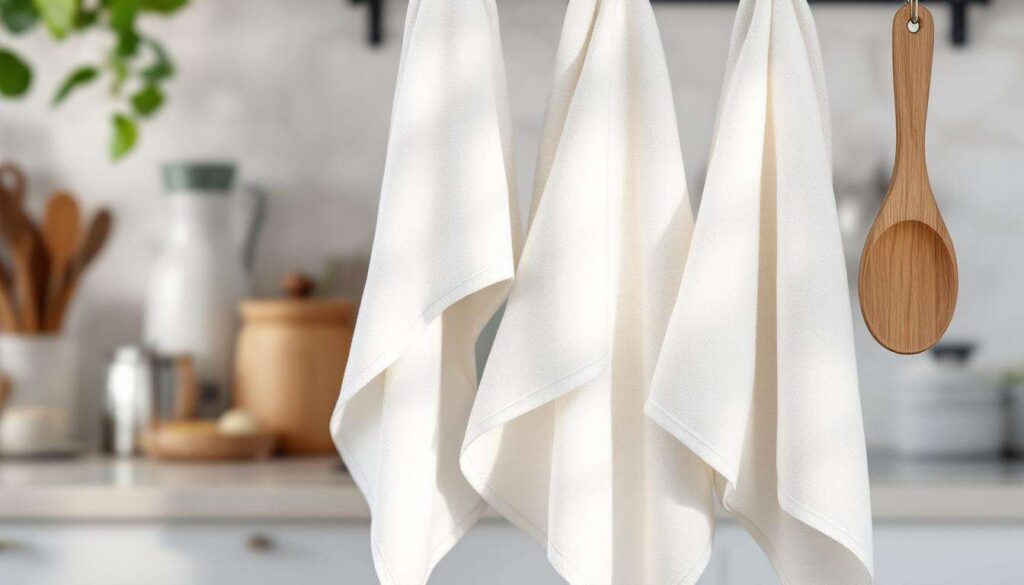
Kitchen towels and tea towels endure a relentless cycle of use, absorbing spills, drying hands, and wiping surfaces throughout the day. Despite regular washing, these essential linens often lose their pristine appearance, transforming from brilliant white to a disappointing grey or yellow. The culprit behind this discolouration extends beyond simple dirt accumulation, involving a complex interaction of food residues, oils, and inadequate washing techniques. Whilst baking soda has long been championed as the solution for restoring whiteness, emerging evidence suggests alternative methods deliver superior results without the hassle of additional treatments.
Why do our kitchen towels turn grey ?
The accumulation of residues and minerals
The primary reason kitchen towels lose their brightness stems from progressive build-up of various substances that embed themselves within the fabric fibres. Each time we use a towel, microscopic particles of food, grease, and dirt transfer onto the material. When washed inadequately, these residues remain trapped, creating layers that dull the original white colour. Hard water compounds this issue significantly, as mineral deposits from calcium and magnesium settle into the fabric during washing cycles.
| Cause of discolouration | Impact on fabric |
|---|---|
| Food oils and grease | Creates yellow staining |
| Hard water minerals | Produces grey dulling |
| Detergent residue | Leaves cloudy appearance |
| Bacterial growth | Causes musty odour and darkening |
Insufficient washing temperatures and detergent effectiveness
Many households wash kitchen linens at temperatures below 60°C, which proves insufficient for removing stubborn stains and killing bacteria. Lower temperatures fail to activate certain detergent enzymes fully, leaving behind the very substances that cause discolouration. Furthermore, using excessive detergent creates a paradoxical problem: soap residue accumulates in fibres, attracting more dirt and creating a grey film that resists removal in subsequent washes.
- Low wash temperatures preserve bacteria and oils
- Overloading washing machines prevents proper agitation
- Fabric softeners coat fibres, trapping dirt particles
- Insufficient rinsing leaves detergent deposits
Understanding these mechanisms reveals why conventional approaches often disappoint, setting the stage for exploring more effective whitening strategies.
The secret to whitening without baking soda
White vinegar as the superior alternative
White vinegar emerges as the most effective natural solution for restoring brilliance to kitchen towels. This humble ingredient works through multiple mechanisms simultaneously: it dissolves mineral deposits, breaks down soap residue, and neutralises odours without damaging fabric integrity. Add approximately 250ml of white vinegar to the fabric softener compartment during the wash cycle. The acidic properties cut through grease whilst the vinegar evaporates completely during drying, leaving no lingering scent.
Lemon juice and sunlight combination
For particularly stubborn staining, lemon juice combined with natural sunlight provides remarkable results. The citric acid in lemon juice acts as a natural bleaching agent, whilst ultraviolet rays from sunlight enhance the whitening effect. Soak towels in hot water with the juice of three to four lemons for thirty minutes before washing. Following the wash cycle, hang towels outdoors in direct sunlight to dry. This method proves especially effective for organic stains such as tea, coffee, or tomato-based sauces.
Hydrogen peroxide treatment
Hydrogen peroxide offers powerful whitening capabilities without the harsh effects of chlorine bleach. Mix 125ml of 3% hydrogen peroxide with your regular detergent for white loads. This oxygen-based solution breaks down stains at the molecular level whilst being gentler on fabrics than traditional bleaches. The compound decomposes into water and oxygen, making it environmentally friendly and safe for septic systems.
| Method | Quantity | Application |
|---|---|---|
| White vinegar | 250ml | Fabric softener compartment |
| Lemon juice | 3-4 lemons | Pre-soak for 30 minutes |
| Hydrogen peroxide | 125ml (3%) | Mix with detergent |
These alternatives not only outperform baking soda but also address the root causes of discolouration more comprehensively, leading naturally to preventative measures.
Simple tips to keep whiteness
Proper sorting and washing frequency
Maintaining the whiteness of kitchen towels begins with rigorous sorting practices. Always separate white towels from coloured items, even light pastels, as dye transfer occurs more readily than most people realise. Wash kitchen towels separately from bathroom towels, as the types of soiling differ significantly. Kitchen linens require more intensive treatment due to food-related staining.
- Wash white kitchen towels after each day of heavy use
- Never allow soiled towels to sit for more than three days
- Rinse heavily soiled towels in cold water before machine washing
- Avoid mixing towels with items containing zips or hooks that damage fibres
Optimal machine settings and load size
The washing machine settings significantly impact cleaning effectiveness. Select a hot water cycle of at least 60°C for white kitchen towels, as this temperature activates enzymes and kills bacteria efficiently. Avoid overloading the drum; towels need adequate space to agitate freely. Fill the machine to approximately two-thirds capacity for optimal results. Use a biological detergent containing enzymes that target protein and fat-based stains.
Immediate drying and storage protocols
Prompt drying prevents mildew formation that contributes to greyness and unpleasant odours. Remove towels from the washing machine immediately upon cycle completion. Tumble dry on high heat or hang in direct sunlight. Never store damp towels in enclosed spaces. Ensure complete dryness before folding and storing in well-ventilated cupboards. These fundamental practices complement professional techniques.
The method used by hotels
Commercial laundry techniques adapted for home use
Hotels maintain consistently pristine linens through systematic washing protocols that home users can replicate. The hospitality industry relies on high-temperature washing at 75-90°C combined with commercial-grade detergents containing optical brighteners. Whilst domestic machines rarely reach these temperatures, achieving similar results remains possible through strategic adaptations.
The double-wash approach
Professional laundries often employ a two-stage washing process for heavily soiled linens. The first cycle uses hot water with detergent to remove surface dirt and oils. The second cycle incorporates a whitening agent or vinegar rinse. Home users can replicate this by running towels through a hot wash with detergent, followed immediately by a second hot cycle with white vinegar in place of fabric softener.
Strategic use of bleach alternatives
Hotels carefully dose oxygen-based bleaches to maintain whiteness without degrading fabrics. For home application, add oxygen bleach powder according to package directions during the wash cycle. Unlike chlorine bleach, oxygen bleach works effectively at lower temperatures and proves safer for coloured stitching or decorative elements on towels. This professional approach ensures longevity alongside cleanliness.
| Hotel technique | Home adaptation |
|---|---|
| 75-90°C washing | 60°C with extended cycle |
| Commercial detergents | Biological detergent plus oxygen bleach |
| Industrial dryers | High-heat tumble dry or sunlight |
| Daily replacement | Wash after each heavy-use day |
Implementing these professional standards at home bridges the gap between commercial and domestic laundry results, though even the best methods eventually face limitations.
How to restore the brightness of your towels
Intensive restoration treatment for severely dulled towels
When towels have reached an advanced stage of discolouration, intensive intervention becomes necessary. Begin with a stripping wash that removes years of accumulated residue. Fill a bathtub or large basin with hot water and add 60ml of washing soda, 60ml of borax, and regular detergent. Submerge towels completely and soak for four to six hours, stirring occasionally. The water will turn alarmingly grey or brown as years of build-up releases from the fibres.
Sequential treatment protocol
Following the stripping wash, implement a three-stage restoration process. First, machine wash towels with hot water and detergent only. Second, run another hot cycle with 250ml white vinegar added to the rinse. Third, complete a final wash with hydrogen peroxide or oxygen bleach. This sequential approach systematically addresses different types of staining and residue.
- Stage one removes loosened debris from stripping wash
- Stage two eliminates remaining mineral deposits and soap residue
- Stage three brightens and sanitises the restored fibres
- Dry in direct sunlight for maximum whitening effect
Maintenance after restoration
Once brightness returns, maintain results through consistent practices. Wash restored towels weekly using the white vinegar method. Avoid fabric softeners permanently, as they reintroduce the coating that traps dirt. Rotate towels regularly to distribute wear evenly. These efforts extend the lifespan of restored linens, though replacement eventually becomes inevitable.
When to replace your old towels ?
Signs indicating replacement necessity
Despite diligent care, kitchen towels eventually reach the end of their functional lifespan. Recognising replacement indicators prevents continued use of unhygienic or ineffective linens. Persistent odours that survive hot washing signal bacterial colonisation deep within fibres. Thinning fabric, holes, or frayed edges compromise absorbency and cleanliness. Stains that resist all whitening attempts indicate permanent fabric damage.
Expected lifespan and usage considerations
Quality kitchen towels typically last one to three years with proper care, though heavy use shortens this timeframe considerably. Commercial kitchens replace towels every six to twelve months due to intensive daily use. Home kitchens with moderate use can expect approximately two years before replacement becomes necessary. Maintain a rotation of at least seven towels to reduce wear on individual items.
| Usage level | Expected lifespan |
|---|---|
| Heavy daily use | 6-12 months |
| Moderate daily use | 1-2 years |
| Light weekly use | 2-3 years |
Environmental considerations for disposal
Rather than discarding worn towels, repurpose them for cleaning tasks where appearance matters less. Cut old kitchen towels into cleaning rags for household tasks, garage work, or gardening. Textile recycling programmes accept cotton towels for industrial repurposing. This approach reduces waste whilst extracting final utility from materials no longer suitable for food preparation areas.
Maintaining brilliant white kitchen towels requires understanding the causes of discolouration and implementing effective solutions beyond traditional baking soda treatments. White vinegar, lemon juice, and hydrogen peroxide provide superior whitening results whilst addressing mineral deposits and residue accumulation. Professional hotel techniques adapted for home use, including double-washing and oxygen bleach application, deliver commercial-quality results. Regular maintenance through proper sorting, optimal washing temperatures, and immediate drying preserves whiteness between intensive treatments. When restoration efforts fail to revive severely damaged towels, timely replacement ensures kitchen hygiene standards remain uncompromised. These comprehensive strategies transform kitchen linen care from frustrating challenge to manageable routine.