

The bathroom has evolved from a purely functional space into a sanctuary where design meets tranquillity. As homeowners seek environments that promote wellbeing whilst maintaining practicality, the Japandi aesthetic has emerged as a compelling solution. This design philosophy marries the refined simplicity of Japanese interiors with the cosy functionality of Scandinavian design, creating bathrooms that feel both serene and supremely liveable. British designers increasingly champion this hybrid style, noting its remarkable ability to transcend fleeting trends whilst delivering spaces that genuinely enhance daily routines.
Understanding Japandi Style: a Blend of Japanese Minimalism and Scandinavian Elegance
The philosophical foundations of Japandi design
Japandi represents more than a visual aesthetic; it embodies a philosophical approach to living. The Japanese concept of wabi-sabi, which celebrates imperfection and impermanence, combines with the Scandinavian principle of hygge, emphasising comfort and contentment. In bathroom contexts, this translates to spaces that honour natural materials, embrace simplicity, and prioritise human experience over ostentation. The style rejects excess whilst avoiding starkness, achieving a delicate equilibrium that feels both restful and welcoming.
Distinguishing characteristics of the Japandi approach
Several defining features set Japandi bathrooms apart from other minimalist styles:
- Careful curation rather than emptiness, with each element serving a clear purpose
- Warmth introduced through natural textures and organic materials
- Low-profile furniture and fixtures that maintain visual calm
- Emphasis on craftsmanship and quality over quantity
- Integration of nature through plants, natural light, and biophilic elements
This thoughtful approach ensures that Japandi bathrooms never feel cold or clinical, distinguishing them from purely minimalist spaces that can sometimes appear austere.
Why the fusion works so effectively
The synergy between Japanese and Scandinavian design principles stems from shared values despite different cultural origins. Both traditions prioritise functionality, natural materials, and understated beauty. Where Japanese design might lean towards austerity, Scandinavian warmth softens the edges. Conversely, Japanese precision and attention to detail elevate Scandinavian cosiness beyond mere comfort. This complementary relationship creates bathrooms that feel simultaneously grounding and uplifting.
These foundational principles naturally lead to specific material and colour choices that define the Japandi bathroom palette.
Key Materials and Colours in Japandi Bathrooms
Natural materials that define the aesthetic
Japandi bathrooms rely heavily on authentic, unprocessed materials that age gracefully. Wood features prominently, particularly lighter varieties such as oak, ash, and Japanese cedar, often left untreated or finished with natural oils. Stone appears in various forms, from honed granite worktops to pebble flooring, providing textural contrast whilst maintaining the organic feel. Bamboo offers a sustainable option for accessories and storage, whilst linen and cotton textiles add softness without compromising the clean aesthetic.
The restrained colour palette
Colour choices in Japandi bathrooms demonstrate remarkable discipline, creating visual harmony through limitation rather than variety:
| Colour Category | Typical Shades | Application |
|---|---|---|
| Neutrals | Warm whites, beiges, soft greys | Walls, large surfaces |
| Earth tones | Terracotta, clay, sand | Accent pieces, ceramics |
| Wood tones | Honey, ash, pale oak | Furniture, fixtures |
| Accent colours | Charcoal, forest green, deep blue | Minimal decorative elements |
Texture as a design element
With colour restrained, texture becomes paramount in preventing monotony. Japandi bathrooms layer different surface qualities: smooth ceramic tiles alongside rough stone, polished wood against woven baskets, matte paint beside glossy fixtures. This textural richness creates visual interest whilst maintaining chromatic simplicity, allowing the eye to rest whilst remaining engaged.
These material choices directly support the dual goals that lie at the heart of Japandi bathroom design.
Functionality and Serenity: the Cornerstones of a Japandi Bathroom
Practical considerations in Japandi design
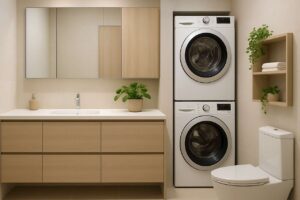
Japandi bathrooms reject the notion that beauty requires sacrifice of utility. Storage solutions remain discreet yet abundant, with built-in cabinetry and concealed compartments maintaining clean lines whilst accommodating necessities. Fixtures are selected for ergonomic excellence as much as aesthetic appeal, with Japanese soaking tubs and rainfall showerheads offering superior functionality alongside visual simplicity. Every element earns its place through usefulness, not merely decorative value.
Creating a spa-like atmosphere
The serene quality of Japandi bathrooms stems from deliberate spatial planning and sensory consideration:
- Generous negative space allowing visual and physical breathing room
- Natural light maximised through strategic window placement and minimal window treatments
- Soft, layered lighting for different times of day and activities
- Acoustic consideration, with sound-absorbing materials reducing echo
- Temperature control through underfloor heating and quality ventilation
The role of ritual in bathroom design
Japandi bathrooms acknowledge that daily routines can become meaningful rituals when the environment supports mindfulness. Thoughtful placement of mirrors, convenient access to frequently used items, and dedicated spaces for specific activities transform mundane tasks into moments of intentional self-care. This approach reflects the Japanese concept of ichi-go ichi-e, treasuring each encounter as unique and unrepeatable.
British designers have recognised these qualities and adapted them to suit local contexts and preferences.
The Impact of Japandi Style on British Designers
Why UK professionals embrace this aesthetic
British interior designers have adopted Japandi principles with particular enthusiasm, finding them well-suited to the UK housing stock and climate. The style’s emphasis on natural light addresses the challenge of darker British winters, whilst its warmth counters potential coldness in period properties. London-based designer Emma Richardson notes that Japandi offers clients something increasingly rare: a design language that feels contemporary without being trendy, sophisticated without pretension.
Adaptations for British homes
UK designers have made subtle modifications to suit local conditions and preferences:
- Incorporation of traditional British materials such as limestone and slate
- Adaptation to smaller bathroom footprints common in Victorian and Edwardian properties
- Integration of heated towel rails and radiators as design features rather than afterthoughts
- Consideration of hard water issues in fixture selection and finishes
- Balancing minimalism with adequate storage for typical British household needs
Client response and market trends
British homeowners have responded positively to Japandi bathrooms, particularly those seeking longevity in their renovations. Manchester-based bathroom specialist James Chen reports that enquiries for Japandi-inspired designs have increased substantially, with clients specifically requesting “timeless” and “calming” spaces. This demand reflects broader cultural shifts towards wellness, sustainability, and intentional living, values that Japandi design inherently embodies.
The enthusiastic reception from both designers and homeowners points to advantages that extend beyond mere aesthetics.
The Timeless Benefits of a Japandi Bathroom
Longevity through restraint
Japandi bathrooms resist obsolescence precisely because they avoid trend-driven choices. By focusing on fundamental design principles rather than fashionable details, these spaces remain relevant across decades. The neutral palette never appears dated, quality materials improve with age, and the emphasis on function ensures continued practical relevance regardless of stylistic shifts elsewhere.
Psychological and wellbeing advantages
The benefits of Japandi bathroom design extend to mental and physical health:
| Benefit | Mechanism | Impact |
|---|---|---|
| Stress reduction | Visual simplicity, natural materials | Lower cortisol levels, improved mood |
| Better sleep | Calming evening routines in serene environment | Enhanced sleep quality and duration |
| Increased mindfulness | Intentional design encouraging present-moment awareness | Greater daily satisfaction and reduced anxiety |
| Improved air quality | Natural materials with low VOC emissions | Respiratory health, reduced allergens |
Environmental and economic considerations
Japandi principles align with sustainable living through emphasis on quality over quantity, natural materials, and timeless design that discourages frequent renovation. The style’s preference for durable, repairable items rather than disposable fixtures reduces environmental impact whilst proving economically sensible over time. This alignment with contemporary values regarding sustainability further ensures the style’s continued relevance.
For those convinced by these advantages, practical implementation requires thoughtful planning and execution.
Tips for Incorporating Japandi Style into Your Bathroom
Starting with spatial planning
Successful Japandi bathrooms begin with careful consideration of layout and flow. Assess your space honestly, removing unnecessary elements before adding anything new. Create zones for different activities whilst maintaining visual continuity. Consider traffic patterns and ensure adequate clearance around fixtures. This foundational work proves more important than any decorative choices that follow.
Selecting fixtures and fittings
Choose bathroom fixtures that embody Japandi principles:
- Wall-hung toilets and basins to maximise floor space and ease cleaning
- Simple, geometric tap designs in matte black or brushed metal finishes
- Frameless glass shower enclosures or simple linen curtains
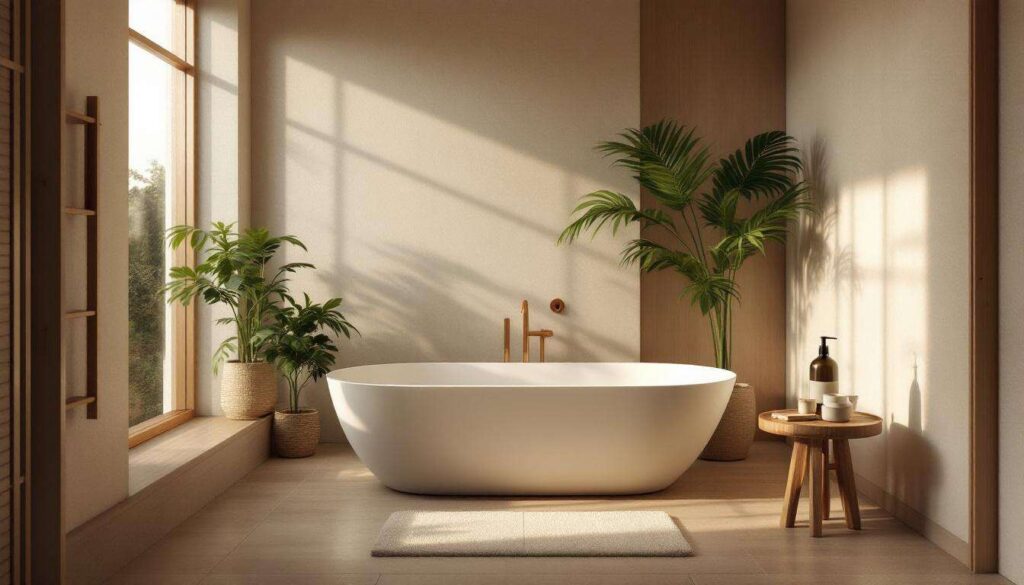
- Freestanding baths with clean lines, avoiding ornate feet or excessive curves
- Recessed or minimalist lighting fixtures that provide function without visual clutter
Adding warmth without compromising simplicity
Prevent austerity by introducing carefully selected warm elements. A wooden bath mat or stool brings natural texture underfoot. Woven baskets provide attractive storage whilst softening hard surfaces. A single potted plant adds life without overwhelming the space. Quality towels in natural fibres and neutral tones offer both comfort and visual appeal. Each addition should feel intentional rather than arbitrary.
Maintaining the aesthetic over time
Japandi bathrooms require discipline to maintain their essential character. Regularly edit possessions, removing items that no longer serve a purpose. Clean and care for natural materials appropriately to preserve their beauty. Resist the temptation to add decorative elements simply to fill space. This ongoing curation ensures the bathroom continues to provide the serenity and functionality that make the style so appealing.
The enduring appeal of Japandi bathroom design lies in its ability to satisfy multiple needs simultaneously: aesthetic beauty, practical functionality, psychological wellbeing, and environmental responsibility. British designers recognise these qualities, understanding that spaces built on timeless principles rather than temporary trends serve clients far better over the lifespan of a renovation. The style’s emphasis on natural materials, restrained colour palettes, and thoughtful spatial planning creates bathrooms that feel both contemporary and enduring. As our homes increasingly serve as sanctuaries from demanding modern life, the calm functionality of Japandi design offers a compelling blueprint for bathrooms that genuinely enhance daily living whilst maintaining their relevance across changing fashions.