

Creating a home that feels custom-built doesn’t require a complete renovation or an extravagant budget. According to experienced contractors, one simple yet transformative detail can elevate any property from ordinary to extraordinary: thoughtful attention to finishing touches. These small investments in quality details create visual cohesion and architectural interest that distinguish professionally designed spaces from standard builds. The difference between a house and a home often lies not in structural changes but in the deliberate choices made regarding trim, lighting, paint, and accessories.
The direct effect of details on a home’s appearance
Why finishing details matter in home design
The human eye naturally gravitates towards refined details that signal quality and care. Contractors consistently emphasise that finishing touches create the impression of custom craftsmanship, even in production-built homes. These elements work together to establish visual rhythm and architectural character that standard builds typically lack.
Key areas where details make an immediate impact include:
- Transitions between rooms and architectural features
- Ceiling and floor junctions that frame living spaces
- Window and door surrounds that add depth
- Built-in features that suggest bespoke construction
The psychology behind perceived value
Research in environmental psychology demonstrates that detailed environments create stronger emotional responses than sparse ones. When homeowners invest in quality finishing details, visitors and potential buyers subconsciously register the space as more valuable and carefully considered. This perception extends beyond aesthetics to influence comfort levels and overall satisfaction with the living environment.
| Detail Level | Perceived Value Increase | Actual Cost |
|---|---|---|
| Basic finish | Baseline | Standard |
| Enhanced trim | 15-20% | 5-8% additional |
| Complete detailing | 25-35% | 10-15% additional |
Understanding how these visual cues function allows homeowners to strategically allocate resources for maximum effect.
The importance of mouldings and trims
Crown moulding as an architectural statement
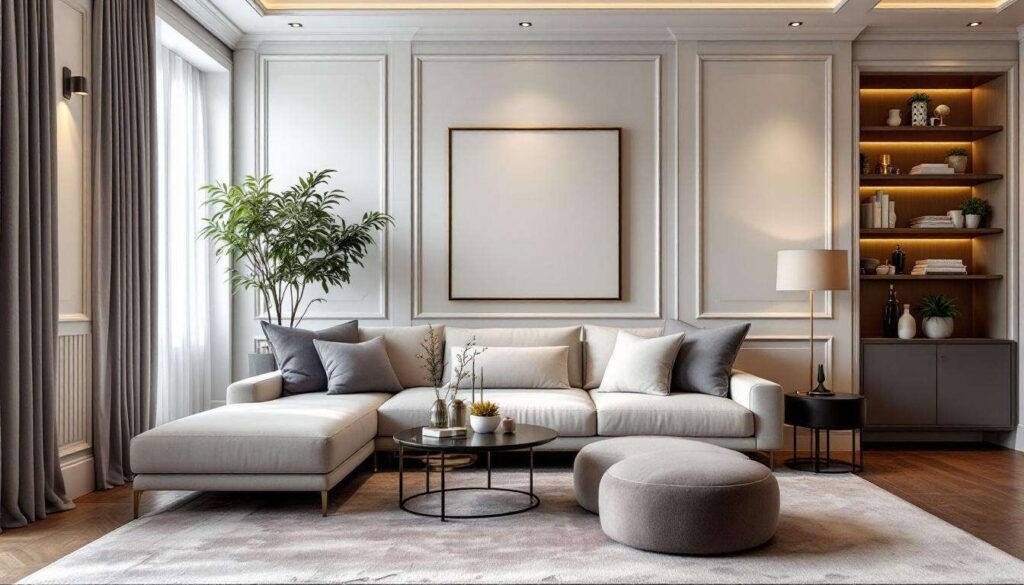
Contractors unanimously identify crown moulding as the single most cost-effective upgrade for creating a custom appearance. This horizontal trim where walls meet ceilings adds architectural sophistication and draws the eye upward, making rooms feel more spacious and intentionally designed. Even modest crown moulding profiles create visual interest that standard squared-off corners cannot achieve.
Installation costs remain relatively low compared to the dramatic visual impact, particularly when using pre-primed MDF or polyurethane options that simplify the finishing process.
Skirting boards and architraves
Often overlooked, skirting boards and door architraves significantly influence a room’s character. Upgrading from basic profiles to more substantial designs instantly elevates the space. Contractors recommend:
- Choosing skirting boards at least 150mm tall for standard ceiling heights
- Matching architrave profiles to skirting board styles for cohesion
- Considering picture rails in dining rooms and hallways
- Adding panel moulding to create feature walls economically
Window and door casings
The frames surrounding windows and doors represent prime opportunities for adding custom-built character. Wider casings with decorative profiles create shadow lines that add depth and visual interest. Many contractors suggest investing in quality window treatments that complement enhanced casings, as the combination creates a cohesive, intentional appearance.
These structural enhancements establish the foundation upon which other design elements build.
How lighting adds a personalised touch
Statement fixtures as focal points
Lighting serves dual purposes: functionality and aesthetics. Contractors emphasise that distinctive light fixtures immediately communicate thoughtful design. Replacing builder-grade fixtures with carefully selected alternatives transforms spaces without structural modifications.
Strategic lighting choices include:
- Oversized pendants in dining areas and kitchens
- Decorative chandeliers in entryways
- Architectural wall sconces flanking mirrors or artwork
- Under-cabinet and toe-kick lighting for ambience
Layered lighting schemes
Professional designers create lighting layers that provide flexibility and atmosphere. This approach combines ambient, task, and accent lighting to highlight architectural features and create visual depth. Dimmer switches on all lighting circuits allow homeowners to adjust mood and functionality throughout the day.
| Lighting Type | Purpose | Budget-Friendly Options |
|---|---|---|
| Ambient | Overall illumination | Upgraded ceiling fixtures |
| Task | Functional lighting | Under-cabinet LED strips |
| Accent | Highlighting features | Picture lights, uplighters |
These illumination strategies naturally lead to considerations of colour and surface treatments.
Paint and wallpaper: economical and strategic choices
The transformative power of paint quality
Contractors consistently advise that premium paint represents one of the best value investments in home finishing. Higher-quality paints provide superior coverage, richer colour depth, and enhanced durability. The difference between standard and premium paint becomes immediately apparent in how light interacts with surfaces.
Accent walls and architectural colour
Strategic colour placement creates architectural interest without physical modifications. Painting alcoves, chimney breasts, or single feature walls in contrasting colours adds dimension and draws attention to desirable features. Many contractors recommend painting ceilings in subtle tints rather than stark white to create warmth and sophistication.
Wallpaper as an affordable luxury
Modern wallpaper options offer remarkable versatility at accessible price points. Contractors note that wallpapering a single feature wall creates dramatic impact with minimal material costs. Textured wallpapers add tactile interest that paint alone cannot achieve, whilst patterned options introduce personality and visual complexity.
Effective colour and pattern choices include:
- Subtle textures in neutral tones for sophistication
- Bold patterns in powder rooms or small spaces
- Coordinating wallpaper with existing architectural details
- Using removable wallpaper for flexibility
These surface treatments create the backdrop against which decorative elements truly shine.
The decor accessories that change everything
Hardware upgrades throughout the home
Experienced contractors identify door and cabinet hardware as disproportionately influential details. Replacing builder-grade handles, knobs, and hinges with quality alternatives instantly elevates perceived craftsmanship. Consistent hardware finishes throughout the home create visual cohesion that suggests intentional design.
Window treatments as architectural elements
Properly specified curtains and blinds frame windows as architectural features rather than mere openings. Contractors recommend mounting curtain poles closer to the ceiling and extending them beyond window frames to create the illusion of larger windows and taller ceilings.
Mirrors and artwork placement
Strategic placement of mirrors amplifies light and creates spatial depth. Large mirrors opposite windows maximize natural light whilst creating the impression of additional square footage. Artwork hung at consistent heights throughout the home establishes visual rhythm and professional presentation.
These finishing touches work in concert with thoughtful spatial planning.
Optimising arrangements for a unique look
Furniture placement principles
Contractors working on show homes understand that furniture arrangement dramatically affects how spaces feel. Pulling furniture away from walls creates conversation areas and makes rooms appear larger. Defining zones within open-plan spaces using rugs and furniture groupings adds structure and purpose.
Creating focal points
Every room benefits from a clear focal point that anchors the space. This might be:
- A fireplace enhanced with quality mantel and surround
- A feature wall with distinctive treatment
- A statement piece of furniture or artwork
- An architectural element highlighted through lighting
Scale and proportion considerations
Professional designers emphasise that appropriate scale distinguishes custom spaces from poorly planned ones. Oversized artwork, substantial light fixtures, and properly proportioned furniture create impact and confidence. Contractors advise homeowners to choose fewer, larger pieces rather than numerous small items that create visual clutter.
Transforming a standard house into a home that feels custom-built requires neither extensive renovations nor unlimited budgets. The strategic application of quality finishing details creates architectural interest and visual sophistication that distinguish thoughtfully designed spaces. Crown moulding and enhanced trim work establish structural elegance, whilst carefully selected lighting fixtures add personality and functionality. Premium paint finishes and strategic wallpaper applications provide cost-effective transformation, and upgraded hardware throughout maintains consistency. Finally, deliberate furniture placement and scaled accessories complete the custom appearance. By focusing investment on these high-impact details, homeowners achieve the bespoke character of custom construction at a fraction of the cost, proving that attention to finishing touches remains the most valuable design principle in residential spaces.