



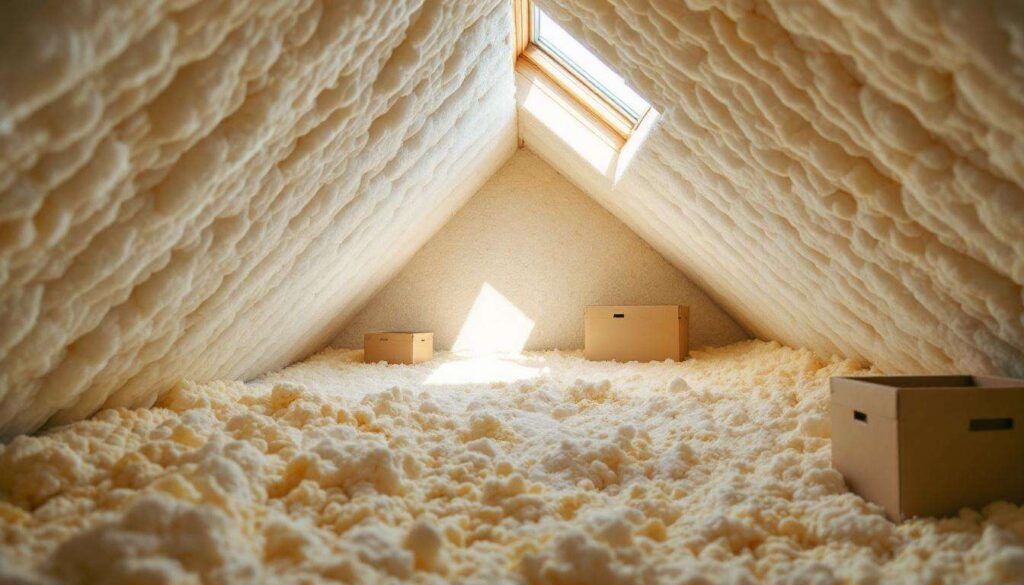
With energy bills continuing to strain household budgets across the UK, homeowners are searching for practical solutions to reduce heating costs. One of the most effective yet frequently overlooked measures involves addressing the space directly above your living areas. Heat naturally rises, and without adequate protection, up to 25% of a home’s warmth can escape through the roof. This represents not just wasted energy but also hundreds of pounds needlessly spent each year. By investing in proper loft insulation, households can dramatically reduce their heating expenses whilst simultaneously improving comfort levels throughout the colder months. The financial benefits are substantial enough that many homeowners recoup their initial investment within a single winter season.
The importance of loft insulation in winter
Understanding heat loss in residential properties
The physics of heat transfer means that warm air consistently moves upwards through convection. In homes with inadequate or non-existent loft insulation, this heated air simply passes through the ceiling and escapes into the atmosphere. During winter months, when heating systems operate for extended periods, this continuous heat loss forces boilers and radiators to work harder to maintain comfortable indoor temperatures. The result is significantly higher energy consumption and inflated utility bills that could otherwise be avoided.
The financial impact of poor insulation
Research from energy efficiency organisations demonstrates that homes without proper loft insulation can lose approximately £590 annually through the roof alone. This figure becomes even more striking when considered over multiple years. A household could be spending thousands of pounds on heating costs that provide no lasting benefit, with the warmth simply dissipating into the external environment. The financial burden affects families across all income brackets, making insulation improvements one of the most democratically beneficial home upgrades available.
Environmental considerations beyond cost savings
Beyond the immediate household budget implications, inadequate insulation contributes to unnecessary carbon emissions. When homes require excessive heating to compensate for heat loss, the environmental footprint increases proportionally. Key environmental benefits of proper loft insulation include:
- Reduced carbon dioxide emissions from decreased energy consumption
- Lower demand on national energy infrastructure during peak winter periods
- Decreased reliance on fossil fuel-based heating systems
- Contribution towards meeting national climate targets
These considerations make loft insulation not merely a personal financial decision but also an environmental responsibility. Understanding how insulation actually functions helps homeowners appreciate why this investment delivers such impressive returns.
How thermal insulation works
The science of thermal resistance
Insulation materials function by trapping air within their structure, creating pockets that resist heat transfer. Air itself is an excellent insulator when stationary, and insulation products exploit this property by preventing air movement. The effectiveness of insulation is measured using R-values or U-values, which quantify thermal resistance. Higher R-values indicate better insulating properties, whilst lower U-values demonstrate reduced heat transfer rates.
Preventing convection, conduction and radiation
Heat escapes through three primary mechanisms: conduction, convection and radiation. Insulation addresses all three simultaneously. Conduction occurs when heat passes through solid materials, whilst convection involves heat transfer through air movement. Radiation refers to heat travelling as electromagnetic waves. Quality loft insulation creates a barrier that minimises all these transfer methods, effectively containing warmth within living spaces rather than allowing it to escape through the roof structure.
The practical implications of these thermal principles become apparent when examining actual energy consumption patterns and potential savings.
Energy savings through insulation
Quantifying the financial benefits
The £590 annual saving figure represents a realistic expectation for typical UK homes with previously uninsulated lofts. However, actual savings vary depending on several factors including property size, existing insulation levels, heating system efficiency and local energy prices. The following table illustrates potential savings across different property types:
| Property Type | Average Annual Saving | Payback Period |
|---|---|---|
| Semi-detached house | £590 | 8-12 months |
| Detached house | £730 | 10-14 months |
| Mid-terrace house | £480 | 7-10 months |
| Bungalow | £640 | 9-13 months |
Long-term financial advantages
Beyond the immediate first-year savings, loft insulation continues delivering financial benefits for decades. Quality insulation materials typically last 40 years or more without significant degradation in performance. Over this lifespan, a household could save tens of thousands of pounds in heating costs. Additionally, properties with good insulation often command higher market values and appeal more strongly to prospective buyers increasingly concerned with energy efficiency ratings.
Reduced heating system wear
When homes retain heat more effectively, boilers and heating systems operate less frequently and under reduced strain. This translates to lower maintenance costs, fewer repairs and extended equipment lifespan. The cumulative effect of these secondary savings further enhances the overall financial case for insulation investment.
Achieving these savings requires selecting appropriate materials that match both the property characteristics and budget constraints.
Effective materials for insulating your loft
Mineral wool insulation
Mineral wool, also known as rock wool or glass wool, remains one of the most popular choices for loft insulation. This material offers excellent fire resistance, good acoustic properties and effective thermal performance. Mineral wool comes in rolls or batts that fit between joists, making installation relatively straightforward for both professionals and competent DIY enthusiasts. The material is non-combustible and resists moisture absorption, contributing to long-term durability.
Rigid foam boards
Polyurethane or polystyrene foam boards provide superior insulating properties per centimetre of thickness compared to mineral wool. These boards work particularly well in lofts with limited headroom or where space constraints make thicker insulation impractical. Rigid boards also offer structural benefits and can create a stable surface for storage purposes when properly installed. However, they typically cost more per square metre than alternative materials.
Natural and sustainable alternatives
Environmentally conscious homeowners increasingly opt for natural insulation materials including:
- Sheep’s wool: renewable, breathable and naturally fire-resistant
- Recycled paper cellulose: eco-friendly with good thermal properties
- Hemp fibre: sustainable, mould-resistant and effective insulator
- Wood fibre boards: renewable resource with excellent thermal mass
These materials often carry environmental certifications and appeal to those prioritising sustainability alongside performance. Whilst sometimes more expensive initially, they offer comparable thermal efficiency and the satisfaction of reducing environmental impact.
Selecting the right material represents only part of the equation; understanding the investment required helps homeowners make informed decisions.
Cost and profitability of good insulation
Initial investment requirements
Professional loft insulation installation typically costs between £300 and £600 for an average semi-detached property, depending on loft size, accessibility and chosen materials. DIY installation can reduce costs by approximately 40-50%, though this requires confidence in working safely at height and understanding proper installation techniques. The investment covers both materials and labour, with prices varying regionally across the UK.
Breaking even within one season
The compelling aspect of loft insulation lies in its rapid payback period. With annual savings of £590, a £500 installation investment recovers itself in approximately 10 months. This represents one of the fastest returns available from any home improvement project. Unlike cosmetic upgrades that provide aesthetic value, insulation delivers measurable, ongoing financial benefits from the moment of installation.
Available grants and support schemes
Various government and energy company schemes periodically offer grants or subsidised insulation for eligible households. These programmes particularly target low-income families, pensioners and those receiving certain benefits. Homeowners should investigate current offerings through the Energy Saving Trust or local authority programmes, as these can substantially reduce or even eliminate upfront costs.
Maximising the return on this investment requires attention to installation quality and technique.
Tips for optimal installation
Achieving the recommended depth
Current building regulations recommend loft insulation depths of at least 270mm to achieve optimal thermal performance. Many older properties have insufficient insulation, often just 100mm or less. When topping up existing insulation, lay new material perpendicular to existing layers to minimise gaps and cold spots. Ensure consistent coverage across the entire loft space, paying particular attention to eaves and corners where heat loss commonly occurs.
Maintaining ventilation and avoiding condensation
Whilst insulating thoroughly, maintaining adequate loft ventilation remains crucial. Blocked ventilation can lead to condensation problems, timber decay and reduced insulation effectiveness. Key ventilation considerations include:
- Never block soffit vents or ridge ventilation
- Install eaves ventilators where insulation meets the roof edge
- Ensure water tanks and pipes receive separate insulation
- Leave inspection hatches accessible and properly sealed
Professional versus DIY installation
Competent DIY enthusiasts can successfully install loft insulation, particularly when using roll or batt materials. However, professional installation guarantees correct technique, appropriate safety measures and often includes warranties. For complex loft configurations, properties with unusual construction or when spray foam insulation is preferred, professional installation proves advisable. The modest additional cost often justifies the peace of mind and assured quality.
Loft insulation represents a rare combination of environmental responsibility and sound financial investment. The substantial annual savings of up to £590, coupled with payback periods measured in months rather than years, make this improvement one of the most cost-effective measures available to UK homeowners. With heating costs unlikely to decrease significantly, the value of retaining warmth within the home only increases. Whether undertaken as a DIY project or through professional installation, proper loft insulation delivers immediate comfort improvements and decades of ongoing financial benefits. For households seeking practical ways to reduce energy bills whilst improving home efficiency, addressing loft insulation should rank as an urgent priority this winter.