



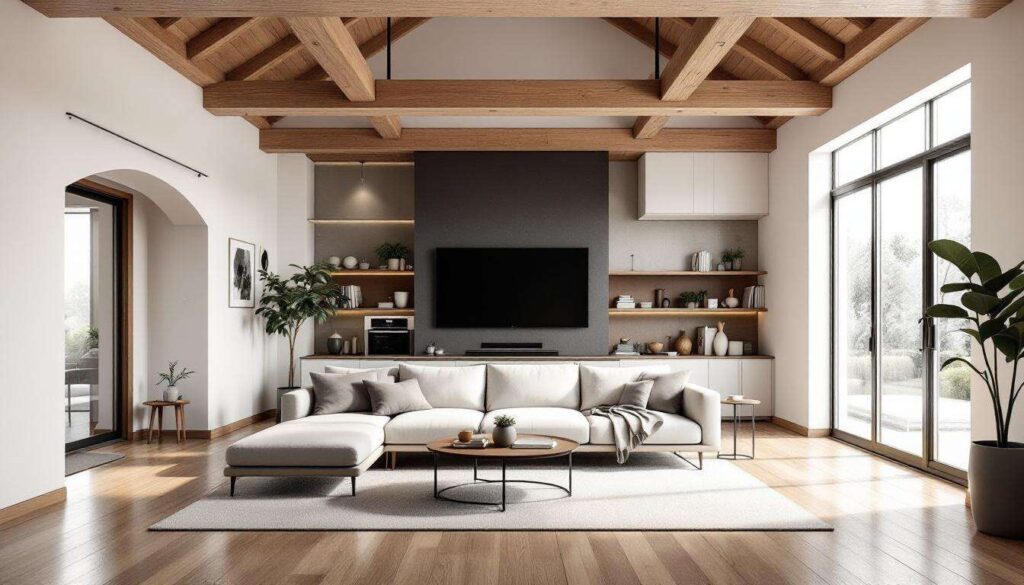
Homeowners and interior designers are rediscovering the charm of architectural elements long hidden beneath plasterboard and paint. Wooden ceilings, particularly those featuring exposed beams, are emerging as a defining feature in contemporary renovation projects. This shift represents more than mere nostalgia; it reflects a growing appreciation for natural materials, craftsmanship, and the character that timber brings to living spaces. As property owners seek to differentiate their homes whilst adding tangible value, the ceiling has become an unexpected canvas for transformation.
Deco trend 2026: the return of wooden ceilings
A departure from minimalist neutrality
The design landscape is witnessing a significant shift away from the stark minimalism that dominated the previous decade. Wooden ceilings offer texture, depth, and visual interest that white-painted surfaces simply cannot match. Architects and designers are increasingly specifying exposed timber structures in both period property restorations and new builds, recognising that these features create instant character and architectural distinction.
Influences driving the trend
Several factors contribute to this resurgence:
- Sustainability concerns favouring natural, renewable materials
- The biophilic design movement emphasising connections to nature
- Social media showcasing dramatic before-and-after transformations
- Growing appreciation for traditional craftsmanship
- Desire for unique, personalised living spaces
Design publications and property programmes have featured numerous projects where uncovering original beams becomes the centrepiece of a renovation. This visibility has transformed wooden ceilings from a rustic curiosity into a desirable design statement that transcends rural cottages and country estates.
Modern interpretations of traditional features
Contemporary applications of wooden ceilings extend beyond simply exposing existing beams. Designers are installing reclaimed timber, creating geometric patterns with different wood tones, and combining beams with modern lighting solutions. This evolution ensures the trend feels fresh rather than dated, appealing to both traditionalists and those with more contemporary tastes.
Understanding why this architectural feature resonates so strongly with today’s homeowners requires examining the specific qualities that make exposed beams particularly appealing.
Why exposed beams appeal
Authenticity in an age of mass production
Exposed beams represent genuine structural elements with a story to tell. Each timber carries marks of its history—saw marks, joinery details, and natural grain patterns that cannot be replicated by manufactured materials. This authenticity provides a powerful counterpoint to the uniformity of modern construction, offering homeowners something genuinely unique.
Psychological comfort and connection
Research in environmental psychology demonstrates that natural materials positively affect wellbeing. Wood in particular creates feelings of warmth, comfort, and security. The presence of substantial timber overhead can make rooms feel more grounded and protected whilst simultaneously adding visual interest that draws the eye upward, creating a sense of spaciousness.
Versatility across design styles
One remarkable aspect of wooden ceilings is their adaptability:
- Dark-stained beams complement industrial aesthetics
- Light, natural finishes suit Scandinavian minimalism
- Whitewashed timber works beautifully in coastal schemes
- Rough-hewn beams enhance rustic farmhouse interiors
- Sleek, engineered timber suits contemporary spaces
This versatility ensures that exposed beams can be incorporated into virtually any design vision, making them appealing to a broad spectrum of homeowners with diverse aesthetic preferences.
The appeal of wooden ceilings extends beyond visual and emotional factors to deliver tangible practical benefits.
Warmth and aesthetics: the benefits of wooden ceilings
Thermal properties and energy efficiency
Timber possesses natural insulating properties that contribute to a home’s thermal performance. Whilst exposed beams alone won’t dramatically reduce heating bills, they form part of a ceiling structure that, when properly insulated between joists, can improve energy efficiency. Wood’s thermal mass also helps regulate temperature fluctuations, creating more stable indoor conditions.
Acoustic enhancement
Wooden surfaces absorb and diffuse sound differently than hard plaster, potentially improving room acoustics. The texture and mass of exposed beams can reduce echo and create a more pleasant auditory environment, particularly in open-plan spaces where sound management presents challenges.
Visual impact and spatial perception
| Design effect | How wooden ceilings achieve it |
|---|---|
| Height emphasis | Beams draw eyes upward, making rooms feel taller |
| Directional flow | Beam orientation guides movement through spaces |
| Architectural definition | Structural elements create visual boundaries |
| Textural contrast | Wood grain adds depth against smooth walls |
Light interaction and atmosphere
Wood responds beautifully to both natural and artificial light. The grain patterns and colour variations create subtle shadows and highlights that change throughout the day, adding dynamic visual interest. This quality means wooden ceilings never appear flat or monotonous, contributing to spaces that feel alive and engaging.
Achieving these benefits requires careful planning and execution, making expert guidance essential for successful implementation.
Renovating with wooden ceilings: expert advice
Structural assessment comes first
Before exposing or installing beams, professional structural evaluation is absolutely essential. Not all ceiling joists are suitable for exposure—some may have been modified, weakened, or never intended to be visible. A structural engineer can determine whether existing timbers can safely remain exposed or whether reinforcement is necessary.
Treatment and preservation considerations
Exposed timber requires appropriate treatment to ensure longevity:
- Inspection for woodworm, rot, or previous pest damage
- Application of preservative treatments where needed
- Selection of appropriate finishes for the environment
- Consideration of fire safety regulations and treatments
- Planning for ongoing maintenance and inspection
Installation options for different scenarios
Homeowners have several approaches depending on their property:
Exposing original beams: involves removing ceiling materials, cleaning timber, and treating as necessary. This option works best in period properties with substantial original structural timber.
Installing reclaimed beams: allows creation of the aesthetic without relying on existing structure. Reclaimed timbers bring authentic character and can be positioned for optimal visual impact.
Adding new timber: offers the most flexibility in terms of size, finish, and placement, though may lack the patina of aged wood.
Integration with services and insulation
Modern homes require electrical wiring, lighting, and often heating systems in ceiling voids. Careful planning ensures these necessities don’t compromise the aesthetic. Strategies include routing cables through beam channels, using surface-mounted period-style wiring, or installing services between beams where they remain concealed.
Beyond aesthetics and comfort, wooden ceilings deliver measurable financial advantages that appeal to investment-minded homeowners.
Impact on the value of your property
Market differentiation and buyer appeal
Properties with distinctive architectural features stand out in crowded markets. Estate agents report that exposed beams frequently appear in buyer wish lists and feature prominently in property descriptions. This desirability translates into faster sales and potentially higher offers, particularly in competitive areas where buyers seek character properties.
Quantifiable value addition
Whilst precise figures vary by location and property type, industry estimates suggest:
| Property type | Estimated value increase |
|---|---|
| Period cottage or farmhouse | 5-8% when original beams exposed |
| Contemporary home with added beams | 2-4% for quality installation |
| Barn conversion | 8-12% with dramatic structural timber |
Appeal across buyer demographics
Wooden ceilings attract diverse buyer groups. Young professionals appreciate the Instagram-worthy aesthetics, families value the warmth and character, whilst downsizers often seek period features reminiscent of previous homes. This broad appeal makes properties with wooden ceilings easier to market across different buyer segments.
Long-term investment perspective
Unlike trendy colour schemes or fashionable fixtures that quickly date, quality timber features remain desirable across decades. Wooden ceilings represent a renovation investment that maintains relevance, protecting property value even as other design trends come and go.
Translating inspiration into reality requires practical strategies for incorporating wooden ceilings into diverse interior schemes.
Ideas for integrating wooden ceilings into your interior
Kitchen applications
Exposed beams work beautifully in kitchens, particularly in open-plan layouts where they help define the cooking zone without physical barriers. Dark-stained timber contrasts effectively with white cabinetry, whilst lighter finishes complement natural wood worktops. Consider integrating lighting into or between beams to provide task illumination whilst highlighting the architectural feature.
Living space transformations
In living rooms, wooden ceilings create focal points that reduce reliance on wall decorations. Strategies include:
- Painting surrounding ceiling white to emphasise beam contrast
- Installing beams perpendicular to main sight lines
- Using different timber tones to create visual patterns
- Combining beams with skylights for dramatic effect
- Incorporating concealed LED strips for atmospheric lighting
Bedroom intimacy
Wooden ceilings bring particular warmth to bedrooms, creating cosy, protected atmospheres conducive to rest. Lower ceilings with exposed joists can enhance this cocoon-like quality, whilst vaulted spaces with structural timbers add drama. Consider lighter finishes in smaller bedrooms to prevent the space feeling oppressive.
Bathroom considerations
Whilst moisture presents challenges, wooden ceilings can work in bathrooms with proper treatment. Marine-grade varnishes, adequate ventilation, and species selection (teak, cedar) that naturally resist moisture make this possible. The result is a spa-like atmosphere that elevates the bathroom beyond purely functional space.
Hallways and transitional spaces
Often overlooked, entrance halls and corridors benefit significantly from wooden ceilings. These spaces typically lack natural light and architectural interest—exposed beams address both issues by adding visual complexity and providing mounting points for statement lighting that illuminates the timber grain.
The resurgence of wooden ceilings represents more than passing fashion; it reflects fundamental shifts towards natural materials, authentic craftsmanship, and distinctive character in residential design. Exposed beams deliver multiple benefits—aesthetic warmth, psychological comfort, improved acoustics, and measurable property value increases. Successful implementation requires professional structural assessment, appropriate treatment, and thoughtful integration with modern services. Whether exposing original timbers in period properties or installing reclaimed beams in contemporary spaces, wooden ceilings offer versatile solutions that adapt to diverse design styles whilst maintaining enduring appeal. For homeowners seeking renovation projects that combine visual impact with financial returns, wooden ceilings present a compelling opportunity that transforms ordinary rooms into memorable spaces with lasting value.