


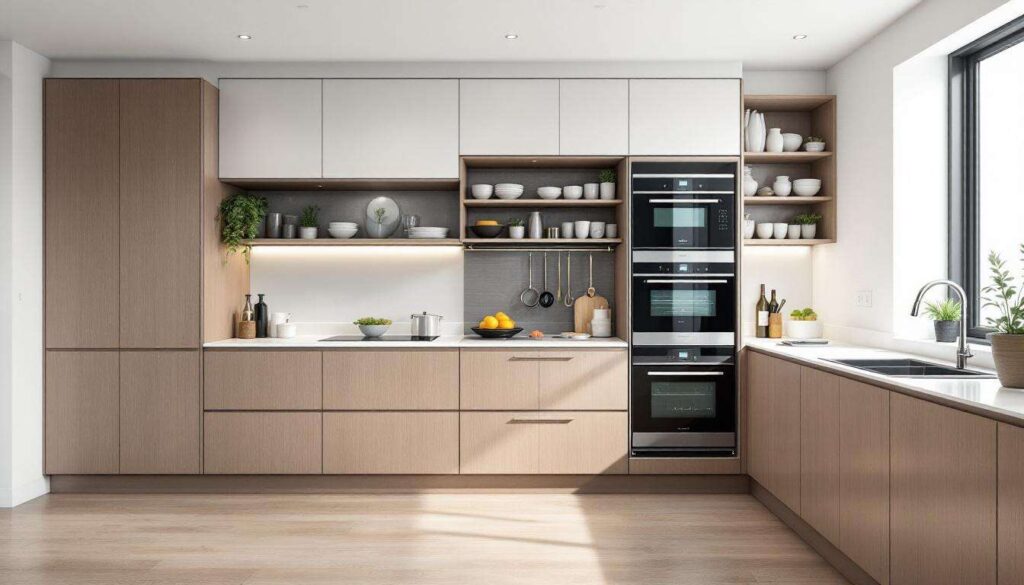
Kitchen worktops have become battlegrounds for space, with toasters, coffee machines, blenders, and mixers competing for every available centimetre. The perpetual clutter not only compromises the aesthetic appeal of modern kitchens but also reduces functional workspace. Enter the appliance garage, a clever storage solution that conceals small kitchen gadgets behind closed doors whilst keeping them readily accessible. This innovative design feature addresses the growing demand for minimalist kitchen aesthetics without sacrificing convenience or functionality.
What is a kitchen appliance garage ?
The basic concept
An appliance garage is essentially a dedicated cabinet space designed specifically to house small kitchen appliances. Typically installed on worktops or integrated into cabinetry, these units feature doors that can be rolled up, folded back, or swung open to reveal the contents within. The primary purpose is to conceal appliances when not in use whilst maintaining easy access during meal preparation.
Most appliance garages are positioned at the back of kitchen counters, creating a seamless visual line when closed. The interior often includes electrical outlets, allowing appliances to remain plugged in and ready for immediate use. This eliminates the tedious process of retrieving heavy equipment from cupboards and searching for available power points.
Common design variations
Several configurations exist to suit different kitchen layouts and storage requirements:
- Tambour door garages: featuring flexible slatted doors that roll up and disappear into the cabinet top
- Bi-fold door units: equipped with hinged panels that fold back against themselves
- Sliding door models: incorporating horizontal panels that glide along tracks
- Lift-up mechanisms: utilising single doors that raise upwards and secure in place
The dimensions vary considerably, with compact versions accommodating a single coffee maker and larger installations housing multiple appliances simultaneously. Understanding these variations helps homeowners select the most appropriate solution for their specific needs and available space.
The benefits of a kitchen garage
Visual decluttering and aesthetic improvement
The most immediate advantage of an appliance garage is the dramatic reduction in visual clutter. Modern kitchen design increasingly favours clean lines and uninterrupted surfaces, reflecting broader minimalist trends in interior design. By concealing appliances behind coordinated cabinetry, homeowners achieve a streamlined appearance that enhances the overall ambience of the space.
This aesthetic improvement extends beyond mere tidiness. Appliance garages allow kitchen designs to showcase premium materials such as marble or granite worktops without the distraction of mismatched appliance colours and finishes. The result is a more cohesive and sophisticated visual presentation.
Practical advantages for daily use
Beyond aesthetics, appliance garages offer substantial functional benefits:
| Benefit | Description | Impact |
|---|---|---|
| Protected storage | Appliances remain shielded from dust, grease, and cooking splashes | Extended appliance lifespan |
| Increased workspace | Worktop surface area becomes available for food preparation | Enhanced cooking efficiency |
| Maintained accessibility | Appliances stay plugged in and ready for immediate use | Reduced preparation time |
| Safety enhancement | Sharp blades and hot surfaces concealed from children | Improved household safety |
These practical considerations make appliance garages particularly valuable in households where kitchen efficiency and safety are priorities. The combination of aesthetic and functional benefits explains the growing popularity of this storage solution.
How to optimise space with an appliance garage
Strategic placement considerations
Maximising the effectiveness of an appliance garage requires careful planning regarding location and configuration. The most common placement is in corner sections of kitchen worktops, utilising space that often proves awkward for other purposes. This positioning creates a natural hub for beverage preparation or breakfast routines.
Alternative locations include spaces between wall cabinets and base units, particularly in galley-style kitchens where worktop depth allows for recessed installations. Some homeowners incorporate appliance garages into kitchen islands, though this requires additional consideration of electrical wiring and ventilation.
Interior organisation techniques
The internal arrangement significantly influences the functionality of an appliance garage. Effective organisation strategies include:
- Installing pull-out shelves that bring appliances forward for easier access
- Incorporating adjustable shelving to accommodate appliances of varying heights
- Adding interior lighting to improve visibility and create ambience
- Including cable management systems to prevent tangled cords
- Fitting power strips with surge protection for multiple appliances
Vertical space utilisation proves particularly important. Taller appliances such as food processors should occupy lower shelves, whilst lighter items like hand mixers can be stored higher. This arrangement facilitates ergonomic access and reduces the risk of accidents when retrieving heavy equipment.
Capacity planning
Determining the appropriate size requires honest assessment of appliance inventory and usage patterns. A typical household might need to accommodate five to seven small appliances, including a kettle, toaster, coffee machine, blender, mixer, and food processor. Measuring these items before installation ensures adequate clearance and prevents overcrowding.
Easy installation: how to set up your kitchen garage
Professional installation versus DIY approaches
Installing an appliance garage ranges from straightforward to complex depending on the chosen design and existing kitchen configuration. Professional installation is recommended when electrical work is required or when integrating the unit into custom cabinetry. Qualified installers ensure proper wiring, adequate ventilation, and seamless integration with surrounding elements.
For experienced DIY enthusiasts, retrofit kits offer a more accessible option. These pre-fabricated units attach to existing worktops and require minimal modification to cabinetry. However, even DIY installations benefit from careful planning and precise measurements to achieve professional results.
Essential installation requirements
Successful installation depends on several critical factors:
- Electrical access: dedicated circuits prevent overloading and ensure safe operation
- Adequate ventilation: prevents heat buildup from appliances like coffee machines
- Structural support: ensures cabinetry can bear the combined weight of multiple appliances
- Moisture protection: guards against water damage in areas near sinks
- Door clearance: confirms sufficient space for doors to open fully without obstruction
Attention to these requirements during the planning phase prevents costly modifications later. Many homeowners discover that consulting with kitchen designers early in the process yields more integrated and functional results.
Budget considerations
Costs vary significantly based on materials, size, and installation complexity. Basic retrofit units start around £200, whilst custom-built appliance garages integrated into bespoke cabinetry can exceed £1,500. Mid-range options typically fall between £500 and £800, offering good quality materials and professional installation. These figures provide a realistic framework for budgeting this kitchen enhancement.
2026 kitchen design trends
The minimalist movement
Contemporary kitchen design increasingly embraces minimalist principles, prioritising clean surfaces and concealed storage. This aesthetic movement reflects broader cultural shifts towards simplified living and intentional design choices. Appliance garages align perfectly with this philosophy, enabling homeowners to maintain functional kitchens without visual chaos.
The trend extends beyond mere tidiness to encompass thoughtful material selection and restrained colour palettes. Neutral tones, natural materials, and integrated appliances create harmonious environments that promote calm and focus during meal preparation.
Smart kitchen integration
Technology continues to reshape kitchen functionality, with appliance garages evolving to accommodate smart devices. Modern installations increasingly feature:
- USB charging ports for tablets and smartphones
- Motion-sensor lighting that activates when doors open
- Integrated power monitoring systems
- Automated door mechanisms controlled via smartphone applications
These technological enhancements transform appliance garages from simple storage solutions into sophisticated kitchen command centres. The integration of smart features represents a natural progression as homes become increasingly connected and automated.
Sustainable design considerations
Environmental consciousness influences kitchen design decisions, with many homeowners selecting appliance garages constructed from sustainable materials. Reclaimed wood, bamboo, and recycled composites offer eco-friendly alternatives to traditional cabinetry materials. Additionally, the protective function of appliance garages extends appliance lifespans, reducing electronic waste and supporting sustainable consumption patterns.
Ergonomics and accessibility: rethinking daily use
Height and reach optimisation
Effective appliance garage design prioritises ergonomic access, positioning frequently used items within comfortable reach. Standard worktop height places appliance garages at approximately 90 centimetres from the floor, an ideal elevation for most adults. This positioning minimises bending and stretching, reducing physical strain during daily kitchen activities.
For households with specific accessibility requirements, customised heights accommodate wheelchair users or individuals with mobility limitations. Pull-out shelves and motorised door mechanisms further enhance accessibility, ensuring that appliance garages serve all household members effectively.
Universal design principles
Incorporating universal design elements makes appliance garages functional for people of all ages and abilities:
- Lever-style handles that require minimal grip strength
- Contrasting colours for improved visibility
- Soft-close mechanisms that prevent slamming
- Clear labelling for easy identification
- Adequate interior lighting for reduced eye strain
These considerations transform appliance garages from convenient storage into truly inclusive design features that support independent living and multi-generational households.
The appliance garage represents a thoughtful solution to the perennial challenge of kitchen organisation, combining aesthetic appeal with practical functionality. By concealing clutter whilst maintaining accessibility, these storage units support both minimalist design trends and efficient cooking routines. Whether installed during kitchen renovations or added as retrofit solutions, appliance garages offer measurable improvements to daily kitchen experiences. The growing emphasis on ergonomic design and sustainable materials ensures that this storage solution will continue evolving to meet changing household needs and environmental priorities.