



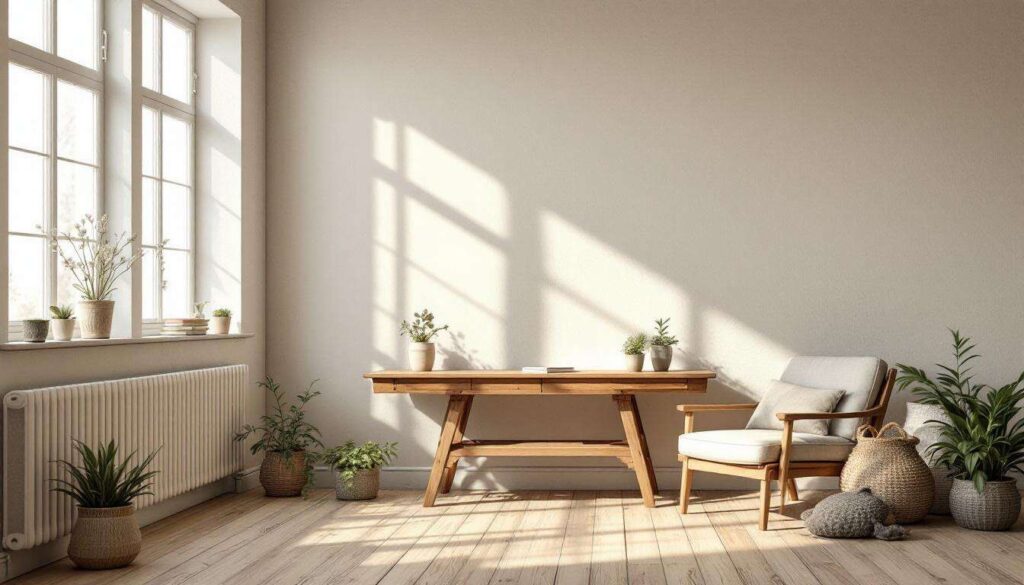
Homeowners seeking sustainable, health-conscious alternatives to modern paints are rediscovering an ancient material that has protected buildings for millennia. Limewash paint offers a unique combination of aesthetic appeal and practical functionality, particularly in addressing one of the most persistent challenges in British homes: dampness. This traditional coating not only allows walls to breathe naturally but also develops a distinctive patina over time, creating character that synthetic paints simply cannot replicate.
What is limewash paint ?
Composition and historical background
Limewash paint is a natural coating made primarily from slaked lime, also known as calcium hydroxide, mixed with water. This simple yet effective formula has been used for thousands of years across various civilisations, from ancient Roman villas to traditional Mediterranean villages. The material forms through a process called carbonation, where the lime reacts with carbon dioxide in the air to create a crystalline calcium carbonate surface that bonds chemically with the substrate.
Key characteristics
Unlike modern emulsion paints that sit on the surface, limewash becomes part of the wall itself. The paint possesses several distinctive features:
- High alkalinity that provides natural antimicrobial properties
- Microporous structure allowing moisture vapour transmission
- Matte, chalky finish with subtle variations in tone
- Translucent quality that creates depth and luminosity
- Ability to self-heal minor cracks through continued carbonation
Understanding these fundamental properties helps explain why architects and conservation specialists increasingly recommend limewash for both historic and contemporary buildings.
The benefits of limewash paint for walls
Environmental and health advantages
Limewash stands out as an exceptionally sustainable choice in an era of growing environmental awareness. The production process requires significantly less energy than synthetic paints, and the material contains no volatile organic compounds (VOCs) or harmful chemicals. For households concerned about indoor air quality, limewash provides a genuinely non-toxic option that improves rather than compromises the living environment.
Aesthetic qualities
The visual appeal of limewash cannot be overstated. Its natural variations create a living surface that changes subtly with light conditions throughout the day. The paint develops a beautiful patina over time, with gentle weathering that adds character rather than appearing shabby. This ageing process is particularly valued in heritage properties and contemporary homes seeking authentic texture.
Durability and cost-effectiveness
| Feature | Limewash | Standard emulsion |
|---|---|---|
| Lifespan | 5-7 years exterior, 10+ years interior | 3-5 years |
| Maintenance | Simple reapplication | Stripping often required |
| Compatibility | Excellent with breathable substrates | Variable |
These practical benefits extend beyond mere appearance, making limewash a sensible long-term investment for property owners.
How does limewash paint prevent dampness ?
The science of breathability
The microporous structure of limewash is fundamental to its moisture management capabilities. Unlike impermeable modern paints that trap moisture within walls, limewash allows water vapour to pass through freely. This breathability means that moisture from inside the building or from damp masonry can evaporate naturally, preventing the accumulation that leads to structural damage and mould growth.
Alkaline protection
Limewash maintains a high pH level that creates an inhospitable environment for mould, mildew, and bacteria. This natural antimicrobial property provides ongoing protection without requiring chemical additives. In older properties particularly, where rising damp or moisture penetration poses constant challenges, limewash works with the building’s natural drying processes rather than against them.
Practical applications for damp-prone areas
Limewash proves particularly effective in:
- Solid wall constructions without cavity barriers
- Basements and cellars with moisture ingress
- Period properties with traditional building materials
- Bathrooms and kitchens requiring humidity management
- External walls exposed to driving rain
These moisture-regulating properties make limewash an intelligent choice for anyone grappling with dampness issues that conventional paints merely conceal.
Current trends in limewash paint
Colour palettes and interior design
Contemporary designers are embracing limewash for its ability to create sophisticated, layered interiors. Whilst traditional white remains popular, manufacturers now offer extensive colour ranges from soft neutrals to deeper earth tones. The current preference leans towards warm, muted shades that complement natural materials and sustainable design principles.
Architectural applications
Modern architecture increasingly incorporates limewash as architects recognise its compatibility with both traditional and contemporary aesthetics. New-build projects specify limewash for its environmental credentials and unique finish, whilst renovation projects value its sympathetic approach to historic fabric. The material bridges past and present, offering authenticity without sacrificing modern performance standards.
Commercial and residential adoption
The hospitality sector has particularly embraced limewash, with boutique hotels and restaurants using it to create distinctive, memorable spaces. Residential demand continues growing as homeowners seek alternatives to mass-produced finishes, valuing the craftsmanship and individuality that limewash provides.
How to apply limewash paint ?
Surface preparation
Successful limewash application begins with proper substrate preparation. The surface must be clean, sound, and absorbent. Remove any existing impermeable coatings, as limewash requires direct contact with porous materials such as lime plaster, render, or bare masonry. Dampen the wall before application to prevent rapid moisture absorption that could compromise adhesion.
Application technique
Apply limewash using a traditional brush with natural bristles, working the material well into the surface. The process requires:
- Dilution according to manufacturer specifications
- Cross-hatching brush strokes for even coverage
- Multiple thin coats rather than one thick application
- Adequate drying time between coats (typically 24 hours)
- Protection from rapid drying or frost during curing
Professional versus DIY considerations
Whilst experienced DIY enthusiasts can achieve satisfactory results, limewash application demands specific techniques that differ significantly from modern paint application. For large areas or exterior work, professional application ensures optimal performance and appearance. The material’s working properties require understanding and practice to master fully.
Maintenance tips for a long-lasting limewash finish
Routine care
Limewash requires minimal maintenance compared to synthetic alternatives. Regular dusting prevents dirt accumulation, whilst gentle cleaning with water and a soft brush addresses marks without damaging the finish. Avoid harsh detergents or abrasive cleaning methods that could compromise the delicate surface patina.
Refreshing and recoating
One significant advantage of limewash involves straightforward maintenance. When refreshment becomes necessary, simply apply additional coats directly over the existing finish without stripping or extensive preparation. This layer-building approach actually enhances the depth and character of the surface over time.
Addressing specific issues
| Issue | Solution |
|---|---|
| Uneven appearance | Apply additional thin coat |
| Minor staining | Gentle brushing with water |
| Excessive chalking | Recoat or fix with lime water |
Understanding these maintenance approaches ensures that limewash finishes continue performing effectively whilst developing their characteristic aged beauty.
Limewash paint represents far more than a fashionable interior trend; it offers genuine practical benefits for managing moisture whilst creating beautiful, healthy living spaces. Its breathable nature addresses dampness at a fundamental level, working with rather than against natural building processes. The material’s environmental credentials, combined with its distinctive aesthetic qualities and proven durability, explain its resurgence in both restoration and new construction projects. For homeowners seeking sustainable solutions that improve with age, limewash provides an authentic alternative to synthetic coatings that honours traditional building wisdom whilst meeting contemporary performance expectations.