


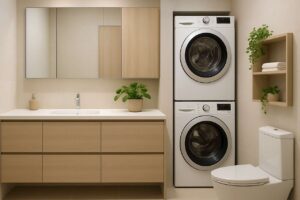
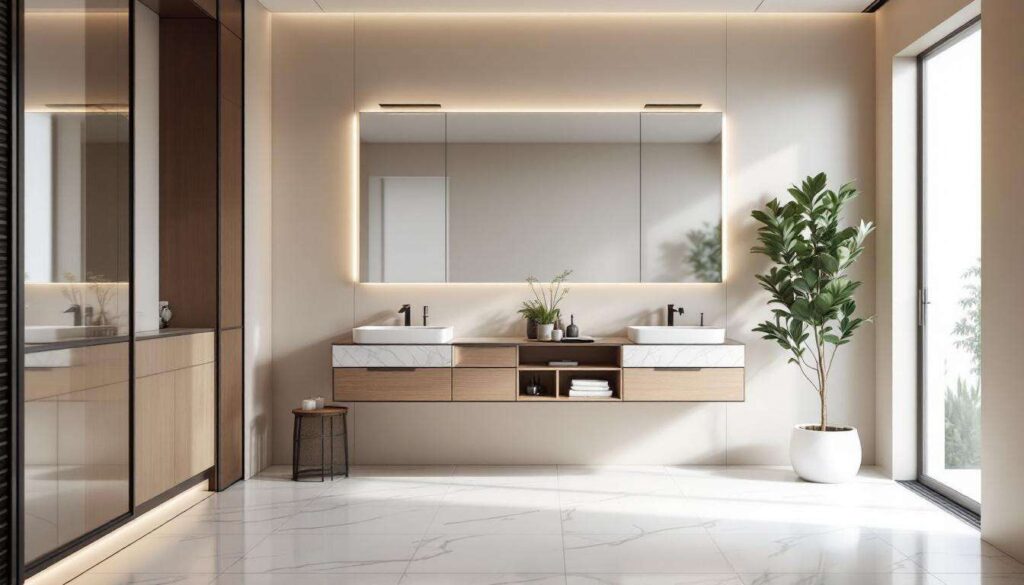
Small bathrooms present a unique design challenge that requires clever solutions to maximise both functionality and visual appeal. One of the most effective strategies employed by interior designers involves the installation of wall-mounted vanities that appear to float above the floor. This simple yet transformative approach creates an illusion of expanded space whilst maintaining essential storage and surface area. The technique has gained considerable traction amongst homeowners and professionals alike, proving particularly valuable in compact urban dwellings where every centimetre counts. By lifting the vanity off the ground, designers unlock a wealth of spatial possibilities that fundamentally alter how we perceive bathroom dimensions.
What is a floating vanity ?
Basic construction and mounting principles
A floating vanity is a wall-mounted bathroom cabinet that attaches directly to the wall studs without any visible support touching the floor. Unlike traditional vanities that rest on legs or a base cabinet, these units appear to hover, creating a gap between the cabinet bottom and the floor surface. The installation requires secure anchoring into wall framing or reinforced blocking to support the weight of the vanity, sink, countertop, and daily usage demands.
The mounting system typically involves heavy-duty brackets or a metal rail system concealed within the cabinet structure. Professional installation ensures proper weight distribution and long-term stability, with most quality floating vanities capable of supporting substantial loads when correctly fitted.
Key design characteristics
Floating vanities share several distinctive features that set them apart from conventional bathroom furniture:
- Wall-mounted construction with no floor contact
- Visible floor space beneath the cabinet
- Streamlined, contemporary aesthetic
- Variable mounting heights for customised ergonomics
- Integration with modern plumbing configurations
The design flexibility allows homeowners to select from various widths, depths, and configurations whilst maintaining the signature floating appearance that defines this category.
Understanding these fundamental characteristics provides the foundation for appreciating how floating vanities transform spatial perception, particularly in constrained bathroom environments.
The benefits of floating vanities for small spaces
Creating visual expansion through exposed flooring
The primary advantage of floating vanities lies in their ability to reveal continuous floor space that would otherwise remain hidden beneath traditional cabinetry. This uninterrupted sightline tricks the eye into perceiving greater square footage than actually exists. When flooring extends visibly beneath the vanity, the room appears longer and more open, a phenomenon designers refer to as visual continuation.
The psychological impact proves particularly pronounced in bathrooms with limited natural light, where every opportunity to enhance spaciousness becomes valuable. The exposed floor also allows light to bounce and circulate more freely, contributing to an airier atmosphere.
Practical advantages for cleaning and maintenance
Beyond aesthetics, floating vanities offer tangible functional benefits:
- Simplified floor cleaning with unrestricted access beneath the unit
- Reduced moisture accumulation around cabinet bases
- Easier detection of plumbing leaks before damage occurs
- Prevention of mould growth in hard-to-reach corners
- Accommodation for underfloor heating systems
These practical considerations make floating vanities particularly suitable for bathrooms prone to humidity issues or those requiring frequent thorough cleaning.
Flexibility in height positioning
Unlike floor-standing vanities with fixed heights, floating units can be mounted at customised elevations to suit user preferences and physical requirements. This adjustability proves invaluable for households with varying height needs or accessibility considerations. The ability to position the vanity at an optimal working height reduces strain during daily grooming routines whilst maintaining the space-enhancing visual effect.
These combined benefits establish floating vanities as a superior choice for compact bathrooms, though selecting the appropriate model requires careful consideration of several factors.
How to choose the right floating vanity for your bathroom
Measuring and proportion considerations
Proper sizing represents the critical first step in floating vanity selection. The unit should occupy sufficient wall space to provide adequate storage and counter area without overwhelming the room. As a general guideline, the vanity width should not exceed 60-70% of the available wall length in particularly small bathrooms.
| Bathroom size | Recommended vanity width | Typical depth |
|---|---|---|
| Under 3 square metres | 45-60 cm | 30-40 cm |
| 3-5 square metres | 60-90 cm | 40-46 cm |
| 5-7 square metres | 90-120 cm | 46-52 cm |
Depth selection proves equally important, as excessively deep vanities can impede movement in narrow bathrooms whilst shallow units may lack sufficient storage capacity.
Storage requirements and configuration options
Evaluate your storage needs carefully before committing to a specific design. Floating vanities come in various configurations:
- Single drawer units for minimalist requirements
- Multi-drawer systems for organised storage
- Open shelf designs for visual lightness
- Combination units with drawers and shelving
- Models with integrated towel bars or side cabinets
Consider which bathroom essentials require accessible storage and select a configuration that accommodates these items without creating clutter on visible surfaces.
Sink style compatibility
The choice between integrated, undermount, or vessel sinks significantly impacts both aesthetics and functionality. Integrated sinks create seamless surfaces ideal for contemporary schemes, whilst undermount options maximise usable counter space. Vessel sinks add visual interest but reduce practical surface area and may not suit all floating vanity designs.
With the right vanity selected, attention must turn to strategic placement and complementary design elements that maximise spatial benefits.
Optimising your bathroom layout with floating vanities
Strategic positioning for maximum impact
The location of your floating vanity within the bathroom significantly influences its space-enhancing effect. Positioning the unit on the longest uninterrupted wall typically yields the greatest visual expansion. Avoid placing floating vanities in alcoves or recesses where the exposed floor benefit becomes diminished.
Consider sightlines from the bathroom entrance, as the floating effect proves most dramatic when immediately visible upon entry. Mounting height should balance practical considerations with aesthetic goals, with most installations ranging between 80-90 cm from floor to countertop surface.
Complementary design elements
Enhance the spacious feeling created by floating vanities through coordinated design choices:
- Large mirrors that extend beyond vanity width to amplify light reflection
- Consistent flooring throughout the bathroom without transitions
- Wall-mounted taps to reduce visual clutter on countertops
- Recessed or floating shelving units that maintain the elevated aesthetic
- Minimal colour contrast between vanity and walls for seamless integration
These supporting elements work synergistically with the floating vanity to create a cohesive, expansive environment.
Lighting strategies to enhance the floating effect
Proper illumination proves essential for maximising the spatial benefits of floating vanities. Installing LED strip lighting beneath the vanity creates a dramatic floating appearance whilst providing practical floor-level illumination. This technique accentuates the gap between cabinet and floor, reinforcing the illusion of weightlessness.
Combine under-vanity lighting with well-positioned overhead and task lighting to eliminate shadows that could diminish the sense of openness. The interplay between these lighting layers and contemporary materials further elevates the overall design impact.
Trendy materials and finishes for floating vanities
Popular surface materials and their characteristics
Contemporary floating vanities showcase a diverse range of materials, each offering distinct aesthetic and practical qualities:
| Material | Visual effect | Durability | Maintenance |
|---|---|---|---|
| Natural wood veneer | Warm, organic | Moderate | Regular sealing required |
| High-gloss lacquer | Reflective, modern | High | Shows fingerprints |
| Matte laminate | Subtle, contemporary | Very high | Easy cleaning |
| Stone composite | Luxurious, textured | Excellent | Minimal upkeep |
The selection should complement existing bathroom finishes whilst considering practical factors such as humidity resistance and cleaning requirements.
Colour trends for space enhancement
Colour choice profoundly influences spatial perception in small bathrooms. Light, neutral tones remain the preferred option for maximising the expansive effect of floating vanities. White, soft grey, and pale wood tones reflect light effectively and create visual continuity with walls and flooring.
However, darker finishes can work successfully when balanced with adequate lighting and lighter surrounding surfaces. Deep navy, charcoal, or rich walnut finishes add sophisticated contrast without necessarily diminishing the sense of space, provided the floating aspect remains visually prominent.
Hardware and detailing considerations
Handle-less designs with push-to-open mechanisms contribute to the sleek, uncluttered appearance that enhances spaciousness. When hardware is desired, minimalist pulls in brushed metals or matching finishes maintain visual simplicity. Integrated finger pulls routed into drawer fronts offer a compromise between functionality and clean lines.
Maintaining these carefully selected finishes and materials requires appropriate care routines to preserve both appearance and structural integrity over time.
Maintenance tips to extend the life of your floating vanity
Regular cleaning protocols for different materials
Establishing appropriate cleaning routines prevents damage and maintains the pristine appearance of floating vanities. For laminate and lacquered surfaces, use soft microfibre cloths with mild, non-abrasive cleaners, avoiding harsh chemicals that may dull finishes or cause discolouration.
Wood veneer vanities benefit from specialist wood cleaners applied sparingly, followed by immediate drying to prevent moisture penetration. Stone composite surfaces tolerate more robust cleaning but should avoid acidic products that may etch the surface over time.
Structural inspection and maintenance
Periodically verify the security of wall mounting hardware, particularly in the months following installation as settling may occur. Check for:
- Any movement or shifting when pressure is applied to the vanity
- Gaps developing between the vanity back and wall surface
- Stress cracks around mounting points
- Water damage or staining on walls behind plumbing connections
- Proper drawer and door alignment indicating stable mounting
Address any concerns immediately to prevent minor issues escalating into costly repairs or safety hazards.
Moisture management and prevention strategies
Despite being elevated above floor level, floating vanities remain vulnerable to moisture-related deterioration if proper precautions are not observed. Ensure adequate bathroom ventilation through extractor fans or windows, particularly following showers or baths. Wipe water splashes from vanity surfaces promptly rather than allowing prolonged contact.
Apply silicone sealant around sink edges and backsplashes annually to maintain watertight barriers. Inspect underneath the vanity periodically for signs of plumbing leaks, taking advantage of the easy access that floating designs provide.
Floating vanities represent a design solution that successfully marries aesthetic appeal with practical functionality, particularly valuable in compact bathroom environments. The illusion of expanded space created through exposed flooring, combined with enhanced cleaning access and customisable positioning, makes these wall-mounted units an intelligent choice for modern homes. Careful selection based on accurate measurements, storage requirements, and material preferences ensures optimal results, whilst strategic placement and complementary design elements maximise spatial benefits. Contemporary materials and finishes offer abundant options to suit varied tastes, from natural wood warmth to sleek lacquered surfaces. With appropriate maintenance routines protecting both appearance and structural integrity, a well-chosen floating vanity transforms small bathrooms into seemingly spacious retreats that prove the adage that sometimes less truly is more.