


Bathroom renovations have taken a decisive turn in recent years, with homeowners increasingly choosing to remove their traditional bathtubs in favour of sleek walk-in showers. This shift reflects changing lifestyles, evolving design preferences, and a growing awareness of accessibility needs. Whether driven by practical considerations or aesthetic aspirations, the move away from bathtubs represents one of the most significant trends in contemporary home improvement. Understanding the implications of this decision requires careful consideration of multiple factors, from property value to environmental impact.
Why walk-in showers are becoming increasingly popular
The surge in walk-in shower installations stems from fundamental changes in how people use their bathrooms. Modern households tend to prioritise speed and efficiency over leisurely soaks, with busy schedules leaving little time for extended bathing sessions. Research indicates that the average person takes fewer than five baths per year, making dedicated bathtub space seem increasingly redundant.
Demographic shifts driving the trend
Several population factors have accelerated the walk-in shower movement:
- An ageing population seeking safer, more accessible bathing solutions
- Younger homeowners prioritising minimalist, spa-like aesthetics
- Increased awareness of mobility challenges and universal design principles
- Urban living spaces demanding more efficient use of limited square footage
The accessibility advantage cannot be overstated. Walk-in showers eliminate the need to step over high bathtub edges, reducing fall risks for elderly residents and those with mobility limitations. This feature has transformed from a specialised requirement into a mainstream preference, with many homeowners planning for future needs even if current mobility poses no challenges.
Influence of contemporary design trends
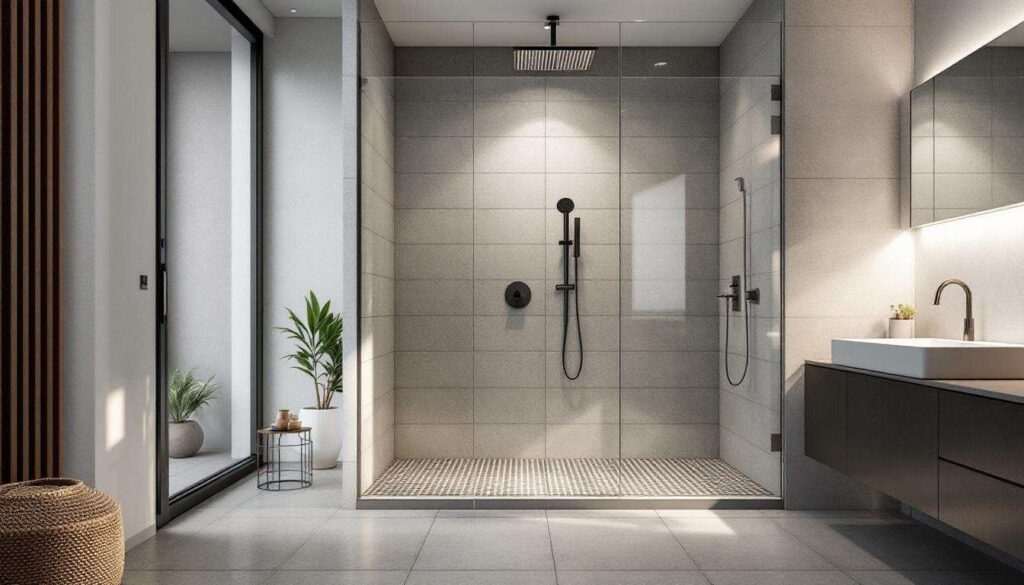
Interior design movements have played a crucial role in popularising walk-in showers. The minimalist aesthetic that dominates current bathroom design favours clean lines, open spaces, and uncluttered surfaces. Walk-in showers perfectly embody these principles, offering a streamlined appearance that makes even modest bathrooms feel more spacious and luxurious.
These design considerations naturally lead to examining the tangible advantages that walk-in showers offer in daily use.
Practical benefits of walk-in showers over bathtubs
Beyond aesthetic appeal, walk-in showers deliver concrete functional advantages that directly improve the bathroom experience. These practical benefits often prove decisive for homeowners contemplating the switch.
Space optimisation and flexibility
Walk-in showers typically require less floor space than traditional bath-shower combinations, freeing up valuable square footage for other purposes. This spatial efficiency proves particularly valuable in smaller bathrooms where every centimetre counts. The reclaimed space can accommodate:
- Additional storage solutions such as built-in shelving or cabinets
- Improved circulation space for easier movement
- Enhanced accessibility features like grab bars or shower seats
- Luxury additions such as dual showerheads or body jets
Maintenance and cleaning considerations
The simplified cleaning routine associated with walk-in showers represents a significant practical advantage. Unlike bathtubs with their awkward curves and hard-to-reach corners, walk-in showers feature flat surfaces and minimal crevices where grime accumulates. This design translates to:
| Maintenance aspect | Bathtub | Walk-in shower |
|---|---|---|
| Average cleaning time | 20-30 minutes | 10-15 minutes |
| Difficult areas | Tub edges, overflow drain, jets | Grout lines only |
| Mould risk | Higher (standing water) | Lower (better drainage) |
Improved hygiene also stems from better ventilation and drainage. Walk-in showers dry more quickly after use, reducing moisture retention that encourages mould and mildew growth. The absence of a bathtub means no standing water where bacteria can multiply between uses.
However, recognising these benefits represents only the first step in making an informed decision about bathroom renovation.
Criteria to consider before removing your bathtub
Despite the compelling advantages of walk-in showers, removing a bathtub requires careful deliberation. Several important factors deserve thorough evaluation before committing to this irreversible change.
Household composition and future needs
The presence of young children fundamentally affects the bathtub decision. Families with infants or toddlers typically find bathtubs essential for safe, convenient bathing. Whilst alternatives exist, including portable baby baths and shower seats, these rarely match the practicality of a proper tub for washing small children.
Consider these household factors:
- Current ages of children and anticipated bathroom needs over the next decade
- Plans for expanding your family
- Elderly relatives who may require bathing assistance
- Pets that need regular washing
Property type and bathroom quantity
Homes with multiple bathrooms enjoy greater flexibility in bathroom configuration. If your property includes two or more full bathrooms, converting one to a walk-in shower whilst retaining a bathtub elsewhere provides the best of both worlds. Single-bathroom homes face a more complex decision, as eliminating the only bathtub may create inconvenience or affect resale prospects.
Installation costs and structural considerations
The financial investment varies considerably depending on existing bathroom layout and desired shower specifications. Budget considerations include:
| Cost component | Typical range |
|---|---|
| Bathtub removal | £200-£500 |
| Shower tray and enclosure | £500-£2,500 |
| Plumbing modifications | £300-£800 |
| Tiling and finishing | £800-£2,000 |
| Total project cost | £1,800-£5,800 |
Understanding these practical considerations naturally raises questions about how such renovations affect overall property worth.
Impact on your home’s property value
The relationship between bathroom configuration and property value proves more nuanced than many homeowners anticipate. Whilst conventional wisdom once held that removing bathtubs inevitably decreased home value, current market realities paint a more complex picture.
Market trends and buyer preferences
Estate agents report shifting attitudes amongst prospective buyers, with walk-in showers increasingly viewed as desirable features rather than liabilities. This change particularly affects certain property segments:
- Luxury properties where high-end walk-in showers signal premium quality
- Retirement-friendly homes targeting older buyers prioritising accessibility
- Urban flats appealing to young professionals valuing modern aesthetics
- Compact properties where space efficiency commands premium value
The family home exception
Properties marketed as family homes represent the notable exception to this trend. Buyers with young children typically expect at least one bathtub, and its absence may narrow the potential buyer pool. Research suggests that three- and four-bedroom houses in family-oriented neighbourhoods may experience reduced appeal without bathtub facilities.
However, this effect diminishes significantly when:
- The property includes multiple bathrooms with at least one retaining a bathtub
- The walk-in shower installation demonstrates exceptional quality and design
- Local market demographics skew towards older or child-free households
These value considerations intertwine closely with the aesthetic possibilities that walk-in showers present.
Design options and customisation of walk-in showers
One of the most appealing aspects of walk-in showers lies in their remarkable design versatility. Unlike standardised bathtubs, walk-in showers accommodate extensive customisation to suit individual preferences and spatial constraints.
Enclosure styles and configurations
The enclosure significantly influences both functionality and visual impact. Popular options include:
- Frameless glass enclosures: create an open, luxurious feel whilst containing water spray
- Walk-in wet rooms: eliminate enclosures entirely for maximum accessibility and contemporary styling
- Partial glass screens: balance openness with practical water containment
- Curved or angled designs: maximise space efficiency in awkward layouts
Material selections and finishes
Material choices profoundly affect both appearance and maintenance requirements. Contemporary options extend far beyond traditional ceramic tiles:
| Material | Advantages | Considerations |
|---|---|---|
| Porcelain tiles | Durable, water-resistant, vast design range | Grout maintenance required |
| Natural stone | Luxurious appearance, unique patterns | Requires sealing, higher cost |
| Glass panels | Seamless look, easy cleaning | Shows water marks readily |
| Acrylic panels | Affordable, grout-free, quick installation | Less premium appearance |
Functional enhancements
Modern walk-in showers accommodate numerous luxury features that transform daily showering into a spa-like experience:
- Thermostatic mixing valves maintaining consistent water temperature
- Rainfall showerheads providing gentle, enveloping water coverage
- Body jets delivering targeted massage effects
- Built-in seating for comfort and accessibility
- Recessed shelving eliminating clutter and trip hazards
- LED lighting creating ambience and improving visibility
These design considerations connect directly to broader questions about resource consumption and environmental responsibility.
Effects on water consumption and environment
The environmental implications of choosing walk-in showers over bathtubs merit serious consideration, particularly as water scarcity and energy costs become increasingly pressing concerns.
Comparative water usage
Walk-in showers typically consume less water than bathtubs, though actual savings depend heavily on individual habits. A standard bathtub holds approximately 150-200 litres when filled, whilst a ten-minute shower with a conventional showerhead uses roughly 100-150 litres. However, water-efficient showerheads can reduce consumption to 60-80 litres for the same duration.
| Bathing method | Typical water consumption |
|---|---|
| Full bathtub | 150-200 litres |
| 10-minute standard shower | 100-150 litres |
| 10-minute eco-shower | 60-80 litres |
Energy efficiency considerations
Beyond water consumption, heating requirements significantly impact environmental footprint. Showers generally prove more energy-efficient than baths because:
- Less total water requires heating
- Hot water delivery occurs only during active use rather than filling a large reservoir
- Modern thermostatic controls prevent waste from temperature adjustments
- Shorter duration reduces overall energy consumption
Long-term sustainability benefits
Walk-in showers facilitate adoption of water-saving technologies more readily than bathtubs. Options include low-flow showerheads, aerating fixtures that maintain pressure whilst reducing volume, and smart systems that limit shower duration. These technologies can reduce household water consumption by 20-40% compared to traditional bathing methods.
The cumulative environmental benefit extends beyond individual households. If widespread adoption of efficient walk-in showers reduced average UK household water consumption by just 10%, this would save billions of litres annually whilst decreasing energy demand for water heating.
The transition from bathtubs to walk-in showers represents more than a simple bathroom upgrade. This decision encompasses practical functionality, financial investment, property value implications, design opportunities, and environmental responsibility. Homeowners contemplating this change should carefully assess their specific circumstances, including household composition, property characteristics, and long-term plans. Whilst walk-in showers offer compelling advantages in accessibility, maintenance, and resource efficiency, the suitability of this choice varies considerably between properties and lifestyles. Those with multiple bathrooms enjoy the flexibility to incorporate both options, whilst single-bathroom homes require more careful deliberation. Ultimately, a well-planned walk-in shower installation can enhance daily living whilst potentially increasing property appeal, provided the decision aligns with both current needs and future considerations.