



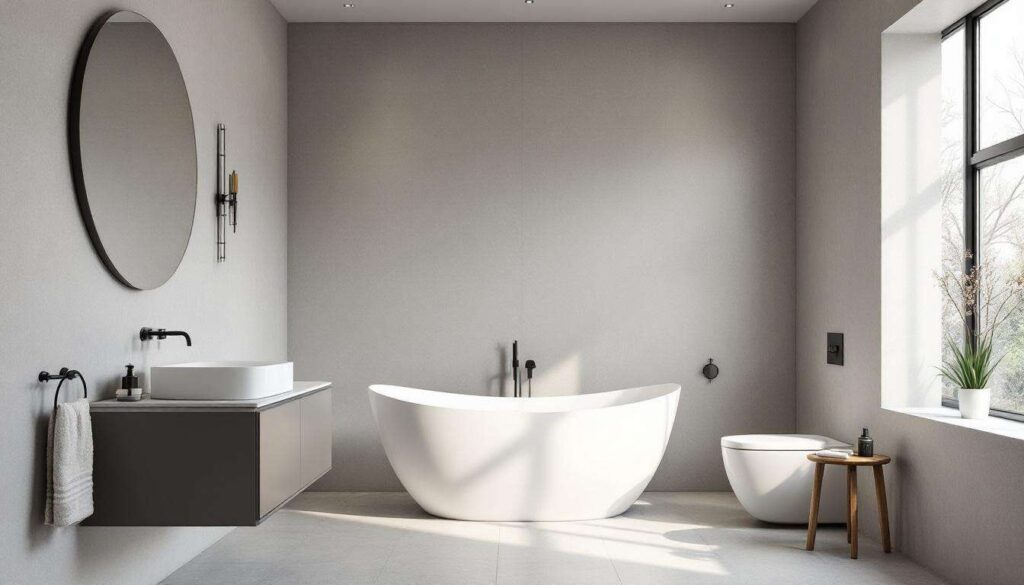
Bathroom renovations across the UK are witnessing a remarkable shift towards minimalist, industrial-inspired finishes that prioritise both functionality and visual appeal. Among these emerging materials, microcement has captured the attention of homeowners and designers alike, offering a solution that eliminates grout lines whilst delivering a sophisticated, contemporary aesthetic. This versatile coating material transforms traditional bathroom spaces into streamlined sanctuaries, combining practicality with cutting-edge design principles that resonate with modern living requirements.
What is microcement ?
Composition and characteristics
Microcement is a polymer-modified cement-based coating that creates an ultra-thin, continuous surface across walls, floors, and other substrates. The material typically comprises a blend of cement, water-based resins, additives, and mineral pigments, resulting in a thickness of merely 2 to 3 millimetres when fully applied. This remarkable thinness distinguishes microcement from traditional rendering systems, allowing application over existing surfaces without significant alterations to room dimensions or door clearances.
The composition delivers several defining characteristics:
- Exceptional adhesion to diverse substrates including plasterboard, concrete, tiles, and wood
- High compressive strength despite minimal thickness
- Water-resistant properties when properly sealed
- Flexibility that accommodates minor substrate movement
- Customisable textures ranging from smooth to slightly textured finishes
Application versatility
Beyond bathroom walls, microcement adapts to numerous surfaces throughout residential and commercial spaces. Kitchen worktops, flooring, shower trays, and even furniture pieces can receive this treatment, establishing visual continuity across different areas. The material’s ability to curve around corners and wrap over edges without joints makes it particularly suitable for contemporary design schemes that favour uninterrupted surfaces and clean lines.
Understanding these fundamental properties provides context for why microcement has become such a sought-after solution in bathroom refurbishments, where moisture resistance and aesthetic appeal must coexist harmoniously.
The benefits of microcement for bathroom walls
Seamless waterproof surfaces
The absence of grout lines represents one of microcement’s most compelling advantages in bathroom environments. Traditional tiling creates numerous joints that become breeding grounds for mould and mildew, requiring constant maintenance and eventual re-grouting. Microcement eliminates these problematic areas entirely, establishing a continuous barrier that, when properly sealed, provides excellent water resistance throughout shower enclosures and wet zones.
Quick installation over existing surfaces
Renovation timelines shorten considerably when microcement is applied directly over existing tiles or plaster. This approach eliminates the labour-intensive and disruptive process of removing old finishes, reducing both project duration and associated costs. Homeowners can transform their bathrooms without the extensive upheaval typically associated with complete refurbishments, making microcement an attractive option for occupied properties.
| Renovation aspect | Traditional tiling | Microcement |
|---|---|---|
| Installation time | 7-10 days | 3-5 days |
| Surface preparation | Complete removal required | Minimal preparation |
| Waste generated | Substantial | Minimal |
| Grout maintenance | Regular cleaning/replacement | None required |
Design flexibility and customisation
Colour options extend far beyond standard tile selections, with microcement available in virtually unlimited hues through custom pigmentation. Texture variations allow homeowners to achieve anything from polished concrete aesthetics to softer, more organic finishes. This adaptability ensures microcement complements diverse interior styles, from industrial lofts to Scandinavian-inspired minimalism.
These practical and aesthetic advantages explain the material’s growing popularity, though successful implementation requires proper application techniques and professional expertise.
How to apply microcement: steps and recommendations
Surface preparation requirements
Proper substrate preparation determines the longevity and performance of microcement installations. Surfaces must be structurally sound, clean, and free from contaminants such as grease, dust, or loose particles. Existing tiles require thorough cleaning and may need light sanding to improve adhesion. Any cracks or significant imperfections should be repaired before application commences, as microcement will follow the contours of the underlying surface.
Application process
Professional installation typically follows this sequence:
- Application of a primer coat to enhance adhesion and regulate porosity
- First base coat applied with a steel trowel, establishing initial coverage
- Second base coat applied after appropriate drying time, building thickness
- Fine finishing coats (typically two layers) creating the desired texture
- Sealing with polyurethane or epoxy-based sealers for waterproofing
- Final protective coating to enhance durability and ease of cleaning
Professional installation versus DIY
Whilst some manufacturers market microcement as suitable for DIY application, bathroom installations demand professional expertise to ensure proper waterproofing and finish quality. Trowel technique significantly influences the final appearance, with skilled applicators creating consistent textures and seamless transitions. Inadequate sealing or improper mixing ratios can compromise water resistance, leading to substrate damage and costly remediation.
The investment in professional installation pays dividends through superior results and long-term performance, particularly in moisture-prone bathroom environments where material integrity is paramount.
Maintenance and durability of microcement walls
Daily cleaning routines
Microcement surfaces require remarkably straightforward maintenance compared to grouted tiles. Regular cleaning involves simply wiping walls with pH-neutral cleaners and soft cloths, avoiding abrasive materials that might scratch the sealed surface. The continuous finish eliminates the need for grout brushes and specialised cleaning products, streamlining bathroom upkeep considerably.
Long-term durability expectations
When properly installed and maintained, microcement walls demonstrate impressive longevity, with manufacturers typically guaranteeing performance for 10 to 15 years under normal bathroom conditions. The material resists cracking better than traditional cement renders due to its polymer content, which provides flexibility. However, durability depends heavily on correct sealing procedures and periodic resealing every few years to maintain optimal water resistance.
Repair and restoration
Minor damage or wear can be addressed through localised repairs rather than complete replacement. Small scratches may be buffed out or touched up with matching material, whilst more significant issues might require resealing specific sections. This repairability contributes to microcement’s sustainability credentials, extending surface lifespan beyond that of many alternative finishes.
Understanding these maintenance requirements helps homeowners make informed decisions about whether microcement aligns with their lifestyle and bathroom usage patterns, whilst also highlighting the material’s practical advantages in contemporary living spaces.
Design trends with microcement in 2026
Colour palettes gaining popularity
Neutral tones continue to dominate microcement selections, with warm greys, soft beiges, and earthy terracottas leading current preferences. These colours complement natural materials like wood and stone whilst providing versatile backdrops for changing accessories and fixtures. Darker charcoals and blacks create dramatic, spa-like atmospheres, particularly in larger bathrooms with adequate lighting.
Textural variations and finishes
Beyond smooth, polished surfaces, textured microcement applications are gaining traction. Subtle variations mimicking natural stone or slightly roughened finishes add tactile interest whilst maintaining the seamless quality that defines the material. Some installations incorporate deliberate trowel marks or organic patterns, introducing artisanal character to contemporary spaces.
Integration with other materials
Forward-thinking designers are combining microcement with contrasting elements to create visual interest:
- Timber vanities against concrete-effect microcement walls
- Brass or matte black fixtures complementing neutral microcement tones
- Natural stone features paired with microcement surrounds
- Glazed partitions framed by continuous microcement surfaces
These design directions reflect broader movements towards biophilic design principles and material honesty, where finishes celebrate their inherent qualities rather than imitating other materials, positioning microcement as both a practical solution and a design statement.
Microcement: a sustainable and aesthetic choice for UK renovations
Environmental considerations
Microcement offers several environmental advantages over traditional renovation approaches. By allowing application over existing surfaces, it dramatically reduces demolition waste that would otherwise reach landfills. The thin application requires less raw material than conventional rendering systems, lowering the carbon footprint associated with material production and transportation. Many formulations now incorporate recycled content and low-VOC components, further enhancing environmental credentials.
Economic value proposition
Initial installation costs for microcement typically range between £80 and £150 per square metre, positioning it as a mid-to-premium option compared to standard tiling. However, the total cost of ownership often proves favourable when factoring in reduced installation time, minimal disruption, elimination of grout maintenance, and extended lifespan. For homeowners planning to remain in properties long-term, microcement represents a sound investment that enhances both functionality and property value.
Aesthetic longevity
Unlike trend-driven tile patterns that may appear dated within years, microcement’s minimalist aesthetic possesses timeless appeal. The material’s neutrality allows evolving décor preferences without requiring surface replacement, adapting to changing fixtures, accessories, and colour schemes throughout its lifespan.
Bathroom renovations demand materials that balance aesthetic appeal with practical performance, particularly in moisture-rich environments where durability and hygiene are non-negotiable. Microcement addresses these requirements through its seamless application, customisable finishes, and minimal maintenance demands. The material’s ability to transform existing surfaces without extensive demolition makes it particularly suited to UK renovation projects, where property age and construction methods often complicate traditional refurbishment approaches. As design preferences continue favouring clean lines and industrial-inspired aesthetics, microcement stands positioned as both a contemporary choice and a practical solution that delivers lasting value. Its combination of visual sophistication, functional benefits, and environmental consideration explains why this versatile coating has become a defining feature of modern bathroom design across the UK.