


As winter settles in and heating costs continue to rise, many households are searching for simple ways to reduce their energy bills without compromising on comfort. One of the most overlooked yet highly effective maintenance tasks is bleeding your radiators. This straightforward procedure, which takes no more than five minutes per radiator, can significantly improve your heating system’s efficiency and lead to noticeable savings on your monthly bills. When air becomes trapped inside your radiators, it creates cold spots and forces your boiler to work harder, consuming more energy to achieve the same level of warmth. By releasing this trapped air, you restore optimal heat distribution throughout your home and ensure your heating system operates at peak performance.
Why bleeding your radiators: an economical and ecological gesture
The financial benefits of regular maintenance
Bleeding your radiators represents one of the most cost-effective maintenance tasks you can perform on your heating system. When air accumulates in your radiators, it creates pockets that prevent hot water from circulating properly. This forces your boiler to run for longer periods and at higher temperatures to compensate for the reduced efficiency, resulting in increased fuel consumption and higher energy bills. Research indicates that trapped air can reduce radiator efficiency by up to 25%, meaning you could be wasting a quarter of your heating budget unnecessarily.
The beauty of this maintenance task lies in its simplicity and accessibility. Unlike many home improvement projects that require professional intervention, bleeding radiators is something virtually any homeowner can accomplish with minimal investment. The tools required cost just a few pounds, and the time commitment is minimal. Once you’ve bled your radiators, the improved efficiency can last throughout the entire heating season, delivering continuous savings month after month.
Environmental impact and carbon footprint reduction
Beyond the financial advantages, bleeding your radiators contributes to environmental sustainability. When your heating system operates inefficiently, it burns more fuel to produce the same amount of heat. This increased fuel consumption translates directly into higher carbon emissions, whether your system runs on gas, oil, or electricity generated from fossil fuels. By ensuring your radiators function at optimal efficiency, you reduce your household’s carbon footprint and contribute to broader environmental goals.
The environmental benefits extend beyond immediate fuel savings. A well-maintained heating system experiences less wear and tear, which can extend its lifespan and delay the need for replacement. This reduction in manufacturing demand and waste disposal further enhances the ecological advantages of this simple maintenance task.
Understanding these dual benefits sets the stage for recognising when your radiators actually need attention and identifying the telltale signs that indicate trapped air.
The signs indicating that bleeding is necessary
Cold spots and uneven heating
The most obvious indicator that your radiators need bleeding is the presence of cold spots, particularly at the top of the radiator. When you run your hand across the surface of a radiator that’s been on for at least 15 minutes, it should feel uniformly warm from top to bottom. If the top section feels noticeably cooler than the bottom, this suggests air has accumulated and is preventing hot water from reaching the upper portion. This symptom is especially common in radiators on upper floors, as air naturally rises through the heating system.
Strange noises from your heating system
Air trapped in your radiators often manifests as unusual sounds coming from your heating system. These may include:
- Gurgling or bubbling noises from radiators or pipes
- Banging or clanking sounds when the heating first comes on
- Whistling or hissing noises as water flows through the system
- Trickling sounds that persist even when the system has been running for some time
These acoustic symptoms indicate that water is struggling to flow freely through the system, encountering air pockets that disrupt normal circulation. While some noise is normal when heating first activates, persistent or loud sounds typically signal a need for maintenance.
Longer heating times and increased energy consumption
If you’ve noticed that your home takes longer to reach a comfortable temperature or that your boiler seems to run constantly without achieving the desired warmth, trapped air could be the culprit. When radiators cannot distribute heat efficiently, your thermostat continues to call for heat, keeping the boiler firing for extended periods. This not only increases energy consumption but also places unnecessary strain on your heating system components.
| Symptom | Severity | Action Required |
|---|---|---|
| Cold top, warm bottom | High | Bleed immediately |
| Gurgling sounds | Medium | Bleed within days |
| Slightly longer heating time | Low | Monitor and bleed soon |
Once you’ve identified these signs, it’s essential to understand the proper procedure for addressing them safely and effectively.
How to bleed your radiators safely
Preparation steps before bleeding
Before beginning the bleeding process, ensure your heating system is turned off and allow radiators to cool completely. Working with hot radiators poses a burn risk and can also result in scalding water being released when you open the valve. Once the system has cooled, which typically takes 30 to 60 minutes after switching off, you’re ready to proceed safely.
Place old towels or a cloth beneath the radiator valve to catch any water that may drip during the process. Have a small container ready to collect water, as you’ll need to release a small amount to confirm all air has been expelled. It’s advisable to start with the radiators on the ground floor and work your way upwards, as this follows the natural flow of air through the system.
The step-by-step bleeding procedure
The actual bleeding process follows a straightforward sequence:
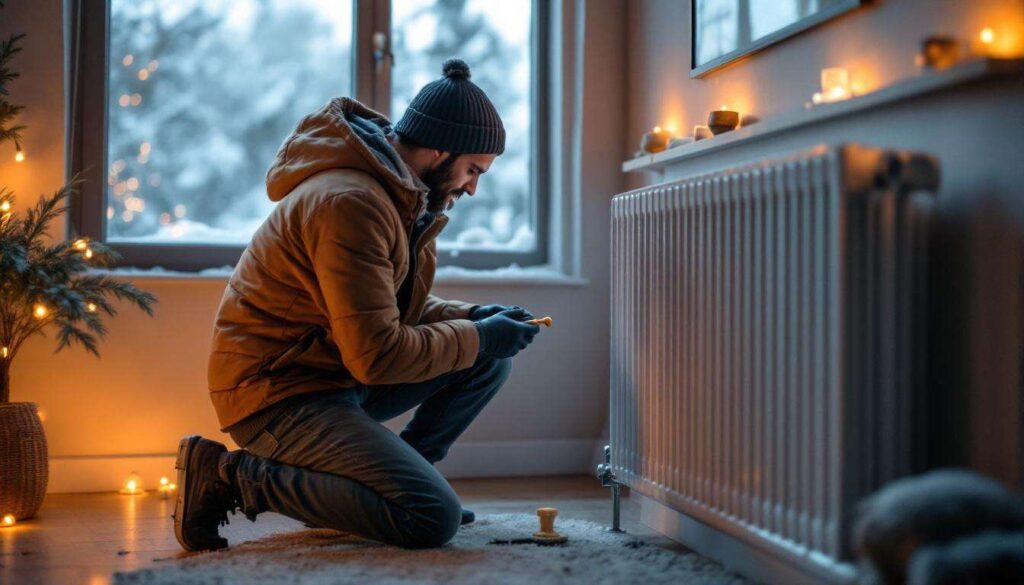
- Locate the bleed valve, typically found at the top corner of the radiator
- Insert your radiator key or screwdriver into the valve slot
- Turn the key slowly anticlockwise, usually no more than a quarter turn
- Listen for the hissing sound of escaping air
- Keep the valve open until water begins to flow steadily
- Close the valve immediately by turning clockwise once water appears
- Wipe away any water and check for leaks
The key is to work slowly and carefully. Never force the valve or open it more than necessary, as this can damage the mechanism or cause excessive water loss. The hissing sound should be clearly audible if air is present, and you should see a steady stream of water once all air has been released.
Post-bleeding checks and system restart
After bleeding all radiators, check your boiler’s pressure gauge. The bleeding process releases water along with air, which can lower system pressure below optimal levels. Most systems operate best between 1 and 1.5 bar when cold. If pressure has dropped, consult your boiler manual for instructions on repressurise the system using the filling loop.
Once pressure is restored, restart your heating system and allow it to run for at least 30 minutes. Check each radiator to confirm even heating from top to bottom, and listen for any remaining unusual sounds. In some cases, particularly if radiators haven’t been bled for years, you may need to repeat the process after the first heating cycle to remove any remaining air.
Having the right equipment makes this entire process smoother and more efficient.
The essential tools for a successful bleed
The radiator key: your primary tool
The radiator key is a small, inexpensive tool specifically designed to fit the square-shaped valve found on most modern radiators. These keys are universally sized and cost typically less than two pounds from hardware shops or online retailers. Many homeowners find it useful to keep several keys in different locations around the house for convenience. Some modern radiators feature slotted valves that can be operated with a flat-head screwdriver, but the traditional radiator key remains the most reliable option for most systems.
Supporting equipment for the task
While the radiator key is the primary tool, several additional items will make the job easier and cleaner:
- Old towels or cloths to protect flooring and catch drips
- A small container or jug to collect released water
- Protective gloves if you prefer not to handle potentially dirty water
- A torch if working in poorly lit areas
- A step stool or ladder for accessing high radiators safely
These supplementary items aren’t strictly necessary but significantly improve the comfort and efficiency of the task. The total investment for all required tools typically amounts to less than ten pounds, making this an exceptionally affordable maintenance solution.
Modern alternatives and innovations
Recent innovations have introduced automatic bleeding valves that release trapped air without manual intervention. These devices can be retrofitted to existing radiators and provide continuous maintenance throughout the heating season. While more expensive than traditional methods, they offer convenience for those with mobility issues or extensive heating systems requiring frequent attention.
Even with the right tools, certain common errors can undermine your efforts or cause damage to your heating system.
The mistakes to avoid when bleeding radiators
Bleeding with the heating system on
One of the most frequent errors is attempting to bleed radiators whilst the heating system is actively running. This creates several problems: the pressure in the system makes it difficult to distinguish between air and water, you risk burns from hot water, and the pump continues to circulate water, potentially drawing more air into the system. Always switch off your heating and wait for radiators to cool before beginning work.
Opening the valve too far
Excessive force or opening the bleed valve more than necessary represents another common mistake. The valve only needs to open a quarter turn at most to release trapped air. Opening it further increases the risk of the valve becoming stuck, damaged, or difficult to close properly. Some older valves can be fragile, and forcing them can cause irreparable damage requiring professional repair or radiator replacement.
Neglecting to check system pressure
Many homeowners successfully bleed their radiators but forget to check and adjust boiler pressure afterwards. Low pressure prevents the system from operating efficiently and can trigger safety mechanisms that shut down the boiler entirely. Modern condensing boilers are particularly sensitive to pressure changes, and neglecting this step can leave you without heating despite having successfully bled all radiators.
Ignoring persistent problems
If you find yourself needing to bleed radiators frequently, this suggests a deeper issue within your heating system. Possible causes include:
- A leak somewhere in the system allowing air to enter continuously
- Corrosion within pipes or radiators producing hydrogen gas
- A faulty pump drawing air into the system
- Incorrectly installed pipework creating air traps
Repeatedly bleeding radiators without addressing the underlying cause wastes time and may mask serious problems that require professional attention. If bleeding becomes necessary more than once or twice per heating season, consult a qualified heating engineer.
Understanding these pitfalls helps ensure that your maintenance efforts translate into genuine improvements in system performance and cost savings.
The impact on your heating bill: tangible savings
Quantifying the financial benefits
The savings from properly bled radiators can be substantial. Studies by heating engineers suggest that trapped air reducing system efficiency by 20-25% is not uncommon in neglected systems. For an average household spending £1,200 annually on heating, this inefficiency represents £240-£300 in wasted energy. By spending five minutes per radiator once or twice yearly, you can reclaim these losses and redirect that money towards other household needs.
| Annual Heating Cost | Efficiency Loss | Potential Annual Saving |
|---|---|---|
| £800 | 20% | £160 |
| £1,200 | 20% | £240 |
| £1,500 | 25% | £375 |
These figures become even more significant when energy prices fluctuate upwards. During periods of high energy costs, the percentage savings remain constant, but the absolute monetary value increases proportionally. A 20% efficiency improvement delivers greater financial relief when baseline costs are elevated.
Long-term benefits beyond immediate savings
The financial advantages extend beyond reduced monthly bills. A heating system operating at optimal efficiency experiences less mechanical stress, potentially extending the lifespan of expensive components like pumps and boilers. Premature boiler replacement can cost several thousand pounds, making preventative maintenance an excellent investment in long-term affordability.
Additionally, homes with efficiently functioning heating systems often achieve better Energy Performance Certificate ratings, which can enhance property value and appeal to potential buyers. In an increasingly energy-conscious property market, demonstrable efficiency improvements provide tangible advantages during sales or lettings.
Regular radiator bleeding forms part of a broader approach to energy efficiency that includes proper insulation, smart thermostat use, and routine system servicing. When combined with these complementary measures, the cumulative savings can reduce heating costs by 30-40% compared to a neglected system, transforming winter energy bills from a source of anxiety into a manageable household expense.
Taking five minutes to bleed your radiators delivers remarkable returns on investment, combining immediate comfort improvements with sustained financial savings. This simple maintenance task empowers homeowners to take control of their heating costs without requiring technical expertise or significant expenditure. As energy prices remain volatile and environmental concerns grow, such accessible efficiency measures become increasingly valuable. By incorporating radiator bleeding into your seasonal maintenance routine, you ensure optimal heating performance, reduce unnecessary energy waste, and protect your household budget from avoidable expenses throughout the coldest months.