



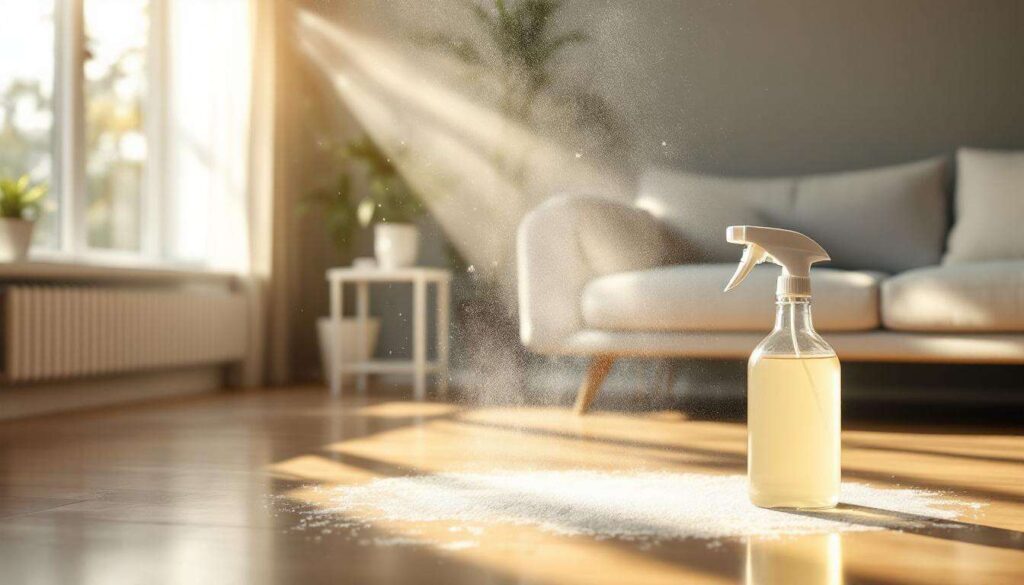
Keeping a home spotless can feel like an endless battle, particularly when dust seems to reappear moments after cleaning. Yet achieving a dust-free environment doesn’t require expensive products or hours of labour. A simple household staple—vinegar—combined with a few natural ingredients, can transform your cleaning routine into a quick, three-minute task that delivers remarkable results. This approach not only saves time but also promotes a healthier living space without relying on harsh chemicals.
Understanding the impact of dust on your home
What dust actually contains
Dust is far from being a harmless layer of grey powder. It comprises a complex mixture of dead skin cells, pet dander, textile fibres, pollen, and outdoor pollutants that infiltrate through windows and doors. Research indicates that a single dust particle can harbour up to 45 different chemical substances, including pesticides, flame retardants, and allergens. This composition makes dust a potential health hazard, particularly for individuals suffering from respiratory conditions or allergies.
Health implications of accumulated dust
The presence of dust in your home affects more than just aesthetics. Prolonged exposure to dust accumulation can trigger:
- Allergic reactions including sneezing, watery eyes, and skin irritation
- Respiratory problems such as asthma exacerbation and bronchial inflammation
- Reduced indoor air quality leading to fatigue and headaches
- Increased risk of infections as dust particles can carry bacteria and viruses
Why traditional cleaning methods fall short
Conventional dusting techniques often simply redistribute particles rather than eliminating them. Feather dusters and dry cloths tend to send dust airborne, allowing it to settle elsewhere moments later. Commercial sprays may contain volatile organic compounds that contribute to indoor air pollution whilst offering only temporary relief. Understanding these limitations highlights the need for a more effective, sustainable approach to dust management.
Recognising the composition and health risks associated with household dust naturally leads to exploring more effective elimination methods, particularly those using natural ingredients.
The effectiveness of vinegar in eliminating dust
The science behind vinegar’s cleaning power
White vinegar contains approximately 5% acetic acid, which gives it remarkable cleaning and disinfecting properties. This mild acid breaks down dust particles, dissolves mineral deposits, and cuts through grime without leaving toxic residues. Unlike synthetic cleaners, vinegar neutralises odours rather than masking them, whilst its natural composition makes it safe for most household surfaces.
Vinegar versus commercial dust products
| Feature | Vinegar solution | Commercial products |
|---|---|---|
| Cost per litre | £0.50-£1.00 | £3.00-£8.00 |
| Chemical content | Natural, non-toxic | Often contains synthetic compounds |
| Environmental impact | Biodegradable | May harm aquatic ecosystems |
| Allergen concerns | Minimal risk | Can trigger sensitivities |
Why vinegar prevents dust from resettling
When combined with a small amount of oil, vinegar creates a protective barrier on surfaces that repels dust particles. The oil component conditions the surface whilst the vinegar cleans, resulting in a finish that actively resists dust accumulation for several days. This dual action makes vinegar-based solutions far superior to water alone, which can leave surfaces statically charged and more attractive to airborne particles.
Armed with knowledge about vinegar’s effectiveness, the next logical step involves creating your own powerful anti-dust solution.
Simple recipe: vinegar anti-dust spray
Gathering your ingredients
Creating an effective anti-dust spray requires just three readily available components. You’ll need 250 ml of distilled white vinegar, which serves as the primary cleaning agent, 250 ml of filtered water to dilute the solution to a safe concentration, and 1-2 teaspoons of olive oil to provide the dust-repelling properties. These proportions are designed for a 500 ml spray bottle, which offers sufficient quantity for multiple cleaning sessions.
Step-by-step preparation method
The preparation process is remarkably straightforward:
- Select a clean spray bottle, preferably glass or high-quality plastic that won’t degrade with vinegar exposure
- Pour the distilled white vinegar into the bottle using a funnel to avoid spillage
- Add the filtered water to achieve the proper dilution ratio
- Measure and incorporate the olive oil carefully, as excessive oil can leave greasy residues
- Secure the spray nozzle tightly and shake vigorously for 30 seconds to emulsify the ingredients
- Label the bottle clearly with contents and preparation date
Storage and shelf life considerations
Your homemade anti-dust spray remains effective for approximately three to four weeks when stored properly. Keep the bottle in a cool, dark cupboard away from direct sunlight, which can degrade the solution’s potency. Always shake the bottle thoroughly before each use, as the oil and water components naturally separate over time. If you notice any unusual odour or discolouration, discard the solution and prepare a fresh batch.
Once your spray is prepared, understanding the specific ingredients and their individual roles enhances your ability to customise the formula.
The key ingredients for a homemade anti-dust spray
Distilled white vinegar: the foundation
Distilled white vinegar serves as the cornerstone of this cleaning solution. Its acetic acid content effectively dissolves dust particles, eliminates bacteria, and neutralises alkaline residues left by previous cleaning products. Unlike malt or apple cider vinegar, distilled white vinegar leaves no colour or strong odour once dry, making it ideal for use on light-coloured surfaces and fabrics.
Filtered water: the dilution agent
Using filtered or distilled water rather than tap water prevents mineral deposits from accumulating on cleaned surfaces. Hard water contains calcium and magnesium that can leave unsightly streaks and actually attract more dust over time. The 1:1 ratio of vinegar to water provides sufficient cleaning power whilst ensuring the solution remains gentle enough for regular use on delicate surfaces.
Olive oil: the protective component
The small quantity of olive oil transforms this spray from a simple cleaner into a dust-prevention system. Oil creates a microscopic barrier that:
- Conditions wooden surfaces, preventing drying and cracking
- Reduces static electricity that attracts airborne particles
- Adds a subtle lustre to furniture without appearing greasy
- Extends the time between necessary cleaning sessions
Optional enhancements with essential oils
Adding 5-10 drops of essential oils such as lemon, lavender, or tea tree can provide additional antibacterial properties whilst imparting a pleasant fragrance. However, always test these additions on inconspicuous areas first, as certain oils may react adversely with specific finishes or materials. Citrus oils offer natural degreasing properties, whilst eucalyptus provides respiratory benefits.
With a complete understanding of each ingredient’s purpose, the focus shifts to proper application techniques that maximise effectiveness.
How to apply your vinegar spray for quick results
Surface preparation before spraying
Before applying your vinegar solution, remove loose dust with a dry microfibre cloth or vacuum with a soft brush attachment. This preliminary step prevents the spray from turning dust into muddy streaks. For heavily soiled areas, a quick wipe with a damp cloth removes stubborn grime that might interfere with the spray’s effectiveness.
The three-minute application technique
Achieving a dust-free surface in three minutes requires systematic application:
- Shake the spray bottle vigorously for 10 seconds to ensure proper mixing
- Hold the bottle 15-20 cm from the surface and apply a light, even mist
- Allow the solution to sit for 30 seconds, letting the vinegar break down particles
- Wipe immediately with a clean microfibre cloth using straight, overlapping strokes
- Buff the surface with a dry section of the cloth to remove any remaining moisture
Ideal surfaces for vinegar spray treatment
This solution works exceptionally well on wooden furniture, metal surfaces, glass, sealed stone, and most plastics. It’s particularly effective on bookshelves, picture frames, skirting boards, and window sills—areas where dust accumulates rapidly. However, avoid using vinegar on unsealed marble, natural stone, or waxed wood, as the acid can damage these materials.
Frequency recommendations for optimal results
For maintaining a consistently dust-free environment, apply the vinegar spray to high-traffic areas twice weekly and less-used spaces once weekly. This schedule prevents significant accumulation whilst allowing the oil barrier sufficient time to provide protection. Adjust frequency based on household factors such as pet ownership, outdoor pollution levels, and seasonal pollen counts.
Whilst the vinegar spray delivers impressive results, complementary strategies further enhance your home’s cleanliness.
Additional tips for maintaining a dust-free interior
Strategic use of baking soda for fabrics
Baking soda serves as an excellent complement to your vinegar spray, particularly for upholstered furniture and mattresses. Sprinkle a generous layer over fabric surfaces, allow it to sit for 2-3 hours to absorb odours and moisture, then vacuum thoroughly using the upholstery attachment. This process eliminates dust mites and refreshes textiles without introducing moisture that could promote mould growth.
Window cleaning for reduced dust entry
Clean windows not only improve visibility but also reduce dust infiltration. Mix equal parts water and vinegar in a spray bottle, apply to glass surfaces, and wipe with crumpled newspaper for a streak-free finish. This method removes pollen and outdoor pollutants that would otherwise enter your home and contribute to indoor dust levels.
Air quality improvements
Maintaining dust-free surfaces proves more sustainable when you address airborne particles:
- Replace HVAC filters every 60-90 days with high-efficiency options
- Use doormats both outside and inside entrances to trap particles
- Maintain humidity levels between 40-50% to prevent dust from becoming airborne
- Vacuum carpets and rugs twice weekly with HEPA-filtered equipment
- Wash bedding weekly in hot water to eliminate dust mites
Preventative measures for long-term success
Establishing routines that minimise dust generation proves as important as cleaning. Remove shoes at the door, groom pets regularly outdoors, and declutter surfaces to reduce dust-collecting items. Consider replacing heavy curtains with washable blinds and choosing hard flooring over carpets in high-traffic areas. These proactive strategies significantly reduce the cleaning burden over time.
Maintaining a dust-free home using vinegar-based solutions offers a practical, economical, and environmentally responsible approach to household cleanliness. The three-minute application method, combined with understanding dust’s composition and vinegar’s natural cleaning properties, empowers you to achieve professional results without expensive products or excessive time investment. By incorporating the simple spray recipe into your regular routine and adopting complementary strategies such as baking soda treatments and improved air quality measures, you create a healthier living environment that requires minimal ongoing effort. The key lies in consistency—regular application of these natural methods prevents accumulation and transforms dust management from an overwhelming chore into a quick, manageable task that protects both your home and your wellbeing.