



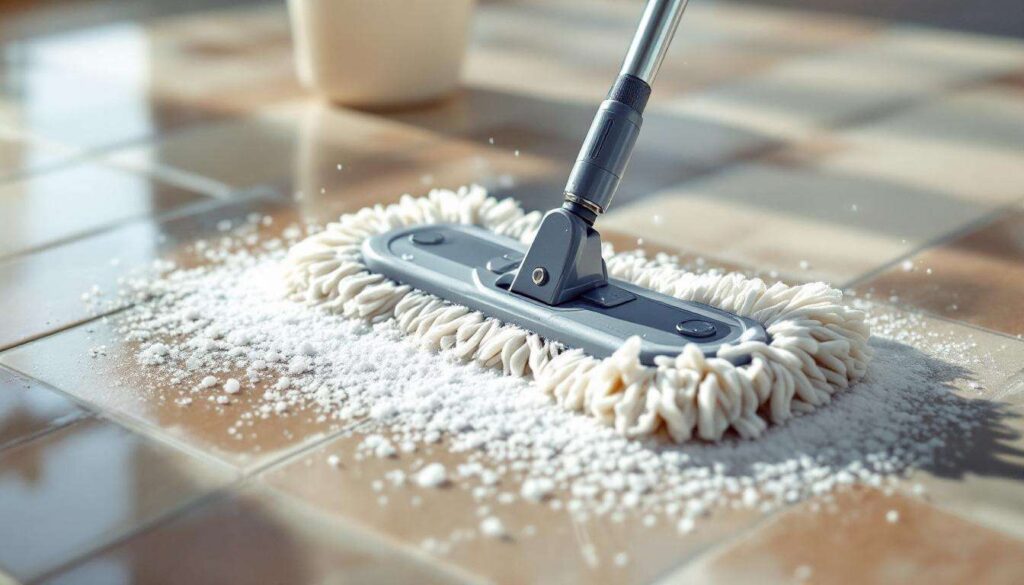
Household cleaning routines have evolved considerably over the centuries, yet some traditional practices persist with remarkable tenacity. The addition of salt to floor mopping water remains a common recommendation across various cultures, blending practical cleaning wisdom with spiritual beliefs. This seemingly simple act continues to intrigue homeowners seeking both effective cleaning solutions and energetic harmony within their living spaces.
Why add salt to cleaning water ?
Traditional wisdom meets modern practice
The practice of adding salt to mopping water stems from centuries-old household traditions that have been passed down through generations. Many cultures, particularly those following Vastu Shastra principles, believe that salt possesses unique properties that extend beyond mere physical cleaning. The recommendation persists because it addresses multiple concerns simultaneously: maintaining cleanliness, promoting positive energy, and providing an affordable cleaning solution.
The dual purpose approach
People continue to advocate for salt in mopping water because it serves a dual purpose. On one hand, it functions as a practical cleaning agent that enhances the effectiveness of water. On the other, it fulfils spiritual and energetic requirements that many households consider essential for maintaining harmony. This combination makes the practice particularly appealing to those who value both tangible results and intangible benefits.
- Cost-effective cleaning enhancement
- Believed to absorb negative energies
- Natural and environmentally friendly
- Compatible with various floor types
- Requires no special equipment or training
Understanding the benefits attributed to salt helps explain why this practice remains firmly embedded in cleaning routines worldwide.
The benefits of salt for cleaning
Physical cleaning properties
Salt offers genuine practical advantages when added to mopping water. Its abrasive texture helps dislodge stubborn dirt and grime from floor surfaces, whilst its natural antibacterial properties contribute to a more hygienic environment. The mineral composition of salt can also help neutralise odours, leaving floors smelling fresh without artificial fragrances.
| Benefit | Effect |
|---|---|
| Abrasive action | Removes stubborn stains and dirt |
| Antibacterial properties | Reduces harmful bacteria on surfaces |
| Odour neutralisation | Eliminates unpleasant smells naturally |
| Enhanced cleaning power | Improves water’s ability to lift grime |
Environmental and safety considerations
Unlike harsh chemical cleaners, salt presents a safer alternative for households with children, pets, or individuals with chemical sensitivities. It leaves no toxic residues and poses minimal environmental impact when disposed of through standard drainage systems. This natural approach aligns with contemporary preferences for eco-friendly cleaning solutions that reduce chemical exposure whilst maintaining effectiveness.
Beyond these tangible benefits, salt carries significant meaning in various spiritual traditions, particularly within Vastu practices.
Salt and Vastu practices: spiritual significance
Energy absorption beliefs
Within Vastu Shastra, salt is regarded as a powerful absorber of negative energy. Practitioners believe that mopping floors with salt water helps remove stagnant or harmful energies that accumulate in living spaces. This energetic cleansing is thought to create a more harmonious environment, promoting mental peace and emotional well-being amongst household members.
Protection and purification rituals
The spiritual significance of salt extends to protective functions. Many believe that regular mopping with salt water creates an invisible barrier against negative influences, including the evil eye and other malevolent forces. This purification ritual is particularly emphasised during important occasions, festivals, or when moving into new premises.
- Removes accumulated negative energies
- Creates protective barriers around the home
- Promotes harmony amongst family members
- Enhances positive vibrations within spaces
- Supports overall spiritual well-being
However, Vastu traditions also specify certain precautions and timing considerations that practitioners should observe.
Precautions and days to avoid
Timing considerations in traditional practice
According to Vastu principles, certain days are considered inauspicious for mopping with salt water. Thursdays and Sundays often feature prominently on this list, as these days are associated with specific deities and planetary influences. Practitioners believe that cleaning with salt on these days might inadvertently disturb positive energies or offend spiritual entities.
Practical safety measures
Beyond spiritual considerations, practical precautions warrant attention. Salt can be corrosive to certain floor finishes, particularly natural stone surfaces like marble or limestone. Excessive use may also leave white residue or cause discolouration on some materials. Testing salt water on an inconspicuous area before widespread application remains advisable.
- Avoid mopping on Thursdays and Sundays according to Vastu
- Test on small areas before full application
- Use appropriate salt concentrations to prevent damage
- Rinse thoroughly to avoid residue build-up
- Consider floor material compatibility
These traditional and practical considerations contrast with what scientific investigation reveals about salt’s actual properties.
The scientific approach to using salt
Evidence-based cleaning effectiveness
From a scientific perspective, salt’s cleaning benefits derive from its physical and chemical properties rather than metaphysical qualities. Sodium chloride acts as a mild abrasive and can enhance water’s cleaning capacity through osmotic action. Studies have demonstrated that salt possesses antimicrobial properties against certain bacteria, though its effectiveness varies depending on concentration and contact time.
Limitations and realistic expectations
Scientific analysis reveals that whilst salt offers genuine cleaning benefits, these advantages are modest compared to dedicated cleaning products. Salt water alone cannot match the disinfecting power of proper sanitisers or the grease-cutting abilities of surfactant-based cleaners. Its primary value lies in supplementing regular cleaning routines rather than replacing comprehensive cleaning protocols.
| Claim | Scientific validity |
|---|---|
| Removes negative energy | No scientific evidence |
| Antibacterial properties | Modest effectiveness demonstrated |
| Abrasive cleaning action | Confirmed physical property |
| Odour neutralisation | Limited effectiveness observed |
For those seeking natural cleaning solutions, several alternatives to salt merit consideration.
Natural alternatives to salt for cleaning
Vinegar-based solutions
White vinegar represents a highly effective natural cleaning alternative with proven antibacterial and degreasing properties. Its acidic nature cuts through grime, dissolves mineral deposits, and neutralises odours more effectively than salt. Diluted vinegar solutions work safely on most floor types, though caution remains necessary with natural stone surfaces.
Other natural cleaning agents
Several natural substances offer comparable or superior cleaning performance to salt whilst maintaining environmental friendliness. Baking soda provides excellent abrasive action and odour absorption. Essential oils like tea tree or lavender contribute antimicrobial properties alongside pleasant fragrances. Lemon juice delivers acidic cleaning power with natural degreasing capabilities.
- White vinegar for general cleaning and disinfection
- Baking soda for scrubbing and deodorising
- Essential oils for antimicrobial enhancement
- Lemon juice for grease removal and freshness
- Castile soap for gentle yet effective cleaning
The enduring popularity of adding salt to mopping water reflects a fascinating intersection of traditional wisdom, spiritual beliefs, and practical household management. Whilst scientific evidence supports some of salt’s cleaning properties, particularly its mild abrasive and antibacterial qualities, the practice derives much of its appeal from cultural and spiritual significance. For those who value Vastu principles or simply appreciate natural cleaning methods, salt remains an accessible and affordable option. However, realistic expectations about its limitations, combined with awareness of suitable alternatives, enable informed decisions about incorporating this traditional practice into modern cleaning routines. Whether motivated by spiritual beliefs or practical considerations, understanding both the benefits and constraints of salt in mopping water allows households to adopt this time-honoured tradition thoughtfully and effectively.