



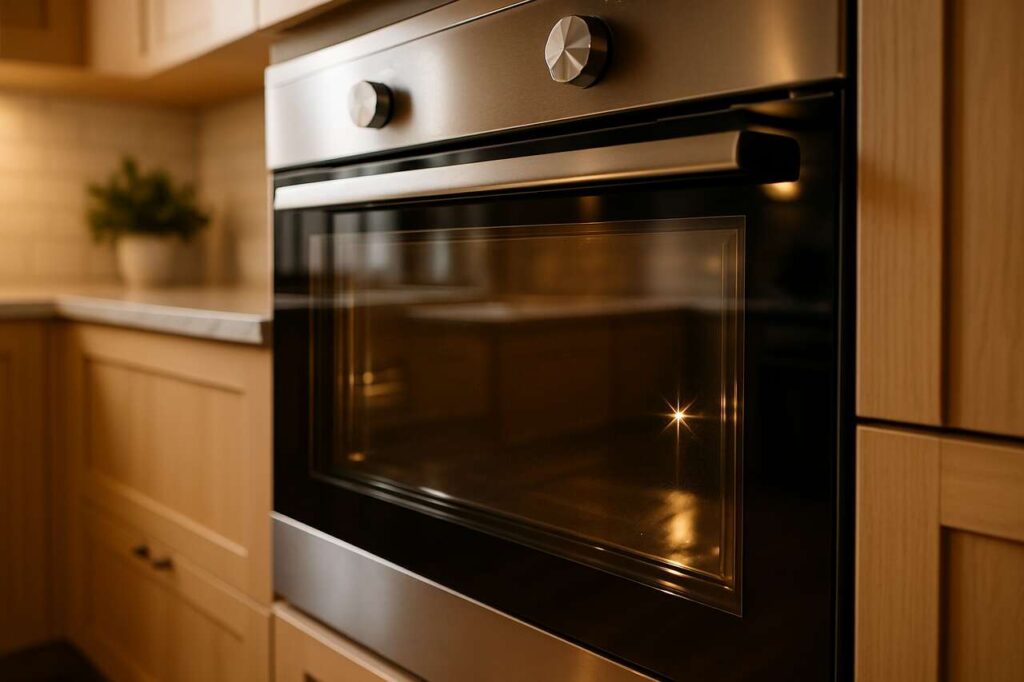
A sparkling glass oven door transforms the appearance of your kitchen whilst allowing you to monitor cooking progress without opening the appliance. However, grease splatters, baked-on residue and stubborn grime can quickly obscure the view and diminish the overall cleanliness of your cooking space. Experts emphasise that proper cleaning techniques not only restore clarity but also extend the lifespan of your oven. Understanding the correct methods and tools ensures effective results without damaging the glass surface or surrounding components.
The tools required for cleaning a glass oven door
Essential cleaning agents
Effective glass oven door cleaning relies on specific household products that combine cleaning power with surface safety. The primary ingredient recommended by experts is bicarbonate of soda, which acts as a gentle abrasive without scratching glass. This versatile powder creates an alkaline solution that breaks down acidic grease deposits and burnt-on food particles.
Additional cleaning agents include:
- White vinegar for cutting through mineral deposits and light grease
- Dishwashing liquid with degreasing properties for enhanced cleaning power
- Warm water to activate cleaning solutions and facilitate residue removal
Necessary equipment and materials
Beyond cleaning solutions, proper tools ensure thorough cleaning without surface damage. A non-abrasive sponge or soft cloth prevents scratching whilst providing sufficient scrubbing action. Microfibre cloths excel at both application and buffing, leaving streak-free results on glass surfaces.
Your cleaning toolkit should contain:
- Microfibre cloths in various sizes for different cleaning stages
- Non-abrasive sponges for gentle scrubbing action
- Spray bottle for vinegar and water mixture application
- Small bowl for mixing paste-based cleaning solutions
- Rubber gloves to protect hands during extended cleaning sessions
Optional specialised products
For comprehensive oven maintenance, certain specialised cleaners address specific materials surrounding the glass door. Stainless steel cleaner proves valuable for frames and handles, maintaining a cohesive appearance across the entire appliance. These products complement glass cleaning efforts without interfering with the primary task.
Having assembled the appropriate tools and cleaning agents, the next step involves addressing the exterior glass surface where fingerprints and kitchen splatter accumulate daily.
Cleaning the outside of the glass oven door
Preparing the vinegar solution
The exterior glass surface requires a straightforward yet effective approach using readily available household ingredients. Experts recommend creating a cleaning solution with equal parts white vinegar and water, typically half a cup of each in a spray bottle. This mixture cuts through grease, removes fingerprints and eliminates streaks without harsh chemicals that might damage surrounding finishes.
The acidic properties of vinegar dissolve mineral deposits and light grease whilst the water dilution prevents excessive acidity that could affect certain oven finishes. This gentle yet powerful combination suits regular maintenance cleaning between more intensive sessions.
Application technique for optimal results
Proper application maximises cleaning effectiveness whilst minimising effort. Begin by spraying the vinegar solution generously across the entire exterior glass surface, ensuring complete coverage including corners and edges where grime accumulates. Allow the solution to sit for approximately two to three minutes, giving the vinegar time to penetrate and loosen surface deposits.
Follow these steps for thorough exterior cleaning:
- Spray the vinegar solution evenly across the glass surface
- Wait two to three minutes for the solution to work
- Wipe with a clean microfibre cloth using circular motions
- Buff with a dry microfibre cloth to eliminate streaks
- Address stubborn spots with additional solution and gentle scrubbing
Addressing stubborn exterior stains
Occasionally, persistent marks require additional attention beyond routine vinegar cleaning. For these challenging spots, create a paste using bicarbonate of soda and a small amount of water. Apply this paste directly to the stubborn area, gently scrub with a non-abrasive sponge, then rinse with the vinegar solution and buff dry.
Whilst the exterior presents relatively straightforward cleaning challenges, the interior glass surface demands more intensive treatment due to prolonged exposure to cooking residues and high temperatures.
Cleaning the inside of the glass oven door
Creating an effective cleaning paste
The interior glass surface endures extreme conditions that bake grease and food particles onto the surface, requiring a more robust cleaning approach. Experts advocate for a paste made from half a cup of bicarbonate of soda mixed with sufficient water to achieve a spreadable consistency. Adding several drops of dishwashing liquid enhances the degreasing properties, creating a powerful yet safe cleaning solution.
This paste works through chemical and physical action: the bicarbonate of soda provides gentle abrasion whilst its alkaline nature breaks down acidic grease, and the dishwashing liquid dissolves oils that water alone cannot remove.
Application and dwell time
Successful interior cleaning depends on allowing adequate time for the cleaning paste to penetrate baked-on residue. Spread the bicarbonate of soda paste evenly across the interior glass surface using a sponge or cloth, paying particular attention to heavily soiled areas. The paste should form a consistent layer approximately three to four millimetres thick.
The recommended process includes:
- Apply paste evenly across the entire interior glass surface
- Leave the paste to work for fifteen to twenty minutes
- For extremely stubborn deposits, extend dwell time to thirty minutes
- Keep the paste moist by lightly misting with water if it begins drying
Removal and finishing touches
After the appropriate dwell time, remove the paste using a damp microfibre cloth, wiping in systematic sections to ensure complete residue removal. Rinse the cloth frequently in clean water to prevent redistributing loosened grime. For particularly stubborn areas, gently scrub with a non-abrasive sponge before final wiping.
Complete the process by spraying the vinegar solution across the cleaned surface and buffing with a dry microfibre cloth until the glass achieves crystal clarity. This final step removes any remaining paste residue and eliminates streaks for a professional finish.
Understanding when to perform these cleaning tasks ensures your oven door maintains its clarity without requiring excessive effort or time investment.
Recommended frequency for cleaning the oven door
Ideal cleaning schedule
Experts suggest that regular maintenance prevents the accumulation of stubborn deposits that require intensive cleaning efforts. Ideally, wiping down the exterior glass after each cooking session takes mere moments yet significantly reduces long-term cleaning requirements. This quick wipe removes fresh splatters before they bake onto the surface during subsequent oven use.
For interior glass cleaning, a monthly schedule suits most household cooking patterns. However, this frequency should adjust based on individual usage patterns and the types of dishes prepared.
Factors influencing cleaning frequency
Several variables determine how often your oven door requires thorough cleaning. High-temperature roasting, particularly of fatty meats, generates more splatter and residue than gentle baking. Similarly, households that use their oven daily naturally accumulate grime faster than those cooking several times weekly.
| Usage Pattern | Exterior Cleaning | Interior Deep Clean |
|---|---|---|
| Daily cooking | After each use | Fortnightly |
| Several times weekly | Every two to three days | Monthly |
| Weekly cooking | Weekly | Every six weeks |
| Occasional use | After each use | Quarterly |
Visual indicators requiring immediate attention
Regardless of scheduled cleaning, certain visual cues indicate the need for immediate attention. Visible grease streaks, obscured viewing through the glass, or noticeable odours during oven preheating all suggest accumulated residue requiring prompt removal. Addressing these signs immediately prevents further baking of deposits that become progressively harder to remove.
Even with optimal cleaning frequency, certain practices can undermine your efforts or potentially damage the oven door, making awareness of common mistakes essential.
Mistakes to avoid when cleaning a glass oven door
Abrasive materials and harsh chemicals
The most common error involves using abrasive cleaning tools that scratch the glass surface. Steel wool, scouring pads and abrasive powders create microscopic scratches that trap dirt and make future cleaning more difficult. These scratches also compromise the structural integrity of tempered glass, potentially leading to thermal stress fractures.
Similarly, harsh chemical cleaners containing ammonia or bleach can damage protective coatings on modern oven glass and surrounding seals. These aggressive products offer no advantage over gentler alternatives whilst introducing unnecessary risks.
Cleaning whilst the oven remains hot
Attempting to clean a hot oven door presents multiple problems beyond obvious burn risks. Rapid temperature changes from applying cold cleaning solutions to hot glass can cause thermal shock, potentially cracking the door. Additionally, cleaning products evaporate quickly on hot surfaces, preventing proper dwell time and reducing effectiveness.
Always ensure the oven has cooled completely before beginning any cleaning process. This typically requires waiting at least two hours after oven use, though overnight cooling provides optimal safety.
Excessive moisture and inadequate drying
Using excessive water during cleaning can allow moisture to seep between double-glazed oven door panels, creating persistent cloudiness that cannot be removed without disassembly. Apply cleaning solutions moderately and wring cloths thoroughly before wiping to prevent this issue.
Common mistakes to avoid include:
- Using steel wool or abrasive scouring pads on glass surfaces
- Applying harsh chemical cleaners containing ammonia or bleach
- Cleaning whilst the oven remains hot or warm
- Allowing excessive moisture to penetrate door seals
- Neglecting to rinse away all cleaning product residue
- Using razor blades or sharp implements to scrape deposits
Many modern ovens feature self-cleaning cycles that promise effortless maintenance, raising questions about whether these functions adequately address door cleaning requirements.
Does the self-cleaning feature include the oven door ?
How self-cleaning cycles function
Self-cleaning ovens employ pyrolytic cleaning, heating the interior to approximately 480 degrees Celsius to incinerate food residue into ash. This extreme temperature effectively cleans oven walls, racks and the floor, reducing debris to a fine powder that requires only wiping away once the cycle completes and the oven cools.
However, this high-heat process primarily targets the oven cavity interior rather than the glass door surfaces that users most frequently notice.
Limitations regarding door glass
Whilst self-cleaning cycles generate some cleaning effect on the interior door glass, they rarely achieve the crystal clarity possible through manual cleaning. The door remains cooler than cavity walls during the cycle due to its insulation design, preventing complete incineration of door deposits. Additionally, the self-cleaning function provides no benefit whatsoever for exterior door surfaces where fingerprints and kitchen splatter accumulate.
Door-specific limitations include:
- Interior door glass remains cooler than cavity walls during cycles
- Grease on glass often carbonises rather than fully incinerating
- Exterior door surfaces receive no cleaning benefit
- Residue between double-glazed panels remains unaffected
Complementary approach to oven maintenance
Experts recommend viewing self-cleaning cycles and manual door cleaning as complementary practices rather than alternatives. Use the self-cleaning function for cavity maintenance whilst maintaining a separate routine for door glass cleaning. This combined approach ensures comprehensive oven cleanliness without relying on automated features to address areas they cannot effectively reach.
Following a self-cleaning cycle, always manually clean both interior and exterior door glass using the methods previously described to achieve optimal clarity and appearance.
Maintaining a spotless glass oven door requires minimal effort when approached with proper techniques and appropriate cleaning agents. Regular attention using bicarbonate of soda paste for interior surfaces and vinegar solution for exteriors prevents stubborn build-up whilst preserving glass integrity. Avoiding abrasive materials, harsh chemicals and cleaning hot surfaces protects your investment whilst ensuring safety. Although self-cleaning cycles offer valuable cavity maintenance, they cannot replace dedicated door cleaning for achieving true clarity. By implementing these expert-recommended practices and maintaining consistent cleaning schedules, your oven door will remain transparent and gleaming, enhancing both kitchen aesthetics and cooking convenience for years to come.