



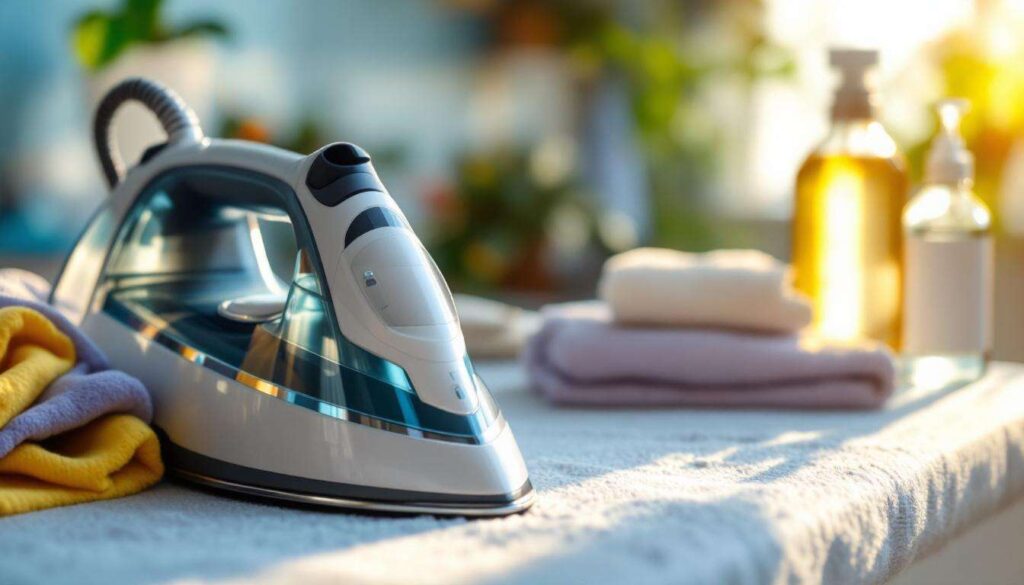
Ironing can transform wrinkled garments into crisp, professional-looking pieces, but a dirty iron can quickly undo all that effort. Residue build-up, mineral deposits and burnt fabric fibres on your iron’s soleplate can transfer onto clothing, leaving unsightly marks and stains. Understanding proper iron maintenance ensures your appliance performs optimally whilst protecting your wardrobe from accidental damage.
Why clean your iron regularly ?
Preventing fabric damage and staining
Over time, irons accumulate various types of residue that can wreak havoc on your clothing. Sticky deposits from synthetic fabrics, starch and interfacing can melt onto the soleplate, creating dark patches that transfer onto clean garments. These marks are often difficult or impossible to remove from delicate fabrics, potentially ruining expensive items.
Regular cleaning prevents these issues by:
- Removing burnt-on residue before it hardens
- Eliminating mineral deposits that can cause brown streaks
- Maintaining smooth gliding across fabric surfaces
- Preventing rust stains from developing
Maintaining optimal steam performance
Steam irons rely on clear pathways to deliver moisture effectively. Mineral build-up from tap water gradually blocks steam holes, reducing the iron’s ability to remove stubborn wrinkles. A clogged steam system forces you to apply more pressure and heat, which can damage delicate fabrics and waste time during ironing sessions.
Extending appliance lifespan
Neglected irons deteriorate faster than well-maintained ones. Limescale accumulation inside the water tank and heating chamber can corrode internal components, leading to leaks, inconsistent temperature control and eventual appliance failure. Monthly cleaning routines significantly extend your iron’s operational life, protecting your investment.
Understanding these benefits naturally leads to exploring the practical techniques for keeping your iron’s soleplate pristine.
Effective methods for cleaning your iron’s soleplate
The vinegar and salt paste technique
For stubborn, burnt-on deposits, creating a gentle abrasive paste offers excellent results. Combine distilled white vinegar with water and four tablespoons of salt to form a thick mixture. Apply this paste using a soft cloth, working in circular motions across the cooled soleplate. The salt provides mild abrasion whilst the vinegar’s acidity breaks down residue.
This method works particularly well on:
- Melted synthetic fabric residue
- Starch build-up
- Light scorch marks
- General grime accumulation
After scrubbing, wipe the soleplate clean with a damp cloth and dry thoroughly before use.
Natural cleaning with lemon
Lemon offers a chemical-free alternative for soleplate maintenance. Cut a fresh lemon in half and rub the exposed flesh directly onto the cooled soleplate. The citric acid naturally dissolves mineral deposits and light residue whilst leaving a fresh scent. This technique restores shine and smoothness without harsh chemicals, making it ideal for those preferring natural cleaning solutions.
Using specialised cleaning tools
Recent testing has demonstrated that melamine foam cleaning products effectively remove particularly stubborn residues. These tools work exceptionally well on sticky materials from interfacing and adhesive-backed fabrics that traditional methods struggle to eliminate. Gently rub the foam across problem areas on a cooled soleplate, applying minimal pressure to avoid scratching the surface.
With the soleplate addressed, attention must turn to the internal components where mineral deposits accumulate.
How to remove mineral build-up and polish the soleplate
The vinegar flush method
Mineral deposits inside your iron require internal cleaning. Mix equal parts distilled white vinegar and distilled water—typically half a cup of each. Pour this solution into the unplugged, completely cooled iron’s water tank. Plug in the appliance and set it to the steam setting, allowing it to heat fully.
The cleaning process involves:
- Holding the iron over a sink or basin
- Activating the steam function for approximately five minutes
- Allowing the vinegar solution to flush through steam holes
- Observing mineral deposits and residue being expelled
This technique effectively clears blocked steam passages and dissolves limescale accumulation throughout the system.
Inspecting and clearing steam holes
Before running the vinegar solution, examine the steam holes on the soleplate. Use a cotton bud or toothpick to gently dislodge any visible blockages. This preliminary step ensures maximum effectiveness when flushing the system, allowing the cleaning solution to flow freely through all passages.
Final polishing for optimal results
After cleaning, polish the soleplate to restore its smooth finish. Use a clean, dry microfibre cloth to buff the surface, removing any remaining residue and creating a friction-free gliding surface. A properly polished soleplate moves effortlessly across fabrics, reducing ironing time and preventing snags on delicate materials.
Beyond the soleplate and steam system, the iron’s internal water reservoir requires specific attention.
Tips for cleaning the inside of your iron
Post-cleaning rinse procedure
After using the vinegar solution, the iron’s interior needs thorough rinsing. Fill the tank with fresh distilled water and repeat the steaming process for two to three minutes. This rinse cycle removes any remaining vinegar residue that could potentially affect fabric or create odours during subsequent use.
Checking manufacturer recommendations
Some modern irons feature self-cleaning functions designed specifically for mineral removal. Consult your appliance’s manual before attempting manual cleaning methods, as certain models require specific procedures to avoid voiding warranties or damaging internal components.
Proper water tank maintenance complements these internal cleaning efforts.
Maintaining your iron’s water tank
Emptying after each use
The single most effective preventative measure involves emptying the water tank after every ironing session. Standing water promotes mineral accumulation and bacterial growth, both of which compromise iron performance and hygiene. This simple habit takes seconds but dramatically reduces cleaning frequency and extends appliance life.
Using appropriate water types
Water quality significantly impacts mineral build-up rates. The following table illustrates recommended water types:
| Water type | Mineral content | Recommendation |
|---|---|---|
| Distilled water | None | Ideal for all irons |
| Demineralised water | Minimal | Excellent choice |
| Tap water (soft) | Low to moderate | Acceptable with frequent cleaning |
| Tap water (hard) | High | Avoid if possible |
Using distilled or demineralised water minimises limescale formation, reducing maintenance requirements and protecting internal components from corrosion.
Monthly deep cleaning schedule
Establish a regular cleaning routine regardless of visible residue. Monthly deep cleaning prevents gradual accumulation that becomes increasingly difficult to remove. Mark your calendar to ensure consistency, treating iron maintenance as essential household upkeep rather than reactive problem-solving.
These maintenance practices naturally extend into broader strategies for appliance longevity.
Tips for extending the life of your iron
Proper temperature settings for different fabrics
Using appropriate heat levels prevents both fabric damage and residue formation. Excessive temperatures melt synthetic fibres onto the soleplate, creating stubborn deposits. Always consult garment care labels and adjust settings accordingly, starting with lower temperatures for delicate materials.
Storage considerations
Store your iron upright in a cool, dry location. Never wrap the cord tightly around the appliance, as this stresses internal wiring and can cause electrical faults. Ensure the iron cools completely before storage and verify the water tank is empty to prevent leaks and mineral deposits during dormant periods.
Protective measures during use
Simple precautions during ironing sessions prevent unnecessary wear:
- Use an ironing board cover in good condition
- Avoid ironing over zips, buttons and embellishments
- Keep the soleplate away from sharp objects
- Allow adequate warm-up time before use
- Never iron directly over printed designs without protection
These practices minimise accidental damage whilst maintaining optimal performance throughout the appliance’s lifespan.
Maintaining a clean iron requires minimal effort but delivers substantial benefits. Regular soleplate cleaning, internal flushing and proper water tank management prevent fabric damage whilst extending appliance longevity. Monthly maintenance routines, appropriate water selection and careful storage practices ensure your iron remains reliable for years. By implementing these straightforward techniques, you protect both your wardrobe and your investment, transforming iron maintenance from a chore into a simple habit that preserves clothing quality and appliance performance.