


Keeping the space beneath and behind your bed clean can feel like an overwhelming task, especially when moving heavy furniture seems impractical or impossible. Dust, allergens, and debris accumulate in these hidden areas, potentially affecting air quality and overall hygiene in your bedroom. Fortunately, several effective methods exist to tackle this challenge without the need to shift your bed from its position. From specialised tools to innovative cleaning techniques, maintaining a spotless sleeping environment has never been more accessible.
Using an extendable duster to eliminate dust
Choosing the right extendable duster
An extendable duster represents one of the simplest yet most effective tools for cleaning beneath beds. These devices feature telescopic handles that can reach up to two metres in length, allowing you to access even the furthest corners without bending or straining. When selecting an extendable duster, prioritise models with flexible heads that can manoeuvre around bed legs and other obstacles. Microfibre options prove particularly effective as they attract and trap dust particles rather than simply dispersing them into the air.
Proper technique for maximum effectiveness
To achieve optimal results with your extendable duster, employ a systematic approach:
- extend the handle to its full length before beginning
- work from one side of the bed to the other in overlapping strokes
- angle the duster head to reach corners and edges
- shake or rinse the duster head regularly to prevent redistributing dust
- repeat the process weekly to prevent excessive accumulation
The lightweight nature of extendable dusters makes them ideal for quick maintenance sessions, requiring minimal physical effort whilst delivering impressive results. This method works particularly well on hard flooring surfaces where dust tends to settle rather than embed itself into fibres.
Whilst dusters excel at removing surface dust, they may struggle with heavier debris, which leads naturally to exploring more powerful cleaning alternatives.
Long-handled vacuum cleaner: the essential tool
Selecting appropriate vacuum attachments
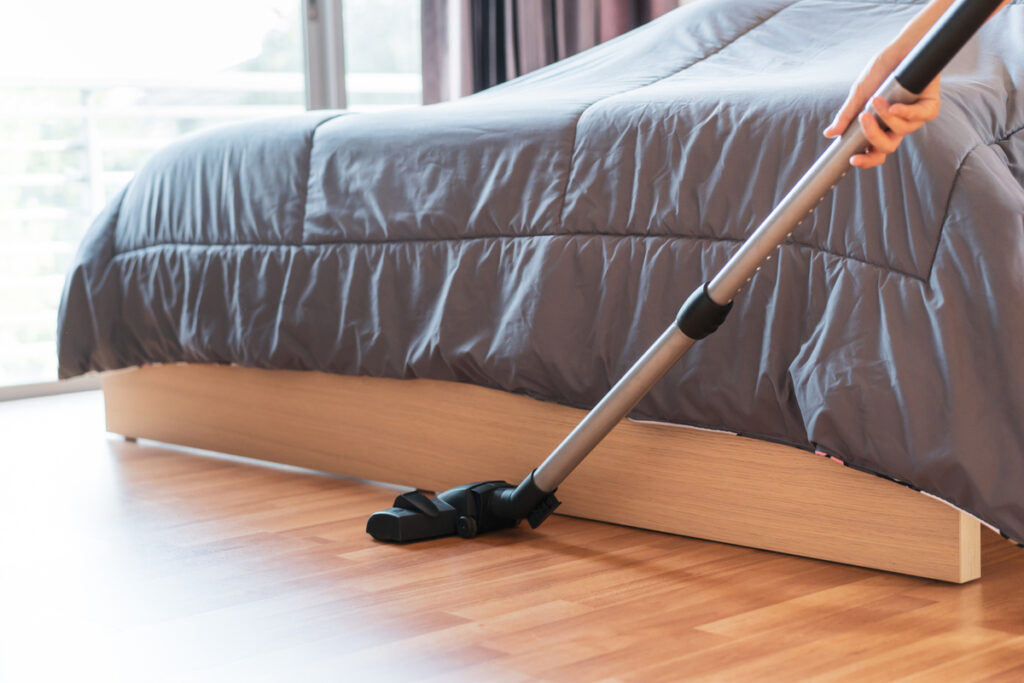
A vacuum cleaner with extended attachments provides superior cleaning power compared to manual dusting methods. Modern vacuum cleaners typically include various nozzles and extensions specifically designed for tight spaces. The crevice tool, with its narrow profile, proves invaluable for navigating beneath low-clearance beds. For beds with slightly more space underneath, a flat floor attachment can cover larger areas efficiently.
Optimising your vacuuming routine
When vacuuming beneath your bed, consider these practical strategies:
- assemble the longest possible combination of extension tubes
- use a torch or mobile phone light to identify dust concentrations
- vacuum in parallel lines to ensure complete coverage
- pay special attention to areas near bed legs where dust accumulates
- adjust suction power according to floor type to prevent scattering debris
For beds positioned extremely close to the floor, specialised low-profile vacuum attachments are available that measure less than five centimetres in height. These accessories slide effortlessly beneath even the lowest bed frames, ensuring comprehensive cleaning without requiring furniture relocation.
Beyond traditional vacuum cleaners, technological advances have introduced even more convenient options for maintaining cleanliness beneath beds.
Electric dust collector: a practical solution
Understanding electric dust collectors
An electric dust collector combines the convenience of a handheld device with the power of a full-sized vacuum cleaner. These compact machines feature slim profiles and ergonomic designs that make them particularly suited for cleaning beneath furniture. Unlike traditional vacuum cleaners, electric dust collectors often weigh less than two kilograms, reducing arm fatigue during extended cleaning sessions.
Key features and benefits
| Feature | Benefit |
|---|---|
| Cordless operation | Enhanced manoeuvrability without cable restrictions |
| HEPA filtration | Captures 99.97% of allergens and fine particles |
| LED illumination | Reveals hidden dust in dark spaces |
| Rechargeable batteries | Provides 20-40 minutes of continuous use |
The portability of electric dust collectors makes them ideal for spontaneous cleaning sessions. Many models include interchangeable heads designed specifically for different surfaces, from hardwood floors to carpeted areas. This versatility ensures thorough cleaning regardless of your bedroom’s flooring type.
Whilst electric devices offer excellent results, sometimes a completely different approach can prove equally effective.
Cleaning by air blowing
Implementing air blowing techniques
Using compressed air or a leaf blower might seem unconventional for indoor cleaning, yet this method effectively dislodges stubborn dust and debris from beneath beds. This technique works particularly well when combined with subsequent vacuuming to collect the displaced particles. Small handheld air blowers designed for computer maintenance can be adapted for this purpose, providing controlled bursts of air that push dust towards accessible areas.
Safety considerations and best practices
When employing air blowing methods, observe these important precautions:
- wear a dust mask to avoid inhaling airborne particles
- open windows to ensure adequate ventilation
- direct air flow towards an area where you can easily vacuum
- use low to medium power settings to prevent excessive dust dispersion
- keep the nozzle at least 15 centimetres from the floor to maintain control
This method proves especially useful for quarterly deep cleaning sessions rather than routine maintenance. The forceful air stream can dislodge accumulated dust that other methods might miss, including particles trapped in carpet fibres or along skirting boards. However, this approach requires immediate follow-up with vacuuming to prevent dust from settling elsewhere in the room.
For those seeking gentler yet highly effective cleaning solutions, static electricity offers an intriguing alternative.
The advantages of electrostatic wipes
How electrostatic wipes function
Electrostatic wipes utilise static charge to attract and capture dust particles, making them remarkably effective for cleaning beneath beds. These specially treated cloths can be attached to flat mops or extendable handles, creating a powerful dust-collection system. Unlike traditional cleaning cloths, electrostatic wipes maintain their charge even when dry, eliminating the need for chemical cleaners or water.
Maximising electrostatic cleaning efficiency
To achieve the best results with electrostatic wipes, consider these strategic approaches:
- attach wipes securely to a flat mop head designed for tight spaces
- use slow, deliberate strokes to allow maximum particle adhesion
- replace wipes when visibly saturated with dust
- store unused wipes in sealed packaging to preserve their charge
- combine with vacuuming for comprehensive cleaning
The chemical-free nature of electrostatic wipes makes them ideal for households with allergies or sensitivities to cleaning products. They prove particularly effective on hard flooring surfaces where dust accumulates in visible layers. Many users find that electrostatic wipes pick up fine particles that vacuum cleaners might miss, including pet hair and lint.
For those seeking the ultimate convenience in bedroom maintenance, automated solutions offer compelling advantages.
Using a robot vacuum cleaner for regular maintenance
Selecting the appropriate robot vacuum
A robot vacuum cleaner represents the most hands-free approach to maintaining cleanliness beneath beds. When choosing a model for this purpose, prioritise devices with low-profile designs measuring less than ten centimetres in height. Advanced models feature intelligent navigation systems that map room layouts, ensuring systematic coverage of all accessible areas including beneath furniture.
Optimising robot vacuum performance
| Consideration | Recommendation |
|---|---|
| Clearance height | Measure bed height before purchasing; select models at least 2cm shorter |
| Scheduling frequency | Programme daily or bi-weekly cleaning cycles |
| Battery capacity | Choose models offering 90+ minutes runtime for larger bedrooms |
| Maintenance | Empty dustbins and clean brushes weekly |
Modern robot vacuums incorporate sophisticated sensors that detect obstacles and adjust cleaning patterns accordingly. This technology ensures thorough coverage beneath beds without becoming trapped or damaging furniture legs. Many models return automatically to charging stations when battery levels decrease, then resume cleaning where they left off.
The consistent maintenance provided by robot vacuums prevents dust accumulation, reducing the need for intensive cleaning sessions. By operating on predetermined schedules, these devices maintain cleanliness even when you’re away from home, contributing to a consistently healthy sleeping environment.
Maintaining a clean space beneath and behind your bed need not involve heavy lifting or furniture rearrangement. The seven methods outlined here offer practical solutions suited to various preferences, budgets, and physical capabilities. Whether you opt for simple extendable dusters, powerful vacuum attachments, innovative electrostatic wipes, or automated robot cleaners, regular attention to these often-neglected areas significantly improves bedroom hygiene. By incorporating one or more of these techniques into your routine, you create a healthier sleeping environment whilst minimising effort and maximising efficiency.