
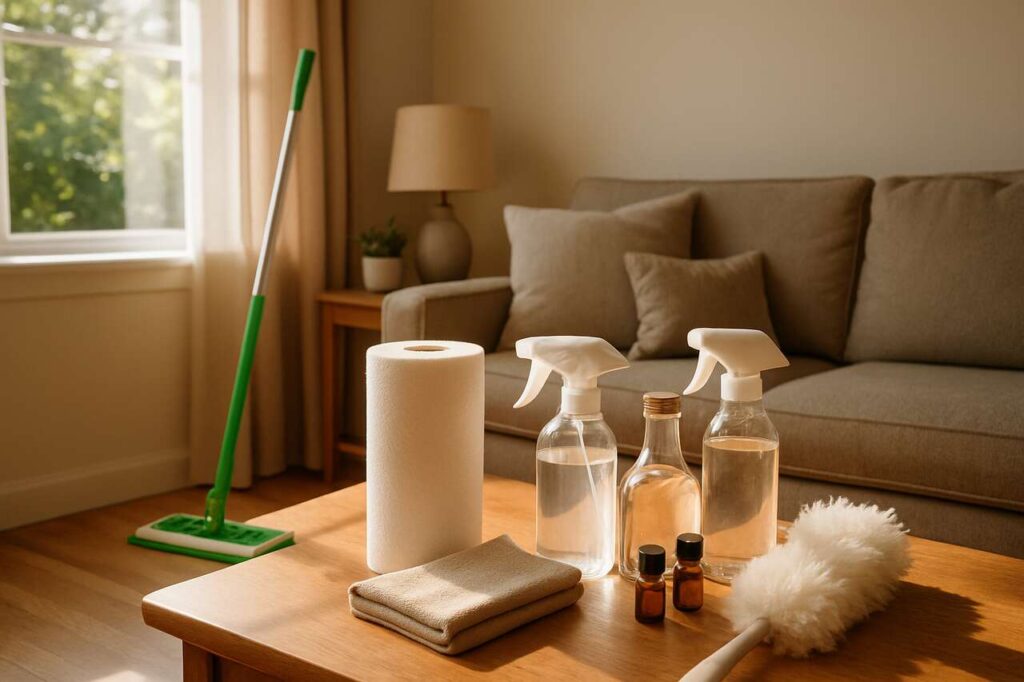
Running out of Swiffer refills at the most inconvenient moment is a familiar frustration for many households. The good news is that you don’t need to halt your cleaning routine or rush to the shops immediately. Several everyday household items can serve as effective substitutes for commercial Swiffer pads, offering both practicality and sustainability. These alternatives not only help you maintain a clean home but also reduce waste and save money in the process. From old clothing to common cleaning cloths, these resourceful solutions demonstrate that cleaning innovation often lies in what you already own.
Fluffy socks for dusting
Transforming worn socks into cleaning tools
Old fuzzy socks represent one of the most accessible and effective alternatives to traditional Swiffer refills. Those worn pairs that have lost their elasticity or developed holes need not be discarded when they can serve a new purpose. The textured surface of fuzzy socks creates an excellent dust-trapping mechanism, making them particularly suitable for capturing pet hair, dust bunnies, and fine particles from hard floors.
How to attach socks to your Swiffer
The attachment process is remarkably simple and requires no special equipment:
- Slide the sock over the Swiffer head, ensuring it covers the entire cleaning surface
- Secure the sock by tucking any excess fabric underneath the edges of the mop head
- For added stability, you can use small elastic bands to keep the sock firmly in place
- Replace the sock when it becomes saturated with dust and debris
Advantages of using fuzzy socks
Fuzzy socks offer several benefits beyond their availability. Their soft, plush texture prevents scratching on delicate floor surfaces whilst effectively grabbing dirt. Unlike disposable pads, socks can be washed and reused multiple times, making them an environmentally conscious choice. The static electricity generated by certain synthetic sock materials also helps attract and hold dust particles more effectively.
Beyond socks, other fabric alternatives offer different cleaning properties worth exploring for various household surfaces.
A microfibre cloth for dry wiping
The versatility of microfibre technology
Microfibre cloths have revolutionised household cleaning due to their unique fibre structure, which consists of extremely fine synthetic threads that create millions of tiny hooks. These microscopic fibres can capture dust, dirt, and bacteria far more effectively than traditional cotton materials. When used with a Swiffer for dry cleaning, microfibre cloths provide exceptional dust collection without requiring any chemical cleaners.
Securing microfibre cloths to your Swiffer
Attaching a microfibre cloth to your Swiffer requires a slightly different approach than socks:
- Fold the cloth to match the dimensions of your Swiffer head
- Tuck the edges into the gripping mechanism on the Swiffer base
- Ensure the cloth is taut to prevent bunching during use
- For stubborn attachment, use clothes pegs or small binder clips on the sides
Performance comparison with disposable pads
| Feature | Microfibre cloth | Disposable pad |
|---|---|---|
| Dust capture | Excellent | Very good |
| Reusability | 100+ washes | Single use |
| Cost per use | £0.02-0.05 | £0.30-0.50 |
| Environmental impact | Low | High |
Whilst microfibre excels at dry dusting, it also demonstrates remarkable capabilities when moisture is introduced to the cleaning process.
A microfibre cloth for wet cleaning
Adapting microfibre for damp mopping
The same microfibre cloths that work brilliantly for dry dusting can be equally effective for wet cleaning tasks. When dampened, microfibre fibres swell slightly, creating even more surface area to lift and trap dirt, grime, and sticky residues. This makes them ideal for kitchen floors, bathroom tiles, and other surfaces that require more than simple dusting.
Preparing your cleaning solution
To maximise the effectiveness of wet microfibre cleaning, proper preparation is essential:
- Dampen the microfibre cloth with warm water, wringing out excess moisture
- Add a few drops of your preferred floor cleaner directly to the cloth
- Alternatively, spray cleaning solution onto the floor and mop with the damp cloth
- Rinse and wring the cloth periodically during cleaning to prevent spreading dirt
Maintenance and care for longevity
Proper care ensures your microfibre cloths remain effective cleaning tools for extended periods. Wash them separately from other laundry to prevent lint accumulation, and avoid fabric softeners, which coat the fibres and reduce their cleaning ability. Hot water washing effectively sanitises the cloths, though warm water suffices for regular cleaning. Air drying or tumble drying on low heat preserves the fibre integrity better than high temperatures.
For those who enjoy crafting or have handmade items available, knitted solutions offer unique cleaning advantages.
Knitted or crocheted cotton pads
Handcrafted cleaning solutions
Knitted or crocheted cotton pads represent a sustainable and customisable alternative to commercial Swiffer refills. These handmade items, often created from cotton yarn or repurposed cotton garments, provide excellent absorbency and durability. The textured surface created by knitting or crocheting patterns enhances dirt-trapping capabilities whilst remaining gentle on floor surfaces.
Creating your own reusable pads
For those with basic crafting skills, making custom Swiffer pads is straightforward:
- Measure your Swiffer head to determine the required pad dimensions
- Select 100% cotton yarn for maximum absorbency and washability
- Use simple knitting or crochet stitches to create rectangular pads
- Add corner loops or elastic edges for easier attachment to the Swiffer
- Create multiple pads to rotate during cleaning sessions
Benefits of cotton construction
Cotton’s natural properties make it an ideal material for cleaning applications. It absorbs moisture readily, holds cleaning solutions effectively, and withstands repeated washing without deteriorating. Unlike synthetic materials, cotton is biodegradable and hypoallergenic, making it suitable for households with sensitivities. The durability of knitted or crocheted cotton means these pads can serve reliably for months or even years with proper care.
Similar repurposing opportunities exist with other soft fabric items commonly found in wardrobes.
Old fleece garments or jackets
Repurposing worn fleece clothing
Fleece materials, whether from old blankets, jackets, or pullovers, offer exceptional dust-attracting properties that rival commercial cleaning products. The synthetic fibres in fleece generate static electricity during use, which naturally draws dust, pet hair, and fine particles. This makes fleece particularly effective for homes with pets or high dust accumulation.
Preparing fleece for Swiffer use
Transforming old fleece items into cleaning pads requires minimal effort:
- Cut fleece garments into rectangles slightly larger than your Swiffer head
- Ensure edges are relatively straight to facilitate secure attachment
- Consider hemming edges to prevent excessive fraying, though this is optional
- Create multiple pads from a single garment for extended use
Performance characteristics of fleece
| Cleaning task | Fleece effectiveness | Best application |
|---|---|---|
| Dust collection | Excellent | Hardwood, laminate floors |
| Pet hair removal | Outstanding | All hard surfaces |
| Wet mopping | Good | Quick spill cleanup |
| Scratch resistance | Excellent | Delicate surfaces |
Care and washing instructions
Fleece pads require straightforward maintenance to remain effective. Shake out accumulated dust before washing, then launder in warm water with standard detergent. Avoid high heat when drying, as excessive temperatures can damage the synthetic fibres and reduce their static-generating properties. Properly maintained fleece pads can withstand dozens of washing cycles whilst retaining their cleaning effectiveness.
Natural fibres from everyday clothing items provide equally practical alternatives with different characteristics.
Old cotton t-shirts or flannel sheets
The cleaning power of natural cotton
Worn cotton t-shirts and flannel sheets represent perhaps the most readily available household items for Swiffer pad replacement. These materials combine softness, absorbency, and durability in ways that make them suitable for both dry dusting and damp mopping. Flannel, with its brushed surface, provides additional texture that helps dislodge stuck-on debris.
Preparing cotton fabrics for cleaning use
Converting old clothing and linens into functional cleaning pads is straightforward:
- Cut t-shirts or sheets into squares approximately 25-30 centimetres per side
- Remove buttons, zippers, or embellishments that might scratch floors
- Pre-wash new cuts to remove any lint and increase absorbency
- Store prepared pads in a designated container for easy access
Dry versus wet applications
Cotton materials excel in both cleaning scenarios. For dry dusting, slightly dampening the cotton pad enhances dust attraction without leaving moisture on floors. For wet cleaning, cotton’s high absorbency allows it to hold cleaning solutions effectively whilst distributing them evenly across surfaces. Flannel’s napped texture provides superior scrubbing action for removing scuff marks or sticky residues.
Economic and environmental considerations
Using repurposed cotton items delivers significant cost savings compared to disposable pads. A single t-shirt can yield four to six cleaning pads, each usable dozens of times before replacement becomes necessary. This approach diverts textiles from landfills whilst reducing household cleaning expenses. The environmental benefits extend beyond waste reduction, as reusable cotton pads eliminate the packaging waste associated with disposable products.
Running out of Swiffer refills need not interrupt your cleaning routine when numerous household items can serve as effective substitutes. Fuzzy socks provide quick dust-grabbing solutions, whilst microfibre cloths offer professional-grade cleaning for both dry and wet applications. Knitted cotton pads combine sustainability with customisation, and fleece materials excel at attracting pet hair and fine particles. Old cotton t-shirts and flannel sheets deliver versatile, absorbent cleaning power. These alternatives not only maintain household cleanliness but also promote environmental responsibility and financial savings. Whilst they may not perfectly replicate commercial pads in every situation, these household items demonstrate that effective cleaning solutions often already exist within your home, waiting to be repurposed.